Chilled Drinking Water Where People Wait and Work
A water cooler is a point of use drinking unit that keeps cold water ready in a small footprint. It is a practical fit for offices, medical rooms, salons, workshops and reception areas where people need quick access to clean drinking water without sending them to a kitchen or bottle store. In Cape Town, where summer heat and load shedding both put pressure on day to day comfort, a cooler helps keep people settled and hydrated.
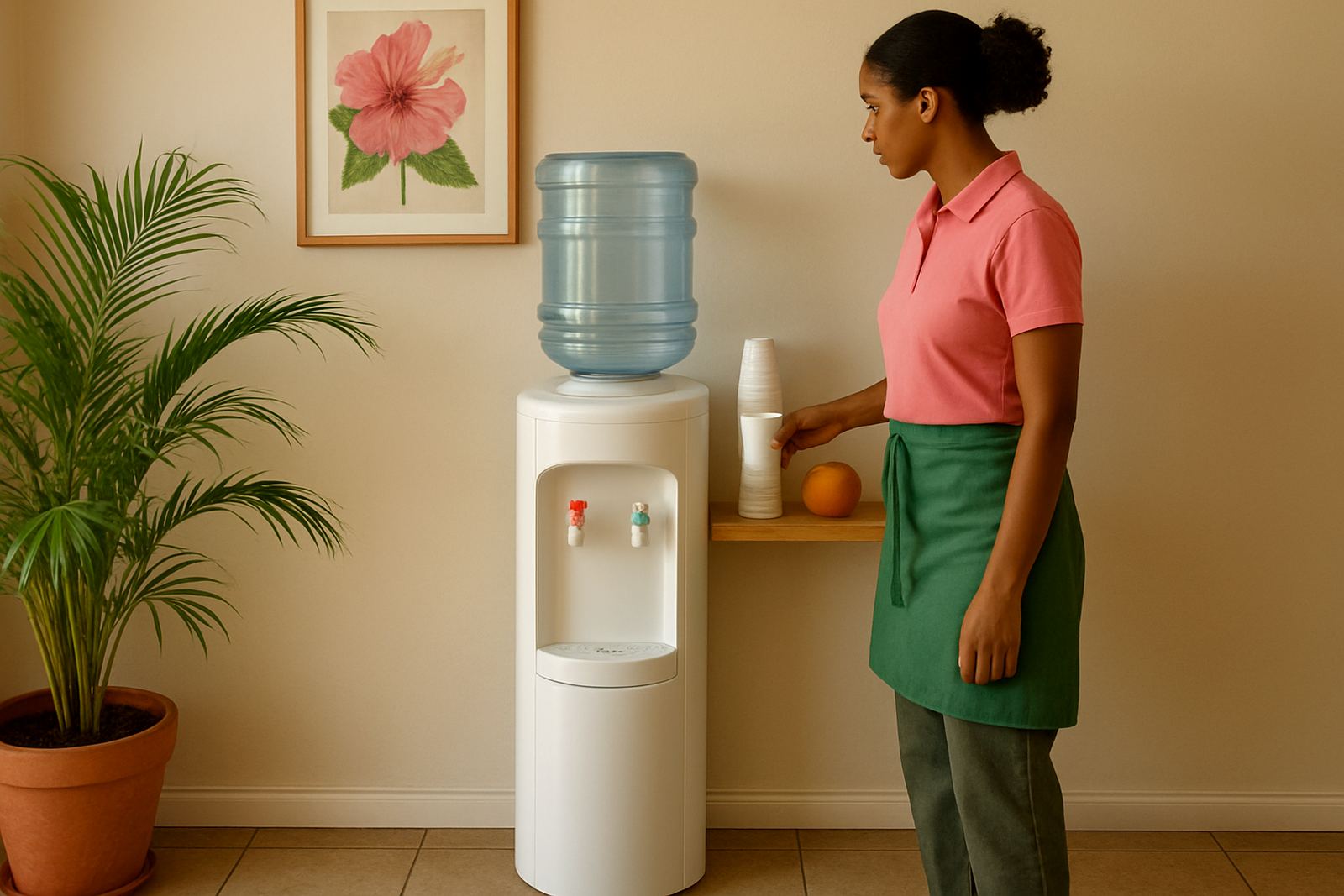
We work with units that are made for light commercial use, from a compact tabletop cooler to a freestanding floor model. Some take a bottled water top load setup, while others can be connected to a mains supply with filtration and a chilled tank. The right choice depends on how many people use it, how often the room is busy, and whether you want a simple plug in unit or a plumbed installation.
For businesses in Montague Gardens, Milnerton, Bellville, Claremont and the CBD, placement matters as much as the unit itself. A cooler should sit where people can reach it without blocking a passage, but not so close to direct sun or heat from other equipment that it works harder than it should.
Sizes, Styles and Basic Spec Choices
Most buyers only need a few clear choices: floor standing or tabletop, bottled or plumbed, cold only or cold and ambient, and whether the unit will serve a small team or a steady stream of visitors. A smaller office may be fine with a compact chilled model holding 2 to 3 litres of cold water at a time, while a busier waiting area may need a larger reservoir and faster recovery.
- Tabletop units suit counters, tea stations and small consultation rooms.
- Floor standing units suit reception areas, clinics and larger offices.
- Bottled coolers are easy to place where water points are limited.
- Mains connected coolers suit fixed sites with regular daily use.
- Cold and ambient options are useful when some users want room temperature water.
Typical power draw is light, but the unit still needs a proper socket and enough air space around the back or sides for heat to move away. In coastal areas like Fish Hoek, False Bay and Somerset West, we also look at corrosion and moisture, because salty air can shorten the life of cheap fittings and reduce the neatness of the finish over time.
Where a Water Cooler Makes Sense
Water coolers are often installed in offices, clinics, admin blocks, training rooms, showrooms and customer waiting areas. They are also useful in staff canteens and light industrial sites where people are moving in and out through the day. If you already have air conditioning, the cooler adds a small but useful comfort point, especially in rooms where people wait longer than expected.
In a clinic or medical reception, clean water at a fixed spot helps reduce traffic through back rooms. In an office, it can encourage staff to drink more water rather than relying on tea and coffee only. In a workshop or service yard, a cooler near the break area is a simple morale fix that does not take much space.
The main thing to check is foot traffic. If people must cross a doorway, lift entrance or fire escape route to reach the unit, the position needs to change. We also check if the area has enough drainage or a drip tray that is easy to empty, because spills around tile, vinyl or carpet can become a nuisance fast.
Installation, Power and Water Supply
A bottled cooler is usually straightforward. Place it on level ground, fit the bottle, plug it in and allow time for the water to chill before use. A plumbed cooler needs a water connection, shut off valve, suitable tubing and often a filter set depending on the water quality and how the site is used. If the water pressure is low or variable, we will check whether a small booster or pressure control is needed.
For most sites the electrical need is simple, but the socket should be sound and not overloaded with kettles, printers or extension leads. During load shedding, a cooler will not keep chilling unless it is on backup power, so the room layout should not depend on instant cold water at all hours. If the business runs a generator or inverter, we can advise on the most practical connection point.
There is no gas refill required for a normal bottled water cooler, but plumbed chillers use a refrigeration circuit and should be installed carefully so the compressor and pipe work are not strained. That matters most when the unit sits in a hot plant room or near a window that gets full afternoon sun.
Keeping the Water Clean and the Unit Working Properly
A water cooler needs basic care to stay clean and to keep the water tasting fresh. The tap area, drip tray and bottle top should be wiped down regularly, and the outside casing should not be left with dust or spill marks. On plumbed units, filters should be changed on schedule and the internals checked for scale build-up or slow flow. If the water starts to taste flat or looks cloudy, it is time for a service.
- Clean the drip tray and tap area every week.
- Check for leaks around the bottle neck or inlet fittings.
- Replace filters at the advised interval.
- Keep the rear vents open and free of dust.
- Do not place the unit next to ovens, printers or direct sun.
In coastal areas and older buildings, a little extra care helps. Humid air, salt in the breeze and dusty office corners can all affect a cooler over time. If a unit is standing in a shared passage, it is worth checking it often for knocks, loose taps and unnoticed drips. A small fault left too long can cause water damage to flooring or skirting.
What to Check Before You Order
Before you order, count how many people will use the cooler on an average day, not just on the busiest day. A reception area with ten visitors a day needs a very different unit from a busy office with fifty staff. Also check the room size, socket position, water point location and whether the unit must move through narrow doors or stairs during delivery. In older buildings, lift size and corridor width can matter more than expected.
It helps to know if you want a bottled top load unit for simple upkeep, or a plumbed model for lower day to day handling. Ask about child safe taps, drip tray size, filtration, storage height and service access. If the cooler will stand near the Cape sun in a west facing room, tell us that too, because heat load changes how the unit performs.
We can assist from our Montague Gardens base and cover Cape Town CBD, Bellville, Milnerton, Claremont, Somerset West and Fish Hoek. If you need a water cooler for a new office or a replacement for an old unit that is no longer keeping up, send us the site details and we will advise on the best fit.
Key facts
| Product type | Chilled drinking water cooler for office and light commercial use |
|---|---|
| Format | Tabletop or floor standing |
| Water supply | Bottled top load or plumbed mains connection |
| Temperature options | Cold only, or cold and ambient depending on model |
| Power needs | Standard 220V socket, clear ventilation space required |
| Typical use areas | Offices, clinics, reception areas, waiting rooms and staff break spaces |