What a floral cooler does for cut flower stock
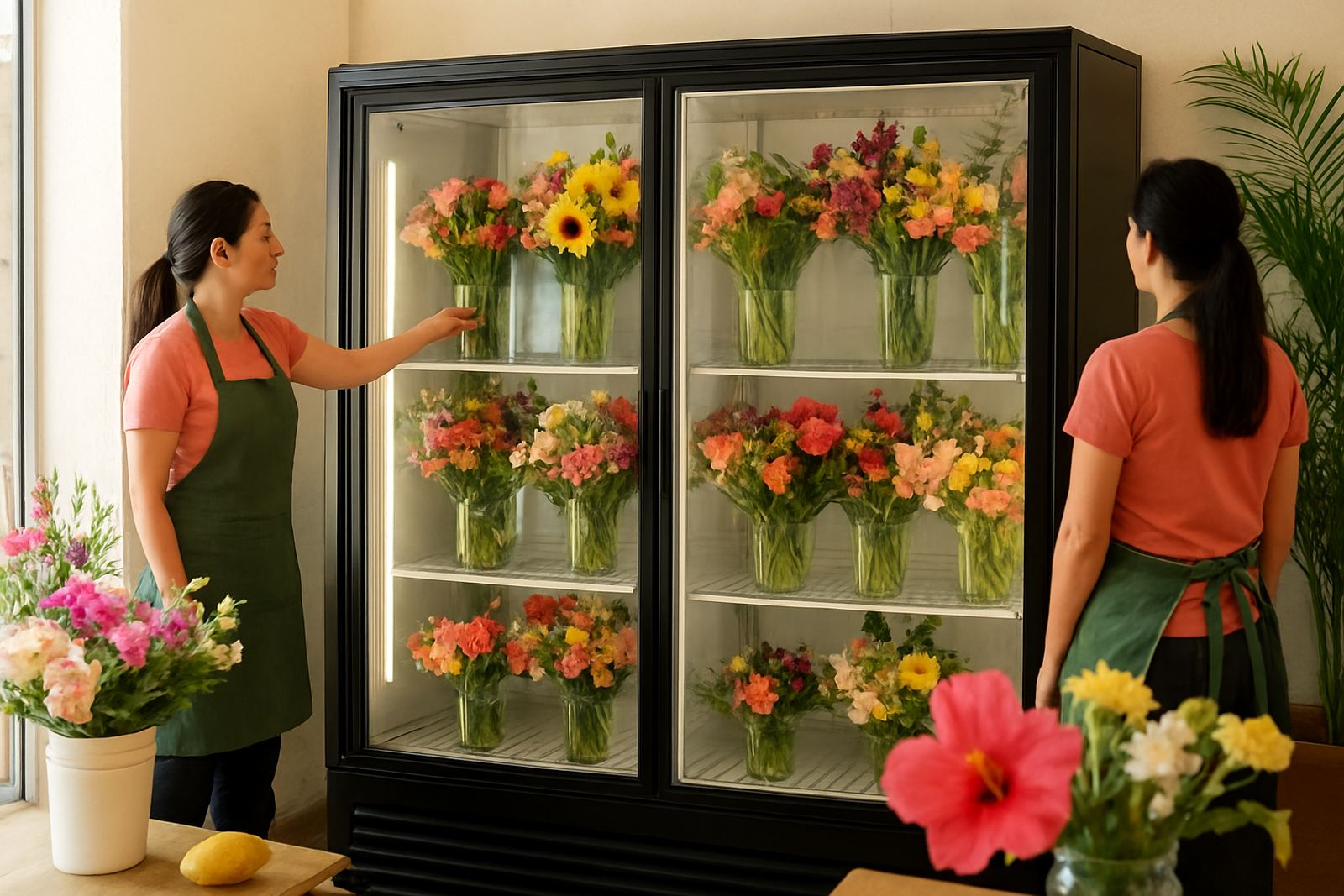
A floral cooler is a temperature controlled cabinet or room used to slow down wilting, reduce moisture loss and keep stems in saleable condition for longer. For florists, event teams and growers, it is one of the most useful pieces of cold storage because flowers lose quality quickly in warm rooms, bright sun and the stop-start conditions caused by load-shedding.
In Cape Town, a cooler is often used for mixed bouquets, roses, lilies, chrysanthemums, natives, filler greens and pre-packed arrangements. It gives you a stable holding space between delivery and display, which helps cut down wastage. A well set unit also supports stock rotation, so older bunches move first and fresher stems stay protected.
- Typical holding temperature: 2°C to 8°C, depending on flower type and handling practice
- Common use: short-term storage before display, dispatch or event setup
- Best suited to: florists, supermarkets, market traders, hotels and wedding suppliers
Sizes and layout options for different premises
Floral coolers are available in compact cabinet sizes for small shops and larger walk-in rooms for higher turnover stock. The right size depends on how many bunches you hold at peak trading, how often deliveries arrive and whether you need shelving for buckets, boxes or racking. A narrow shop in the Cape Town CBD may need a smaller footprint, while a wholesale operation in Montague Gardens or Bellville may need a walk-in unit with double access.
We can supply cooling setups that suit front-of-house display support, prep areas and back storage. Some sites need a single door cabinet, while others need a partitioned room with separate zones for flowers and wrapped product. If your operation grows seasonally, it is worth planning a little extra capacity now, rather than trying to push a unit beyond what it was built for.
- Cabinet coolers for lower stock volumes and tighter floor space
- Walk-in floral rooms for higher turnover and multiple product types
- Custom shelving and bucket spacing for stems, bunches and arrangements
Installation needs, power supply and site readiness
Floral cooler installation starts with the room, not just the equipment. We check available floor space, ventilation, access for deliveries and where condensate can drain. The site should be level, easy to clean and away from direct sun, ovens or washing-up heat. In coastal areas like Fish Hoek and the southern Peninsula, humidity can be higher, so the enclosure and door seals need proper attention.
Most floral coolers run on standard electrical supply, but the exact load depends on size, insulation and compressor rating. A dedicated circuit is usually best, with proper breaker protection and wiring suited to the equipment draw. In areas that experience load-shedding, many businesses also plan for generator or inverter support for the cooler, especially if stock loss would be costly. We can advise on practical start-up current, daily running needs and what backup makes sense for your premises.
- Need a level site, good airflow and easy cleaning access
- Electrical supply must match compressor and fan load
- Backup power should be considered where outages are frequent
Temperature control, gas charge and cooling performance
The performance of a floral cooler depends on correct refrigerant charge, clean condenser coils, working fans and accurate thermostat control. If the unit is undercharged, overcharged or running with a leak, temperatures drift and flowers age faster. A cooler that cycles too often or struggles to pull down after deliveries will also cost more to run.
We check the cooling circuit, gas pressure, thermostat operation and air movement during installation and service. If a system uses the wrong gas, or has contamination from a poor repair, it may still run but not hold the stable conditions flowers need. That sort of fault often shows up first as soft stems, condensation build-up or uneven cooling from top to bottom. Catching it early saves product and avoids a bigger repair later, the kind that always seems to happen on a Friday afternoon.
- Correct refrigerant charge is essential for stable temperatures
- Fans and coils must stay clean for even air circulation
- Thermostat settings should be checked after transport or power cuts
Routine care, cleaning and service intervals
Floral coolers need regular care because flower debris, water spills and leaf matter can build up quickly. Weekly cleaning of shelves, buckets, drains and seals helps prevent smells, mould and blocked condensate lines. The door should close properly every time, with no torn gasket or warped frame allowing warm air in.
We recommend regular servicing for electrical checks, fan inspection, gas leak detection and general performance testing. In busy flower shops, a service visit every few months may be more useful than waiting for a full breakdown. If you notice frost where it should not be, a noisy compressor, or temperatures drifting above the set point, get it checked soon rather than trying to push through. Small issues in refrigeration can become expensive very quickly.
- Clean shelves, drains and seals on a weekly basis
- Book service before peak trading periods and wedding season
- Report temperature drift, ice build-up or abnormal noise early
What to check before you place an order
Before ordering a floral cooler, work through the practical details so the unit matches your stock and your site. Measure the available space properly, including door clearance and delivery access. Confirm whether you need a cabinet or walk-in room, and whether the stock is mostly bouquets, bunches, buckets or boxed product. It also helps to know how many hours the cooler will be opened in a day, because frequent access affects the cooling load.
We also advise checking where the unit will stand in relation to sunlight, prep sinks and hot equipment. In a small shop, a cooler placed too close to a busy work area can waste energy and make flowers sweat every time the door opens. If you are operating from the CBD, Milnerton, Claremont, Somerset West or the Cape Peninsula, we can help you match the cooler to the room and the day-to-day workflow. That is usually better than buying a size on guess work alone.
- Available floor space, doorway width and delivery access
- Stock volume, bucket count and expected daily opening frequency
- Power point location, drainage and backup power plan
Key facts
| Product type | Floral cooler for cut flower storage |
|---|---|
| Typical temperature range | 2°C to 8°C |
| Common sizes | Compact cabinet units and walk-in room options |
| Power requirement | Electric supply sized to unit load, with dedicated circuit recommended |
| Main components | Compressor, evaporator, condenser, fans, thermostat and insulated panels |
| Best uses | Florists, growers, supermarkets, hotels and event suppliers |