What an underceiling unit does
An underceiling unit is mounted high on a wall close to the ceiling, so it blows conditioned air across the room instead of taking up floor space. It is often chosen for shops, offices, meeting rooms, open-plan areas and homes where the room layout leaves no practical place for a standard wall split unit.
These units suit spaces that need faster pull-down, such as rooms with a lot of glass, higher ceilings or regular foot traffic. In Cape Town, that can mean hotter north-facing rooms in summer, or enclosed offices that trap heat when the sun sits on the roof and load-shedding leaves the space still and stuffy.
Sizes and options we supply
Underceiling units are available in a range of capacities, usually from about 18 000 BTU/h up to 60 000 BTU/h and above, depending on the room size and heat load. The right size depends on ceiling height, insulation, the number of people in the room and how much direct sun the area gets.
For lighter commercial use, a mid-size unit may be enough. For a busy office, restaurant back area, church hall or retail floor, a larger capacity may be needed. We also check whether the unit should discharge air in one direction or across a wider span, because that affects comfort and where the unit sits.
- Smaller offices and consult rooms: about 18 000 to 24 000 BTU/h
- Medium retail spaces and meeting rooms: about 24 000 to 36 000 BTU/h
- Large open areas and high-load rooms: about 48 000 to 60 000 BTU/h or more
Where this unit works best
Underceiling units work well where a wall-mounted indoor unit would get in the way, or where there is no safe place to drill at low level. They are also useful when air needs to travel further across the room. In a long office in Bellville or a reception area in Claremont, one correctly placed unit can often cover a larger usable area than a small wall unit.
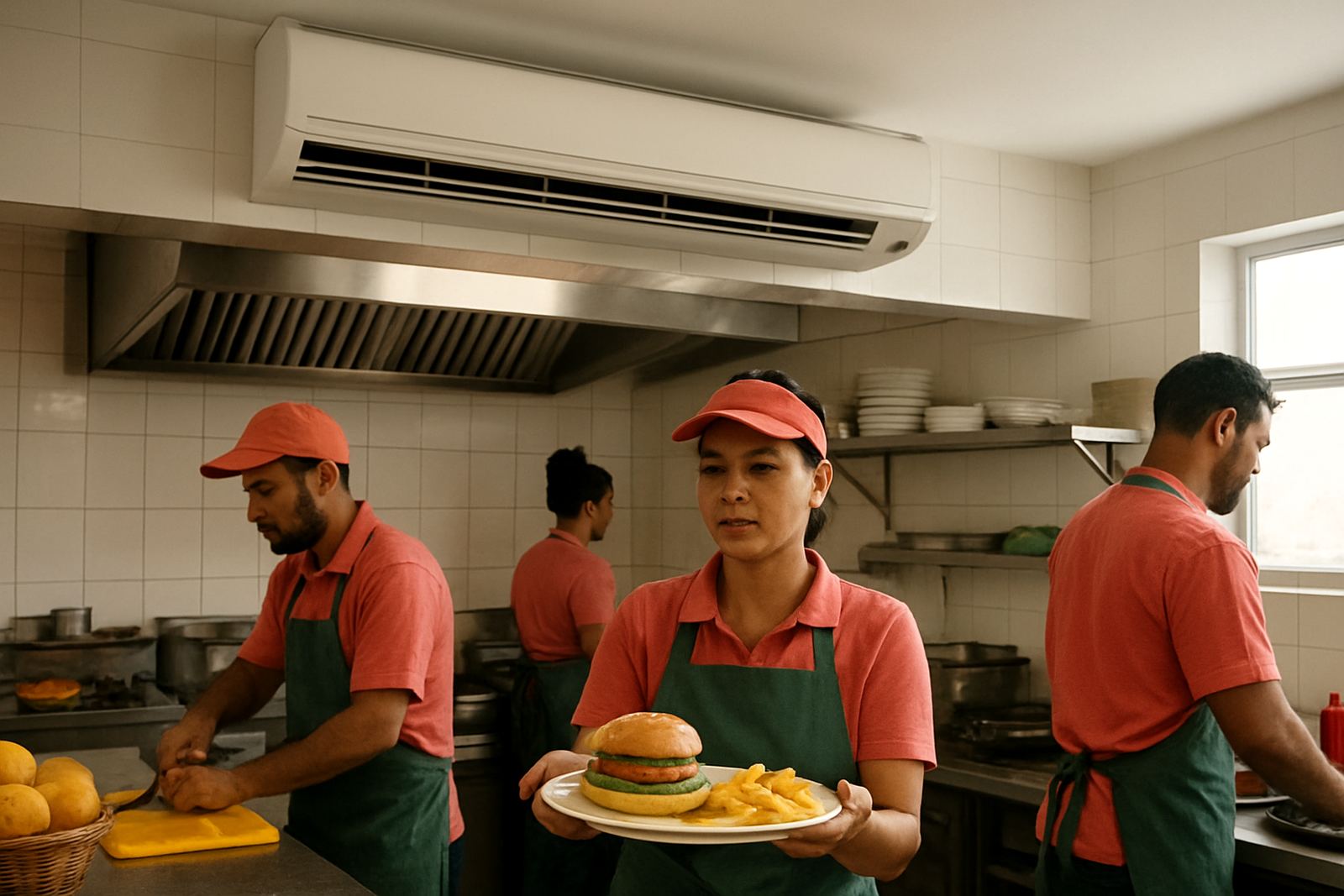
We often recommend this option for commercial spaces with counters, shelves or display walls, and for homes with an open-plan lounge where the owner does not want a unit over a TV or cabinet. They can also be a practical choice in coastal areas like Muizenberg and Fish Hoek, where salty air calls for regular cleaning and a unit mounted out of reach is easier to keep in good condition.
- Offices, boardrooms and reception areas
- Retail floors, salons and studios
- Restaurants, small halls and prayer rooms
- Homes with limited wall space or large open-plan rooms
Installation, power and gas requirements
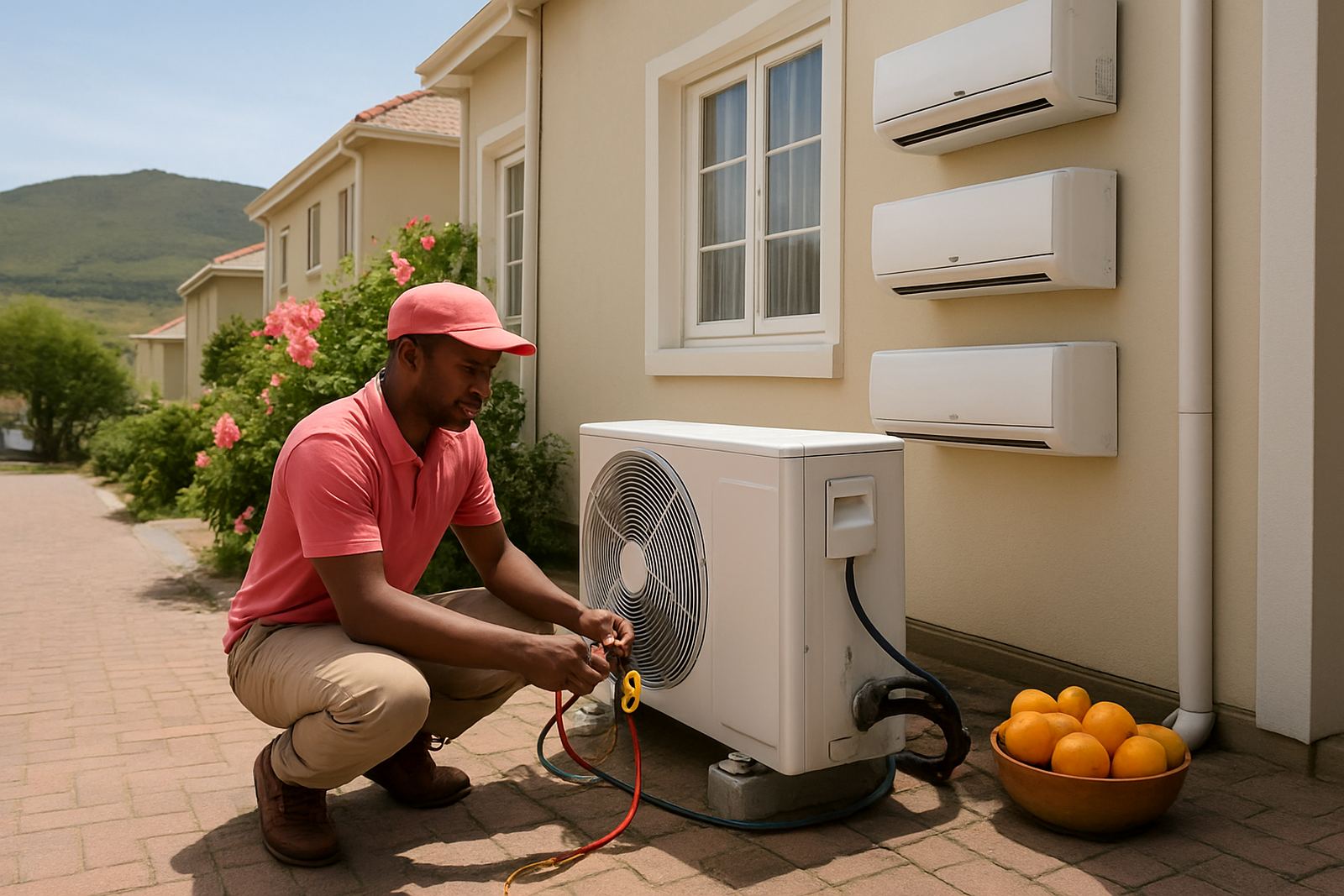
Installation needs a solid mounting point, correct clearances and a drain route that will not back up into the room. The installer also needs to size the pipe runs properly, pressure test the system and check that the indoor and outdoor units match the capacity required. Poor pipe sizing can cause weak cooling, noise or compressor strain later on.
Most underceiling systems run on standard single phase power for smaller units, while larger units may need three phase power depending on the size and duty. We check the supply before any work starts, because an undersized circuit can trip when the temperature rises and the unit starts working hard. Gas lines must be installed and tested correctly, and the unit should be charged to the maker's specification, not guessed by feel.
For Cape Town sites with long cable runs or older switchboards, we often advise a quick electrical check before installation. That saves time and avoids a call-back after the first hot spell.
Care and servicing that keep it reliable
An underceiling unit needs regular filter cleaning, coil cleaning and a check on the drain. Dust build-up can reduce airflow, while blocked drains can drip onto floors, walls or stock. In humid weather, especially near the coast, moisture and salt can shorten the life of parts if the unit is not cleaned properly.
We recommend servicing at least once a year for home use, and twice a year for busy commercial sites. A proper service should include refrigerant pressure checks, electrical checks, fan inspection and a look for oil stains or vibration that could point to a leak or mounting issue.
- Clean filters monthly in heavy use areas
- Book a service before summer, not after the first hot week
- Check for dripping water, musty smells or weak airflow
- Keep the area below the unit clear so air can move properly
What to check before you order
Before ordering, measure the room length, width and ceiling height, and note how many windows the room has. Tell us what the space is used for, how many people are in it, and whether it has heat from appliances, printers or cooking equipment. This helps us match the unit size to the actual load instead of just the floor area.
You should also check where the outdoor unit can go, whether there is safe access for pipe work, and if the building rules allow the necessary penetrations. In some sectional title buildings and city buildings, there are limits on where condensers can be mounted or how lines may run. If you are replacing an old unit, take the old model number, if available, and let us know whether the current gas type and piping are still in good condition.
- Room measurements and ceiling height
- Use of the room and number of occupants
- Power supply available at the site
- Outdoor unit location and access
- Any old unit, pipework or drainage issues
Key facts
| Typical capacities | 18 000 to 60 000 BTU/h and above |
|---|---|
| Mounting position | High wall under the ceiling |
| Best room types | Offices, shops, open-plan homes and commercial spaces |
| Power supply | Single phase on smaller units, three phase on larger units |
| Refrigerant line requirement | Correctly sized copper pipe set, insulated and pressure tested |
| Maintenance interval | At least yearly, or twice yearly for heavy use |