How a multi split system works in everyday use
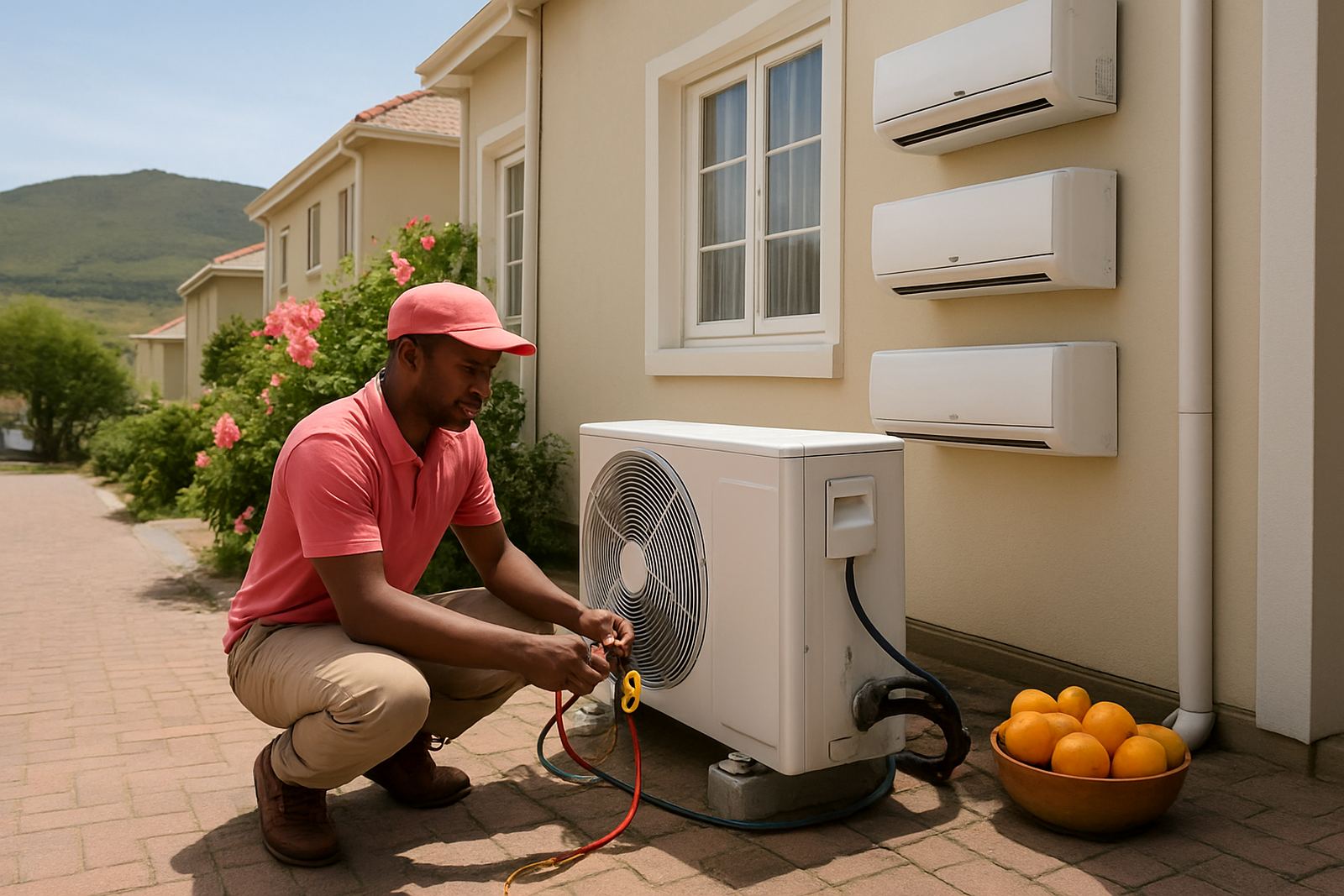
A multi split system links two to five indoor units to a single outdoor condenser. Each indoor unit can be set on its own, so one room can run cooler while another is kept at a milder setting. That makes it a practical choice for a flat, townhouse, office suite or a home in the Cape Peninsula with different sun exposure on each side.
Because only one outdoor unit is needed, it can help where courtyard space is tight or where too many outdoor units would look untidy on a boundary wall. It also keeps the installation neater for body corporate sites, provided the municipal and building rules are checked before work starts.
Sizes, indoor unit options and useful combinations
Multi split systems are selected by total cooling demand, not just by the number of rooms. A small setup might serve two bedrooms and a passage office, while a larger one may run four indoor units in a house in Claremont or a medical practice in Bellville. The indoor units can be wall mounted, ceiling cassettes or, in some layouts, concealed ducted units. Choice depends on ceiling space, pipe runs and how visible you want the units to be.
- 2 indoor units for compact homes, garden flats or a small consulting suite
- 3 indoor units for open-plan living plus two rooms that need separate control
- 4 to 5 indoor units for larger homes, retail back areas or office wings
- Mixed room sizes where one room needs more cooling than the others
- Independent temperature control for different users or operating hours
The outdoor unit is usually sized by total capacity, often around 18 000 to 60 000 BTU or more, depending on the mix of indoor units and the length of pipework. A proper load calculation is important, because a system that is too small will struggle in summer and one that is oversized can cycle badly and waste power.
Where this system suits best in Cape Town
In Cape Town, a multi split system works well where rooms heat up unevenly during the day. Homes near the coast often deal with damp air and salt exposure, while inland suburbs can see stronger afternoon heat through west facing windows. A single outdoor unit can serve upstairs bedrooms, a lounge and a study without filling the outside of the building with multiple machines.
It is also useful for small commercial sites such as reception areas, boardrooms, treatment rooms and staff offices. In places like the CBD, Milnerton and Somerset West, it can help keep customers comfortable while staff rooms are kept at a different setting. If there is limited power capacity or the site already runs fridges, freezers or other equipment, the electrical load needs to be checked before installation.
- Homes with 2 to 5 rooms needing separate control
- Offices with a mix of occupied and unused rooms
- Units where outside wall space is limited
- Sites with split use between day and night
- Properties where a cleaner outside finish is preferred
Installation needs, wiring and gas line planning
Multi split installation starts with a site check. The technician measures room sizes, checks ceiling access, looks at the outdoor mounting point and plans the refrigerant pipe routes. Good planning matters because long pipe runs, sharp bends or poor drainage can cause noisy operation or weak cooling later on. On some jobs the condensate drain can be gravity fed, but in others a pump may be needed.
Electrical supply must be matched to the system. Many homes need a dedicated circuit, isolator and correct breaker size, and some sites may need an upgrade if the existing board is already full. A licensed installer should also check whether extra cabling or trunking is needed. The gas pipework is pressure tested, vacuumed and charged to spec before start-up. If the installation is rushed, the system may lose performance and leak later, so the job should be done properly the first time.
For coastal properties, outdoor units should be positioned where they get some protection from direct sea spray and strong wind. The bracket or stand should be fixed securely, and any exposed metal fittings should be protected against corrosion where possible. It saves a lot of trouble later, especialy in wetter areas.
Power use, load-shedding and running costs
A multi split system can be more efficient than fitting a separate outdoor unit for every room, but running cost still depends on how many indoor units are on at once and how hard they are working. In summer, rooms with west facing glass, poor insulation or lots of people inside will draw more power. If you only need two rooms during load-shedding recovery or in the evening, you can run just those indoor units instead of cooling the whole property.
Where backup power is used, the inverter, generator or changeover setup must be matched to the air-conditioning load. Not every backup supply can handle compressor start-up, and some systems will trip if the voltage is weak. We advise customers to plan around the real usage pattern, not just the nameplate number. That is especially important for offices in Cape Town CBD and Milnerton where other equipment may already be on the same supply.
- Check whether the property has enough spare electrical capacity
- Confirm if the backup supply can carry the starting load
- Ask about inverter-friendly operation and any restrictions
- Use separate room control to avoid cooling empty spaces
Servicing, repairs and what to check before you order
A multi split system needs regular cleaning and servicing to keep airflow steady and prevent strain on the compressor. Filters should be cleaned often, especially in dusty areas or where pets and traffic fumes affect indoor air. Outdoor coils should be kept clear of leaves and dirt, and drain pans should be checked so that water does not drip onto walls or ceilings. On the coast, annual service is a sensible minimum because salt and moisture can shorten component life.
Before ordering, check how many rooms must be cooled, the approximate room sizes, where each indoor unit will sit, and whether the site allows for pipe runs between floors or through the roof. You should also confirm the finish you want inside, the noise level allowed in bedrooms or consulting rooms, and whether the property has an outside wall that can carry the condenser safely. If you are replacing an old system, ask whether the existing pipework can be reused or should be renewed. A quick check now prevents mismatched parts later and keeps the install tidy.
- Number of rooms and their sizes in square metres
- Indoor unit type for each room
- Outdoor unit position and access for service
- Electrical supply and backup power setup
- Pipe run length, drain route and wall finish
- Any body corporate or municipal restrictions
Key facts
| System type | Multi split air-conditioning with one outdoor unit and multiple indoor units |
|---|---|
| Indoor units | 2 to 5 units, depending on the selected system and room load |
| Typical capacity range | About 18 000 to 60 000 BTU total, subject to site requirements |
| Control | Independent room-by-room temperature control |
| Power requirement | Dedicated electrical circuit and correct breaker sizing, site dependent |
| Common use | Homes, offices, consulting rooms and small commercial spaces |