What a mobile cold room does on site
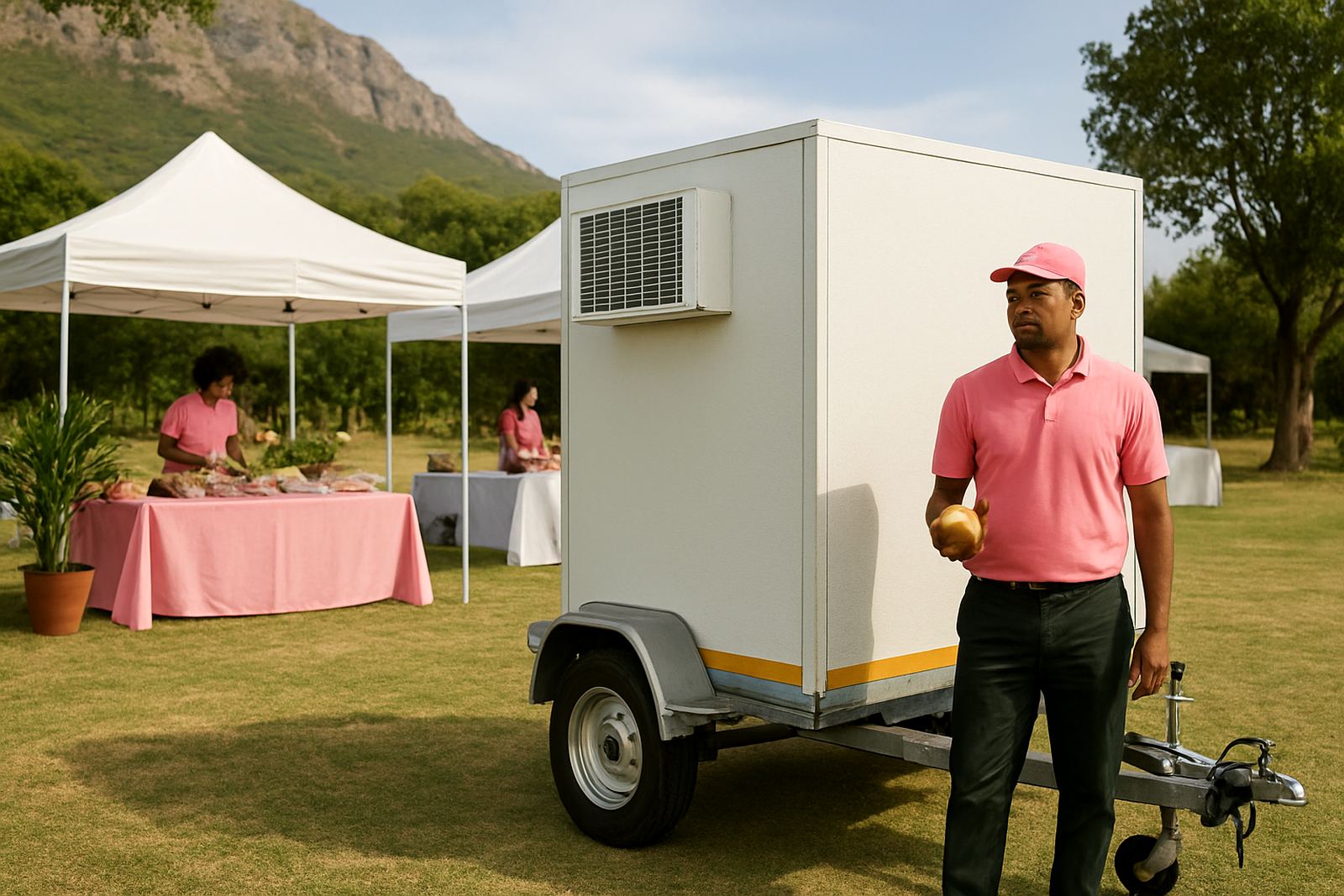
A mobile cold room is a portable insulated storage unit fitted with a refrigeration system so you can keep goods at a set temperature without building a permanent room. It is used when a business needs extra cold space fast, or when the main cold room is down and stock must be protected. For caterers, hotels, florists, butchers, and food distributors, it can keep operations moving during load-shedding, equipment failures, or seasonal rushes.
These units are built for practical use, not display. They are placed near the loading point, connected to suitable power, and set to the temperature you need. In Cape Town, that matters when deliveries are tight, weather changes quickly, or you need temporary storage during a function, renovation, or peak trade. A good unit should hold steady even when the doors open often, though site discipline still matters.
- Temporary chilled storage for events and functions
- Extra space during holidays, harvests, or stock peaks
- Emergency backup when a fixed cold room needs repair
- Short-term storage for food, dairy, flowers, or pre-packed goods
Sizes and layout options for different sites
Mobile cold rooms are supplied in a few practical sizes so the unit can suit the site instead of forcing the site to suit the unit. Smaller units work well for tight service yards in areas like the Cape Town CBD or Claremont, while larger units are better for warehouses in Montague Gardens, Bellville, or Somerset West where there is more turning space and loading room.
Common options include walk-in style units with a single access door, units with ramp access for trolleys, and larger models that can handle palletised stock. Some clients need a simple chilled unit, while others need a split of chilled and frozen storage. The best size depends on stock type, daily access, and how long the unit will be needed. A unit that is too small gets overpacked, which affects air flow and holding temperature.
- Compact units for 1 to 2 trolleys or small event storage
- Mid-size units for hospitality, retail overflow, and seasonal stock
- Larger units for pallet loading and higher-volume food handling
- Chilled and frozen options, subject to site and power capacity
Power needs, siting, and installation basics
Mobile cold rooms need a level surface, clear access, and the right electrical supply. Most installations are straightforward, but the site still needs proper planning. The unit should be placed where delivery vehicles can reach it and where doors can open fully. On many Cape Peninsula sites, this means checking tight driveways, pavement space, and municipal access rules before delivery day.
Power needs depend on the unit size and temperature range. Some smaller units can run from standard single-phase supply, while larger units may need three-phase power. If a site is affected by load-shedding, clients often arrange backup power or generator support. That part must be checked early, because a cold room without stable power can lose temperature quickly, especially in summer or in coastal humidity where moisture ingress becomes a concern. We also look at cable length, protection, and ventilation around the condenser, as poor placement can shorten equipment life.
- Level floor or paved area for safe setup
- Space for airflow around the condenser section
- Suitable power supply confirmed before delivery
- Backup power plan recommended for load-shedding periods
Where a mobile cold room suits best
Mobile cold rooms are a practical fit wherever short-term refrigeration is needed. Event organisers use them for food staging and beverage storage. Restaurants and hotels use them during upgrades, high season, or when extra stock arrives ahead of a busy weekend. Retailers use them for promo periods or when a fixed cold room needs servicing. Some farms and packhouses also use them during peak harvest when the normal cold chain needs extra breathing room.
They are also useful when a business is waiting for a permanent repair to be completed. Instead of losing stock or turning work away, a mobile unit gives the team time to keep trading. That can be the difference between a controlled problem and a costly write-off. For seafood, dairy, meat, and prepared foods, that extra time is often critical.
- Weddings, expos, festivals, and catering events
- Hotels, guest houses, and restaurants during peak trade
- Retail back-up storage during refurbishments or stock take
- Emergency cover while a cold room compressor or thermostat is repaired
Care, cleaning, and servicing during hire or use
To keep a mobile cold room working properly, the door seals, thermostat setting, drains, and evaporator area need regular attention. The inside should be cleaned with suitable food-safe products, and stock should not be packed tight against the walls or fan outlets. That allows proper air movement and helps the unit recover after each door opening. In warm weather, poor loading can cause a lot more strain than people expect.
Our team can also assist with servicing, fault finding, and repairs if a unit is being used over a longer period. That includes checking for gas leaks, fan problems, thermostat faults, and compressor issues. If the unit is on site for several days, a quick inspection can prevent spoilage. It sounds simple but many problems start with a door that does not close fully, or a power supply that trips overnight.
- Keep stock off the floor where possible
- Check door seals and latches daily
- Avoid overloading shelves and blocking air flow
- Log temperatures during longer hires or critical storage periods
What to confirm before you order a unit
Before ordering, it helps to confirm the goods you plan to store, the target temperature, the expected loading pattern, and the space available on site. A mobile cold room for boxed drinks has different demands to one used for meat or frozen products. You should also check whether the site can take the unit by truck or trailer, and whether there is enough clearance for doors, ramps, and service access. A quick site check often saves time and avoids extra call-backs.
It is also worth confirming how long the unit will be needed. A weekend event, a two-week repair, and a three-month seasonal contract all need slightly different planning. If the unit will be used in a coastal area such as Fish Hoek or Somerset West, we also consider exposure to salt air and the need for sensible maintenance. The aim is to match the unit to the job, not overspecify and waste money.
- Type of goods and required temperature range
- Duration of use and daily access frequency
- Site access for delivery and pickup
- Power supply, backup plan, and any generator use
Cape Town support from Montague Gardens
Tropical Refrigeration is based in Montague Gardens and works across Cape Town and the Cape Peninsula, including Cape Town CBD, Milnerton, Bellville, Claremont, Somerset West, and Fish Hoek. Because we handle both refrigeration and air-conditioning work, we understand what temporary cold storage needs to do on a real site, not just on paper. From a small event unit to a larger temporary cold room for business continuity, we keep the process practical and the advice clear.
If you need temporary refrigerated storage, we can help with selection, setup, servicing, and on-site support. We also assist if the cold room is needed alongside repairs to existing refrigeration plant, so your stock stays protected while permanent equipment is being sorted. Send your enquiry to bookings@tropicalrefrigeration.co.za and include the site area, the product type, and the dates you need it for.
Key facts
| Temperature range | Chilled and frozen options available, subject to unit size and site requirements |
|---|---|
| Power supply | Single-phase or three-phase depending on model and load |
| Access | Walk-in door standard, ramp access on selected units |
| Typical use | Events, seasonal peaks, backup storage, repairs and refurbishments |
| Setup surface | Level paved or concrete area preferred |
| Service area | Cape Town, Cape Peninsula, and surrounding business districts |