What a flake ice machine does best
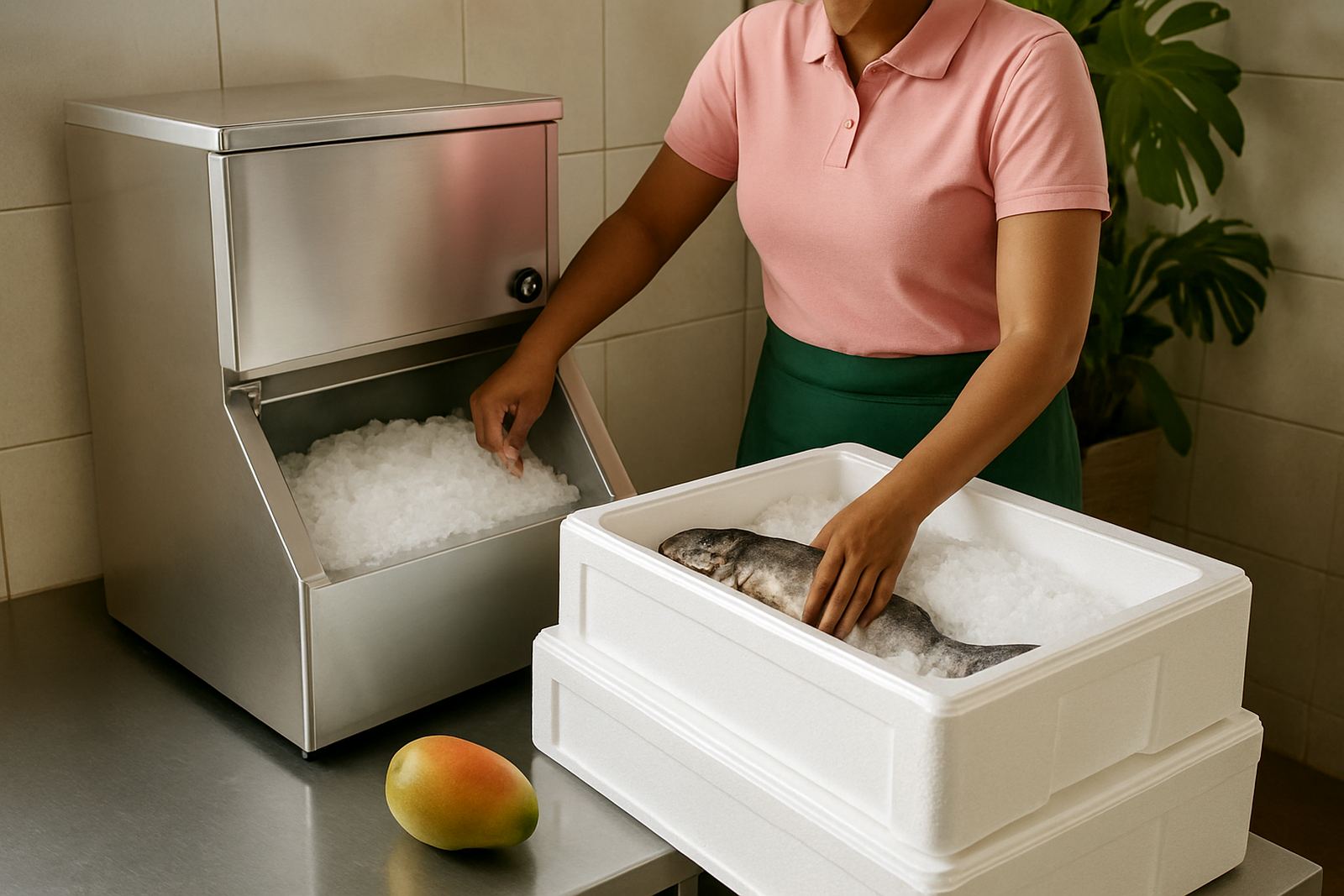
A flake ice machine turns water into thin, dry ice flakes that pack around product more evenly than hard cubes. That makes it a useful choice where temperature needs to drop quickly without bruising delicate stock. In seafood rooms, butcheries, supermarkets and food prep areas, flake ice helps keep fish, prawns, salads and tray displays colder for longer, especially during load-shedding or busy trade periods when doors open often.
Because the ice is soft and easy to spread, staff can use it for display beds, crate packing, transport coolers and short term chilling. It is not only for food either. Some operations use it for product presentation, flower cooling and light medical or laboratory needs where controlled chilling matters. If you need ice that covers more surface area and settles neatly around items, flake is usually the better option.
- Fast chilling for fresh stock and displays
- Soft ice that packs around product without heavy pressure
- Works well where stock is handled often through the day
- Useful in cold rooms, prep rooms and retail counters
Common sizes and output options
Flake ice machines are selected by daily output, storage needs and how often the ice is used. Smaller units suit cafés, fish shops and light retail use, while larger machines are better for seafood processors, wholesalers and busy supermarkets. Output is usually measured in kilograms per 24 hours, and the right size depends on how much ice you use before the next batch is needed. A machine that is too small will run flat out and wear sooner, while an oversized unit can waste electricity and water if the demand is low.
Typical sizes range from compact 80 kg to 150 kg per day units up to medium and larger systems in the 300 kg, 500 kg and 1 ton plus range. Some models sit on an ice bin, while others feed a separate storage bin or a cold room tray. For Cape Town businesses close to the coast, stainless steel outer finishes and protected components are worth checking because salty air and humidity can shorten the life of exposed parts.
- Small: about 80 kg to 150 kg per 24 hours
- Medium: about 200 kg to 500 kg per 24 hours
- Large: 1 ton and above for high volume use
- Options include self-contained or remote ice storage setups
Where flake ice fits in Cape Town businesses
In Cape Town, flake ice is most often used where freshness and display matter. Seafood traders in the Cape Town CBD and Bellville use it for fish beds and crate packing. Cold rooms in Montague Gardens and Milnerton often use it for rapid cooling before stock moves into storage. In Claremont, Somerset West and Fish Hoek, smaller food businesses choose compact machines for daily prep and display work.
It also suits places that need a neat presentation on the counter. Flake ice settles around product and gives good coverage without big gaps. That helps maintain temperature on busy days, especially where the cabinet is opened often. If your stock sits near doors, market stalls or delivery points, flake ice can help reduce warm spots and slow melt down. It is also handy for coastal businesses that see higher ambient humidity, because a good machine with correct drainage and airflow will hold up better than a unit squeezed into a tight hot space.
- Seafood counters and fishmongers
- Butcheries, supermarkets and deli displays
- Cold rooms and packing areas
- Flower cooling and short term product chilling
Power, water and installation checks
Most flake ice machines need a reliable power supply, a proper water connection and enough ventilation around the unit. Smaller machines may run on standard single phase supply, while larger commercial units often need three phase power. Before installation, it is worth checking the existing breaker size, cable condition and whether the site can handle startup load. During load-shedding, a machine cannot work properly without backup power, so some clients pair it with generator support or a managed power plan for critical stock.
Water quality matters too. Hard water can cause scale, block small passages and reduce ice output. In many Cape Town areas, a filter or pre-treatment helps keep the machine cleaner and lowers service call outs. Drainage must also be planned properly because melt water and wash down water should move away quickly. The unit needs open space for air flow, a level base and enough room for maintenance access. If it is being fitted near a cold room or prep area, the position should allow easy loading of the bin without staff carrying ice too far.
- Check whether the site has single phase or three phase power
- Allow for water supply, filtration and drainage
- Leave space for airflow and service access
- Plan for backup power where stock is critical
Care, cleaning and service life
Flake ice machines work best when cleaned on a set schedule. Scale, dust and blocked filters are common causes of poor output and early wear. The machine should be wiped down, the water system checked, and the storage bin kept free of old ice build up. In coastal areas, corrosion on fasteners, panels and electrical parts can start sooner if the unit is not cleaned and inspected regularly. A quick monthly check is useful, while more detailed servicing should be done at agreed intervals depending on usage.
Watch for thinner ice, slow production, odd noises, leaking water, or ice that smells stale. These signs usually point to water problems, airflow issues, worn components or refrigerant trouble. If the machine is running longer than normal to make the same amount of ice, it is costing more to operate and may be close to a bigger fault. Good care helps the equipment last longer and keeps product safer. It also avoids surprises during busy weekends and holiday trade, when a breakdown can affect sales quickly.
- Clean filters and check water quality regularly
- Remove scale before it builds up
- Inspect bin, drain and seals for dirt or blockage
- Book service early if output drops or ice quality changes
What to check before you order
Before ordering a flake ice machine, start with the amount of ice you actually use in a day and how quickly you need it to recover after busy periods. Then check the space available, the power supply, water feed and drainage point. If the machine will stand near a fish room, prep room or display counter, measure access width as well, because bigger units can be awkward to move into place. Ask whether you need a built in bin, a separate storage bin, or a remote arrangement linked to a cold room.
It also helps to confirm the operating environment. A machine installed in a hot kitchen, near an oven or in a cramped plant space may need better ventilation than one in a cooler back room. For coastal sites, ask about stainless parts and protection against humidity. For municipal compliance, ensure drainage and water points are done neatly and safely, especially where public food handling is involved. If the site already has refrigeration equipment, a technician should check how the new machine will fit into the existing electrical and maintenance schedule so the whole system works properly.
- Daily ice demand and peak usage
- Available floor space and access route
- Electrical supply and backup plan
- Water quality, filtration and drainage
Key facts
| Typical output | 80 kg to 1 ton plus per 24 hours, depending on model |
|---|---|
| Ice type | Soft flake ice for packing, display and fast chilling |
| Power supply | Single phase on smaller units, three phase on larger commercial units |
| Water requirement | Clean mains water with filtration recommended in hard water areas |
| Installation needs | Level base, airflow clearance, drainage and service access |
| Best use | Seafood, retail display, prep rooms, cold rooms and transport chilling |