How a blast chiller works in daily kitchen use
A blast chiller is a refrigerated cabinet or trolley unit that takes hot food from cooking temperature to safe chilled storage much faster than a standard fridge. Instead of leaving pans on a prep table to cool slowly, the machine uses forced cold air and controlled airflow to bring the core temperature down in a planned cycle. That matters for food safety, shelf life and steady service when your team is turning out meals all day.
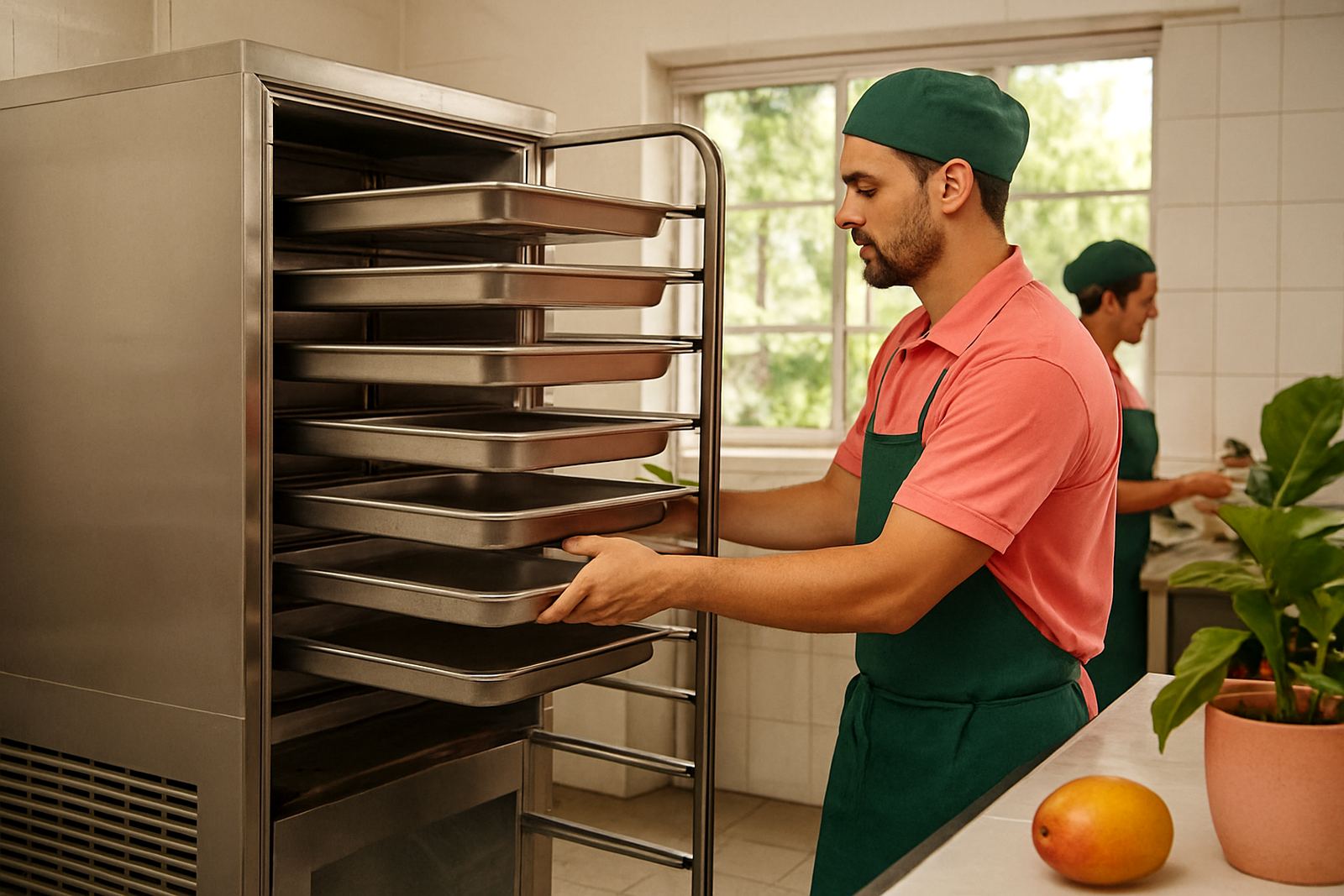
In practice, you load trays of cooked product, close the door and set the cycle. The unit chills the food quickly, then often shifts into holding mode once the target temperature is reached. This helps protect texture and moisture, so sauces, cooked meat, pastry fillings and plated items keep better quality. In Cape Town kitchens, where power interruptions and busy lunch prep can throw timings off, that control is a real help.
Blast chillers are not just for large factories. Smaller restaurants in the CBD, hotel kitchens in Milnerton, bakery prep rooms in Bellville and caterers working from Somerset West all use them for better batch control. A proper install and the right ventilation around the unit make a big difference to how well it performs.
Sizes, cabinet formats and tray capacity
Blast chillers come in compact counter units, upright cabinet models and larger trolley systems. The right size depends on how much food you chill per shift, what pans you use and how much floor space you can spare. We normally match the cabinet to the load pattern, not just the room size, because an oversized machine in a small kitchen can become awkward fast.
Typical options include:
- Small counter unit for light prep runs, often 3 to 5 trays
- Mid-size upright cabinet for 5 to 10 trays
- Large cabinet or pass-through unit for 10 to 20 trays
- Trolley blast chiller for bulk production and central kitchens
- Multi-cycle models with soft chill and hard freeze settings
Tray spacing matters as much as capacity. If pans are packed too tightly, cold air cannot move properly and the cycle takes longer. When ordering, check the tray size, shelf pitch and whether your existing gastronorm pans will fit. If you use deep trays for soups or bulk sauces, you need a model that can handle the depth without slowing the pull-down too much.
Where blast chillers suit best in Cape Town kitchens
Blast chillers suit any operation that needs cooked food cooled quickly before storage or service. That includes restaurants, bakeries, canteens, hotels, butchery prep areas, deli kitchens and food production spaces. They are especially useful where a team cooks in batches early in the day, then stores chilled product for later service. It keeps the workflow cleaner and cuts the risk of warm food lingering too long.
They also help where compliance checks are strict. Food handlers must be able to show safe cooling practice, and a blast chiller gives you a clear process to follow. For sites near the coast, the cabinet should be installed where salt air and condensation will not build up around the condenser. In humid areas like the Southern Suburbs or Fish Hoek side, good room airflow and regular cleaning are important.
Common use cases include:
- Cooling soups, sauces and stews after cooking
- Chilling baked goods before icing or packing
- Preparing proteins for later service or vacuum packing
- Holding plated meals for functions and banqueting
- Reducing wastage when prep runs change during load shedding or busy service periods
Installation needs, power supply and drainage
Blast chillers need the right electrical supply, clear airflow and a sensible drain arrangement. Some smaller units can run on standard single-phase supply, while larger cabinets and trolley models may need three-phase power. Before we install, we check the site load, plug point position and whether the board has space for the circuit. If the kitchen already runs ovens, dishwashers and extraction fans, the electrical planning must be done carefully.
The unit also needs room to breathe. The condenser must not be pressed against a wall or blocked by stacked boxes. A cramped install can cause high head pressure, longer cycles and unnecessary call-outs. Where drainage is required, we make sure the condensate can run away properly and will not pool under the machine. That matters on tiled floors that get washed down often.
In some Cape Town kitchens, power backup is part of the plan. If you run generators or inverter systems during outages, it is worth checking whether the blast chiller can restart properly after a power cut and whether the supply is stable enough for the compressor. We can assess the site and advise on practical placement, cable routing and service access. A neat install is easier to clean too, which saves time every week.
Cleaning, servicing and common faults to watch
A blast chiller needs regular care if you want steady pull-down times and low running costs. Dust, grease and flour can clog the condenser, especially in bakeries and takeaway kitchens. Door seals should be checked for cracking or hard spots, and the evaporator area must be kept clear. If the unit is not cleaned, it works harder and the compressor wears out faster.
Watch for signs like food taking longer to chill, frost building up too quickly, warm spots inside the cabinet or noisy fans. These can point to low gas, blocked airflow, a faulty thermostat or a weak compressor. In some cases the fault is simple, but ignoring it usually makes the repair more expensive later on.
- Clean the condenser on a set schedule
- Check door gaskets for gaps and tears
- Keep trays and rails free of grease build-up
- Book leak detection if the unit loses performance
- Service before peak summer trading, not after a breakdown
Our team handles refrigeration repairs, gas refills, thermostat replacement and compressor work for commercial kitchens across Montague Gardens, Claremont, Bellville and the CBD.
What to confirm before you place an order
Before you order a blast chiller, check the food volume you need to cool per day, the pan sizes you use and the space available for the cabinet door to open fully. It is also worth knowing whether you need chill only, chill and freeze, or a unit that can switch between both. That choice affects the size, the electrical draw and the cost of installation.
Ask about core temperature pull-down times, tray count, insulation thickness and service access at the rear or side. If the unit must sit in a hot kitchen next to ovens or fryers, the machine may need more clearance and better extraction around it. If you are buying for a food room that is part of a new fit-out, plan the refrigeration point early so the power, drain and floor finish all line up. A late change can slow the whole job.
It also helps to know the maintenance plan from day one. A blast chiller that is serviced regularly will give you better control, fewer breakdowns and less product loss. We can help you choose the right machine for your operation and set it up so the kitchen team can use it properly from the start.
Key facts
| Product type | Commercial blast chiller for rapid food cooling |
|---|---|
| Capacity options | Compact, upright cabinet and trolley formats |
| Tray count | Typically 3 to 20 trays depending on model |
| Power supply | Single-phase on smaller units, three-phase on larger units |
| Installation needs | Clear airflow, level floor, drainage and service access |
| Service options | Installation, repairs, gas refills, leak detection and compressor replacement |