What an evaporator coil does in a cooling system
The evaporator coil is the part of the refrigeration system that absorbs heat from the room or cabinet. Warm air passes over the coil, the refrigerant inside boils at a low temperature, and that change draws heat away so the space stays at the set point. In a cold room that means produce, meat, dairy or drinks stay within spec. In a freezer room it means the cabinet can hold sub-zero temperatures without fighting the climate outside.
For Cape Town sites, the coil choice must suit the actual duty, not just the room size on paper. A takeaway in Bellville with frequent door opening needs a different coil duty to a small storeroom in Claremont. Coastal humidity in Milnerton or Fish Hoek can also push frost build-up faster, so coil spacing and fan selection matter. If the coil is too small, the room runs long, ice builds up and the compressor works harder than it should.
- Used in cold rooms, freezer rooms, bottle stores and prep areas
- Selected by room volume, product load and target temperature
- Matched to refrigerant type, airflow and defrost method
Sizes, fin spacing and fan options that suit the job
Evaporator coils are not one-size-fits-all. They come in different face areas, row counts, tube diameters and fin spacing. A tighter fin pitch can give more surface area, but in a moist environment it may frost up faster and need more careful defrosting. Wider fin spacing is often a better fit for freezer rooms or humid coastal locations where icing is a regular issue.
Fan motors and air throw also need to be considered. A unit with the wrong air pattern can leave warm pockets near the door or under shelving. That can spoil stock and create uneven pull-down times. For rooms with low ceilings, narrow passages or double-door access, we often specify compact units with directed airflow so the air does not short-cycle across the ceiling.
- Small, medium and larger commercial evaporator units
- Single-fan, twin-fan and multi-fan arrangements
- Different fin spacing for chilled rooms and frozen rooms
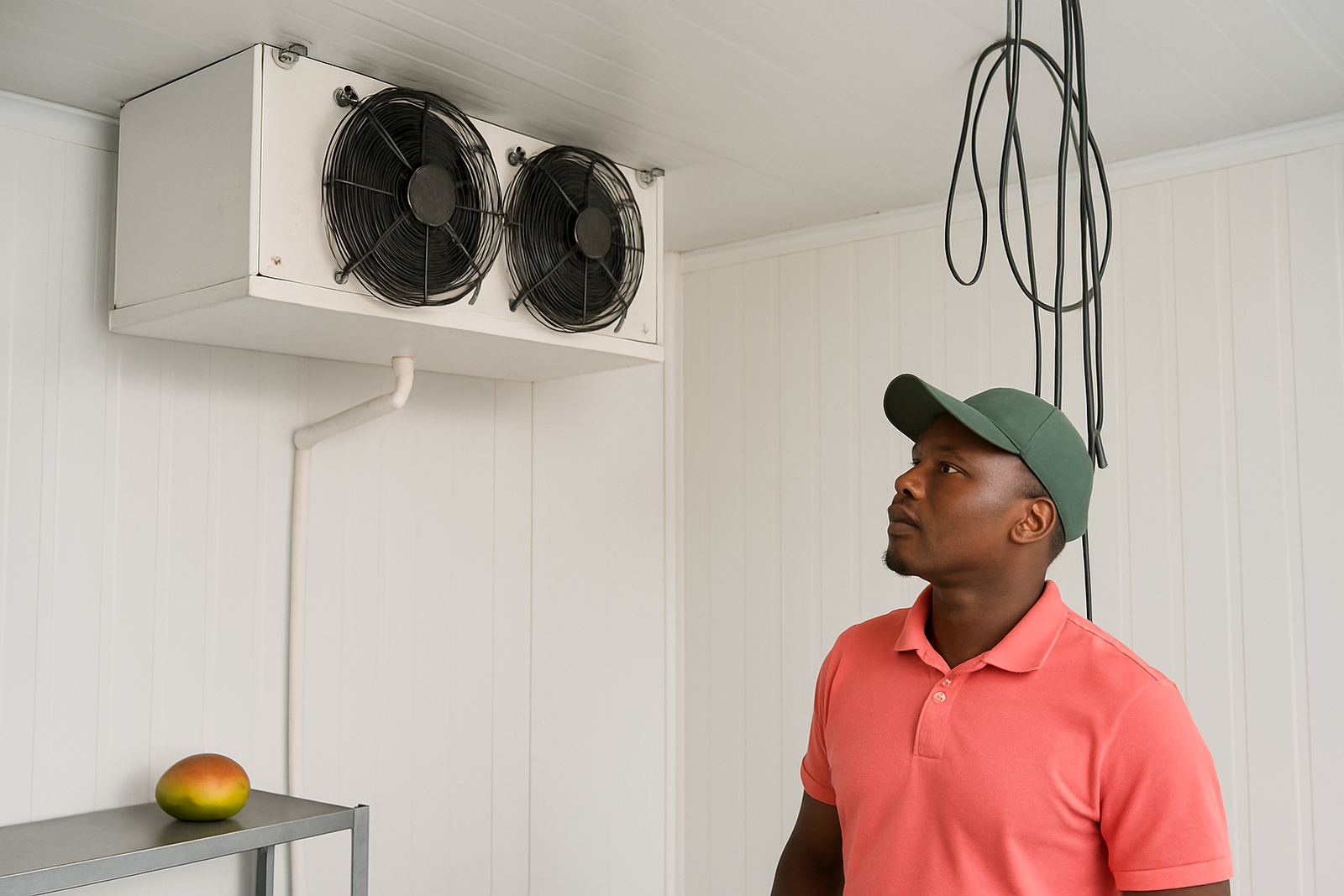
- Wall-mounted and ceiling-mounted options depending on the room layout
Where evaporator units work best
These units are used in spaces where temperature control must stay steady through busy trading hours and load-shedding interruptions. We fit them in butcheries, cafes, restaurants, bakeries, pharmacies, pack rooms and distribution stores. They are also used in home and office setups where a separate cold room or wine store needs controlled cooling.
For Cape Town CBD sites, compact rooms often need low-profile units so there is still space to work around stock and shelving. In Somerset West and the Cape Peninsula, we often look at humidity and salt air exposure too, because corrosion can shorten the life of poor-quality coils and brackets. If the room is near an external wall, proper insulation and vapour sealing are just as important as the coil itself.
- Cold rooms for fresh produce, dairy, meat and drinks
- Freezer rooms for frozen stock and backup storage
- Prep rooms, packing areas and walk-in storerooms
- Controlled storage where product quality depends on stable temperature
Installation, power and refrigerant checks before commissioning
A good evaporator coil install starts with the room itself. We check insulation thickness, door seals, drainage, air return paths and where the unit can be mounted without blocking access. The coil must also be aligned correctly so condensate drains away cleanly and does not pool inside the tray. Poor fall on the drain line can lead to water leaks, ice and odours.
On the power side, the fans and controls need a supply that suits the load and the site conditions. Some rooms run on dedicated circuits with proper isolation and surge protection, which is worth having when the area sees load-shedding or unstable supply. The refrigerant side must be sized to the compressor, pipe lengths and gas type. If the charge is off, the coil may underperform even though the room looks fine on the outside.
We also check access for future servicing. If a unit is boxed in too tightly, cleaning and repairs become harder and costs rise over time.
- Mounting height, airflow direction and service access
- Drain line fall and trap arrangement
- Electrical supply, isolation and control wiring
- Refrigerant line sizing and gas compatibility
Care, cleaning and servicing that keeps cooling steady
Evaporator coils need regular cleaning and inspection. Dust, grease and lint block airflow, while ice on the fins can cut heat transfer. In food sites, a dirty coil can also spread smells and make the room harder to keep at the right temperature. We recommend routine checks based on use, not just the calendar. A busy kitchen in the CBD will need more attention than a lightly used storeroom in Milnerton.
During service we look at fan motors, bearings, wiring, thermostat response, drain pans, defrost operation and signs of refrigerant leak. If the coil is freezing unevenly or has oil stains, that often points to a gas problem or a leak somewhere in the line set. Catching it early can save the compressor from extra strain. It also keeps the running cost lower, which matters when power prices keep moving up.
- Clean fins and fan blades on a routine basis
- Check for ice build-up, blocked drains and water leaks
- Test thermostats, sensors and defrost cycles
- Inspect for corrosion, especially near the coast
What to confirm when ordering the right coil
To order the correct evaporator coil, we need the room size, product type, target temperature and how often the door opens. We also need to know whether the room is chilled or frozen, what compressor is in use, and what refrigerant the system runs on. If the old coil failed, a photo of the nameplate and the old layout helps us match the replacement properly.
It also helps to know the site conditions. A restaurant near the harbour has different corrosion exposure to a dry inland storeroom. A freezer room with heavy stock turnover needs stronger air circulation than a smaller hold-over room. If you are unsure, send the measurements and we can help work through the options before parts are ordered.
- Room length, width and ceiling height
- Target temperature and product type
- Compressor size and refrigerant type
- Power supply details and available mounting space
For Cape Town businesses and homeowners, the right coil is about matching the job properly the first time. That keeps stock safer, reduces call-backs and makes the system easier to live with through summer heat and winter humidity.
Cape Town supply, repairs and replacement support
Tropical Refrigeration works from Montague Gardens and serves Cape Town CBD, Milnerton, Bellville, Claremont, Somerset West and Fish Hoek, with support across the Cape Peninsula. We handle evaporator coil supply, installation, repairs, gas refills, leak detection and compressor replacement for commercial refrigeration and air-conditioning related cooling needs.
If your current coil is iced over, leaking, corroded or simply too small for the room, we can assess it on site and advise on the next step. Mandla Petersen and the team have been supporting Cape Town customers since 2013, with practical attention to room size, power supply and the realities of local conditions. Send the room measurements and the current fault, and we will take it from there.
Key facts
| Type | Air-cooled evaporator coil for commercial and domestic refrigeration systems |
|---|---|
| Typical use | Cold rooms, freezer rooms, prep areas, storerooms and controlled storage |
| Temperature range | Chilled rooms to deep freeze applications, matched to duty |
| Mounting | Wall-mounted or ceiling-mounted, depending on room layout |
| Airflow | Single, twin or multi-fan configurations |
| Key matches | Room volume, product load, refrigerant type, compressor capacity and defrost method |