What a chest freezer does for home and business storage
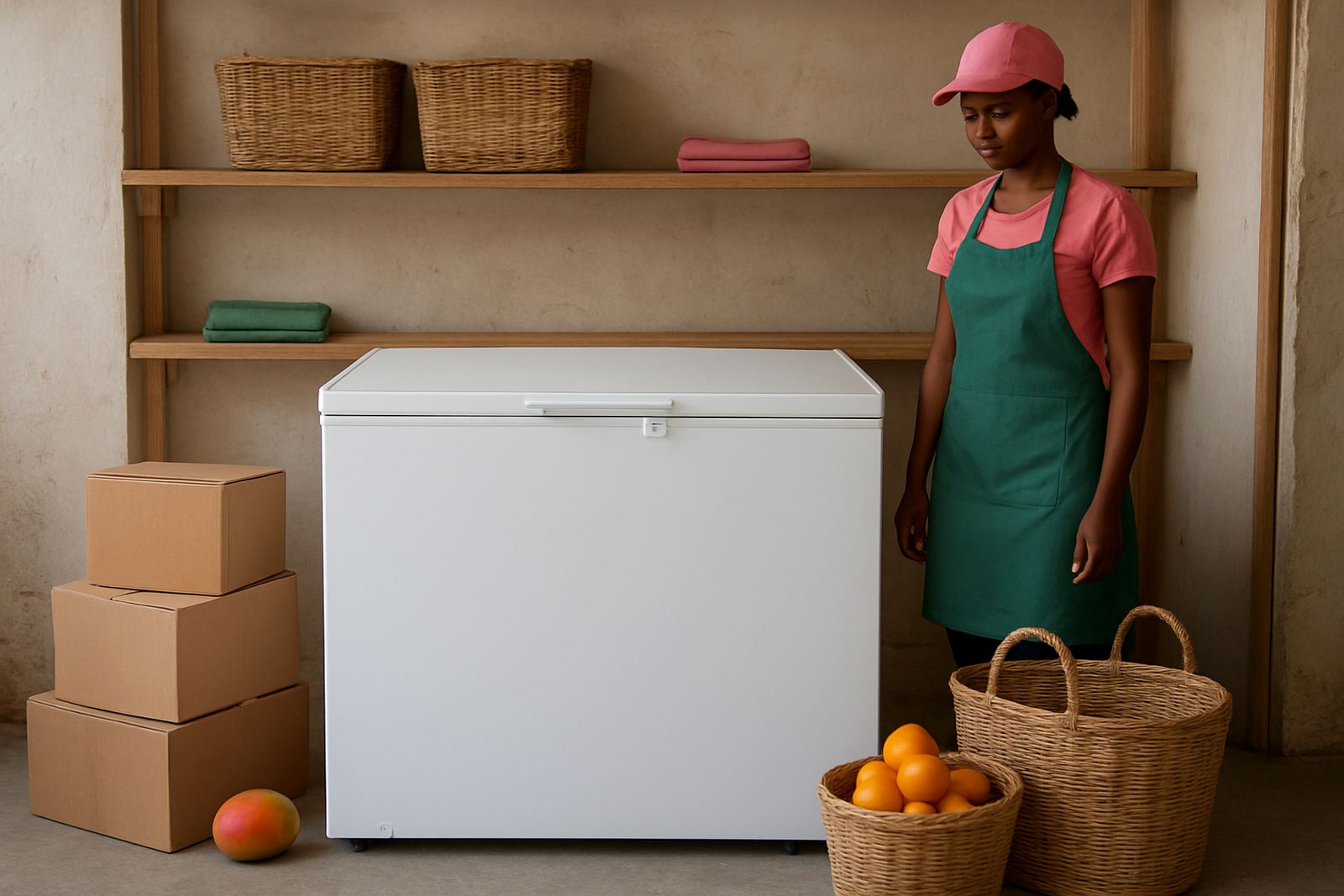
A chest freezer is a top-opening freezer with deep storage space for frozen goods, stock rotation and items that must stay below freezing for long periods. It suits back rooms, kitchens, tuck shops, takeaways, butcheries, guest houses and homes that buy in bulk. Because the cold stays lower inside the cabinet when the lid opens, a chest freezer usually holds temperature better than an upright unit during busy periods and load-shedding.
In Cape Town, that extra holding time matters. If the power trips at the office park in Bellville or there is a long outage in Milnerton, a well-filled chest freezer can keep contents safer for longer, as long as the lid stays closed. For coastal areas like Fish Hoek and Somerset West, the right unit also needs proper airflow around the motor and enough clearance so salt air and humidity do not shorten its life.
Sizes, basket options and storage capacity
Chest freezers come in a range of sizes, from small home units to large commercial cabinets for stock holding. The right size depends on what you store, how often you access it and how much floor space you have. A smaller unit may suit a family garage or a café back room, while larger models work better for bakeries, supermarkets and food prep sites that need steady frozen stock.
- Small units: about 100 to 200 litres for homes, small offices and limited overflow storage
- Medium units: about 200 to 400 litres for takeaways, guest houses and shared staff areas
- Large units: 400 litres and up for commercial kitchens, retail stock and bulk buying
- Single or double wire baskets for organising fast-moving items
- Manual or digital temperature control depending on the model
When choosing, think about how often the lid will be opened, whether goods must be separated by type and whether staff need quick access to daily stock. Bigger is not always better. A freezer that is too large for the load can cycle badly and waste power, while one that is too small gets packed tight and blocks air movement. That can cause cold spots and uneven freezing, which is a problem with meat, dairy and prepared food.
Where chest freezers suit best in Cape Town
Chest freezers are practical in places where frozen stock must stay ready and the space is not always climate controlled. In the Cape Town CBD, they are often used in cafés, convenience stores and shared kitchens. In Claremont and Bellville, they suit school kitchens, canteens and office catering stores. In Somerset West and Fish Hoek, they are common in family homes, guest houses and small food businesses that need room for bulk shopping.
They also work well in back rooms with limited shelving, because the flat top can double as a work surface for sorting stock, although it should not be treated like a packing bench. Leave enough room to open the lid fully and keep the area clear for ventilation. If the freezer will sit near an outside wall or in a warm storeroom, the compressor will work harder, so room temperature and air movement matter.
For businesses, chest freezers are often part of a bigger cold chain set-up with fridges, cold rooms or undercounter units. That makes the freezer useful for buffer stock when deliveries are late, which happens often enough when traffic, power issues or supplier delays get in the way.
Installation, placement and power points
Proper placement is important from day one. A chest freezer should stand level on a firm floor, with enough space around the body for heat to move away from the condenser area. Do not wedge it hard against a wall or box it into a tight cupboard. That can raise running temperatures and shorten compressor life. In damp coastal areas, it is also worth keeping the unit off standing water and away from direct sun through a window.
Most domestic units plug into a standard 230 V outlet, while larger commercial models may draw more power and need a dedicated circuit. If the freezer sits with other equipment on the same line, check the load before adding another appliance. With load-shedding, many clients in Cape Town ask about inverter or generator support. A chest freezer generally handles backup power well if the supply is stable and the changeover is not rough. Sudden cuts and poor voltage can still damage motors and control boards.
- Use a properly earthed outlet
- Keep the cable clear of heat and water
- Allow the unit to stand before switching on after transport
- Check that doors, lids and seals close without lifting
- Make sure the room has enough airflow for the compressor
Care, cleaning and servicing that protect stock
A chest freezer needs simple regular care to keep it freezing properly and to stop frost build-up. Defrost when the ice layer gets thick, clean the lid seal, and wipe the inside with a food-safe cleaner after stock is removed. Heavy frost makes the unit work harder and steals usable storage space. If the lid seal is split or dirty, warm air gets in and the compressor runs longer than it should. On a busy site that can push electricity use up fast, especially during winter when loads are already high.
For commercial units, regular servicing helps catch issues before they become stock losses. That can include leak detection, thermostat checks, compressor testing and gas level checks if the system is not holding temperature. Strange noises, warm side panels, frequent cycling or ice only forming in one section are warning signs. If the freezer has a smell of burnt wiring or it trips the supply, stop using it and have it checked.
We service chest freezers for homes and businesses across the Cape Peninsula, including areas like Montague Gardens, Milnerton and the CBD. A quick repair now is usually cheaper than replacing spoiled stock later, which no one wants during a busy week.
What to check before you place an order
Before ordering a chest freezer, measure the space carefully and check the access route as well. A unit may fit in the room but not through a narrow passage, doorway or stairwell. If the freezer must go through an office block or into a shopfront, check building rules, delivery hours and any site access requirements first.
- Required storage size in litres
- Available floor space and lid clearance
- Single-phase power point or dedicated supply need
- Manual or digital control preference
- Basket layout for sorting stock
- Whether the unit is for domestic, light commercial or full commercial use
It also helps to know what you will store. Frozen meats, ice cream, vegetables and prepared meals all behave differently, and the right temperature range matters. If you run a food business, consistent holding temperature and easy stock rotation are more important than just the biggest cabinet you can find. We can help match the freezer size and service plan to the way you work, so the unit suits the site instead of becoming extra clutter.
Key facts
| Storage type | Top-opening chest freezer for bulk frozen holding |
|---|---|
| Capacity range | About 100 litres to 600 litres, depending on model |
| Power supply | Standard 230 V domestic supply or dedicated commercial circuit |
| Temperature control | Manual dial or digital thermostat, model dependent |
| Typical use | Homes, takeaways, butchers, guest houses, shops and kitchens |
| Service support | Installation, repairs, gas refills, leak detection and thermostat replacement |