What a heat pump does for daily hot water use
A heat pump moves heat from the surrounding air into water, so it uses less power than a standard electric geyser running on elements alone. In Cape Town that matters when load-shedding hits, when a building has high morning demand, or when a guest house needs steady hot water for back to back showers. It is not a magic box, but it is a sensible piece of equipment when hot water costs need to be kept under control.
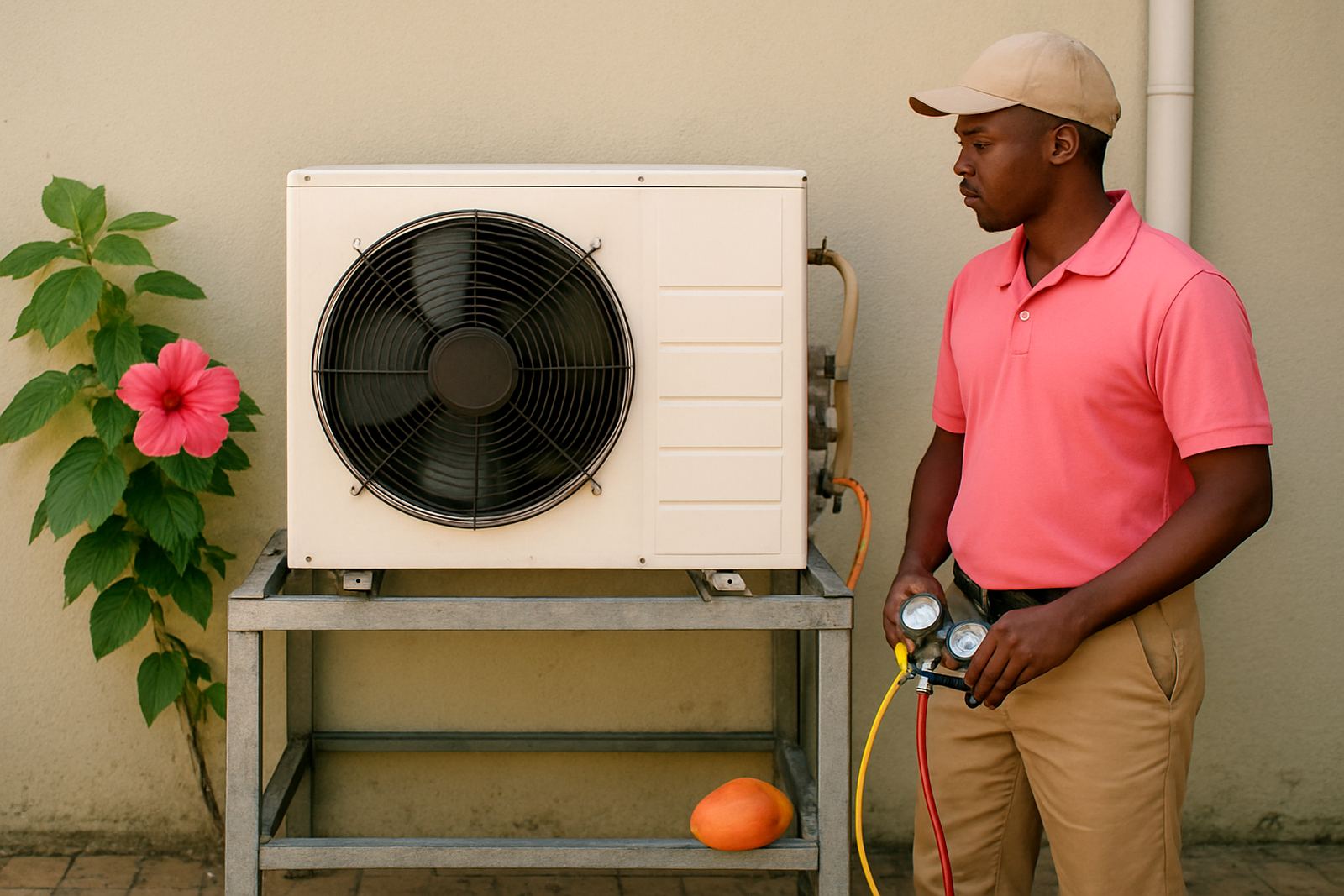
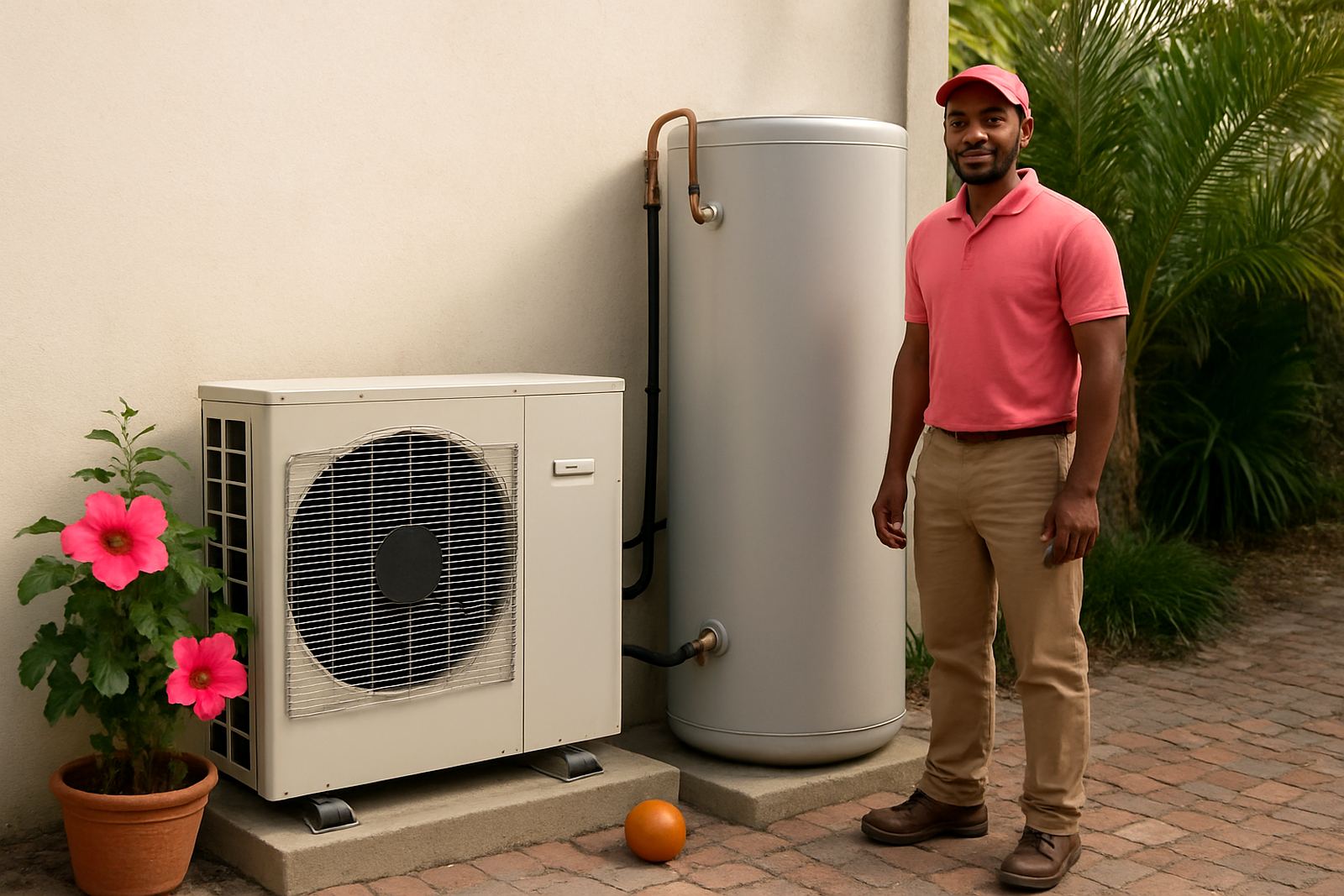
Most units are paired to an insulated storage tank and fitted with a controller, circulation pump and safety valves. They work best where there is enough air movement and space around the unit. On a mild day they run very efficiently, and even in cooler coastal conditions they can still provide useful hot water if the system is correctly sized. A poor installation, wrong tank size or bad pipework will waste power fast.
Sizes and options for different properties
Heat pumps are chosen by hot water demand, not by guesswork. A small home may only need one unit serving a 200 litre or 300 litre tank, while a gym, lodge or busy guest facility may need a larger tank and a higher output unit. The main thing is to match the machine to the number of people using hot water, the number of bathrooms or showers, and the times of day the demand spikes.
Common options include split systems, where the compressor and water tank are separated, and packaged systems where the main components are closer together. Some systems suit roof mounting, while others are better on a shaded wall or a plant area with good airflow. In windy or salty coastal areas, the mounting and casing need proper corrosion protection, otherwise the unit ages quicker than it should.
- Domestic hot water for 2 to 6 people
- Guest houses and lodges with staggered shower times
- Gyms and sports clubs with high morning and evening use
- Small commercial wash-up or staff ablution areas
Where a heat pump suits best in Cape Town
Heat pumps suit places that use a fair amount of hot water every day and need the cost under control. We install and service systems for homes, townhouses, sectional title units, gyms, salons, guest houses and small commercial sites. In areas like Milnerton, Bellville and the CBD, the right unit can help reduce strain on the electrical supply and give a more predictable hot water setup. In Claremont and Somerset West, many clients want better control over operating costs without overcomplicating the plant room.
For a home, the main benefit is steady hot water with lower running costs. For a guest facility, the benefit is having recover time between groups of showers. For a gym, the issue is peak demand and recovery speed, so the installer must look at occupancy and timing. If the site is close to the coast, salt air and humidity need to be taken seriously, because a heat pump in Fish Hoek or near the bay will need better care than one inland. People often forget that placement matters as much as the unit itself, and then wonder why performance drops.
- Good airflow around the unit
- Access for maintenance and cleaning
- Short, well insulated pipe runs
- Protection from direct sea spray where possible
Installation, electrical load and water connections
Correct installation is the difference between a system that saves power and one that gives trouble. The site must be checked for electrical capacity, tank connection points, drainage for condensate and safe access for technicians. Some jobs need a tie in to an existing geyser line, while others call for a fresh tank and a control setup from scratch. We look at switchgear, isolators, pipe sizing and whether the location allows proper service access later on.
Heat pumps need a suitable electrical supply and a proper isolator. They are not usually heavy power users compared with an element that runs hard, but they still need correct cable sizing and protection. On the water side, valves, non return fittings and pressure control must be installed properly. If the pipe insulation is poor, the system loses heat and has to work harder. That sort of detail is where a lot of money gets wasted, and it is often missed on quick jobs.
We also check whether the building has enough space for safe airflow and whether the chosen point is exposed to dust, kitchen grease or recycled warm air. A heat pump installed next to the wrong exhaust path will underperform, no matter what the brochure says.
Care, servicing and common faults
Like any mechanical system, a heat pump needs cleaning and periodic checks. Filters, coils, fans and drainage points should be inspected so the unit can breathe properly and move heat without strain. In Cape Town, dust from building work, salt in the air and summer debris can all build up on the coil fins. If the system is left too long, the compressor works harder and the water takes longer to heat.
Typical callouts include weak heating, noisy fans, tripping, thermostat problems, low output, pressure faults and leaks around fittings. Sometimes the problem is electrical, sometimes it is water flow, and sometimes the system just needs a good service. A unit with a blocked coil or poor circulation can look fine from the outside but still perform badly. It is a bit like expecting a car to run well with half the radiator blocked.
- Clean coils and clear airflow paths
- Check thermostat settings and temperature recovery
- Inspect valves, joints and condensate drainage
- Service before winter and again before peak summer use
What to check before you order one
Before ordering a heat pump, check how many litres of hot water you need, when the peak demand happens, and what tank is already on site. It is also wise to note the available electrical supply, the mounting space and whether the location is sheltered from wind, splash and direct sun. If you are replacing old equipment, we will also check the pipework, insulation and valve condition so the new unit is not saddled with old faults from day one.
It helps to know whether you need a quiet unit for a home, a higher recovery setup for a guest facility, or a more hard working system for a gym. Tell us if the site has power cuts, shared water lines or a limited plant room. The more accurate the details, the better the sizing. A quick chat can save a lot of back and forth later on, and it avoids ordering a unit that is too small or over specified.
If you are in Cape Town, Bellville, Milnerton, Claremont, Somerset West or Fish Hoek, send the site details to bookings@tropicalrefrigeration.co.za and we can advise on the practical next step.
How Tropical Refrigeration handles heat pump work
We handle new heat pump installations, repairs, gas related checks where applicable to the system design, and servicing for homes and commercial sites across the Cape Peninsula. Our team works from Montague Gardens and covers Cape Town CBD, Milnerton, Bellville, Claremont, Somerset West and Fish Hoek. For property managers and owners, that means one contact for the equipment, the water side and the electrical coordination needed to get the job done properly.
We are practical about site conditions. If the area is cramped, coastal, exposed to load-shedding or hard to access, we say so upfront and plan accordingly. That includes checking service clearances, drainage, pipe insulation and the condition of the existing geyser tank if one is being reused. Good hot water equipment should work without drama, and the install should be tidy enough to service later without breaking walls or tiles.
Key facts
| Typical capacity range | 200 litre to 500 litre storage tanks, sized to demand |
|---|---|
| Power supply | Usually 220 V to 240 V single phase, subject to model and site load |
| Best use | Domestic hot water, gyms, guest houses and small commercial wash areas |
| Operating conditions | Needs clear airflow, drainage and protection from excess salt exposure |
| Common controls | Thermostat, compressor controller, safety valves and temperature display |
| Service checks | Coil cleaning, fan check, leaks, wiring, insulation and pressure control |