Bottle coolers made for busy service counters
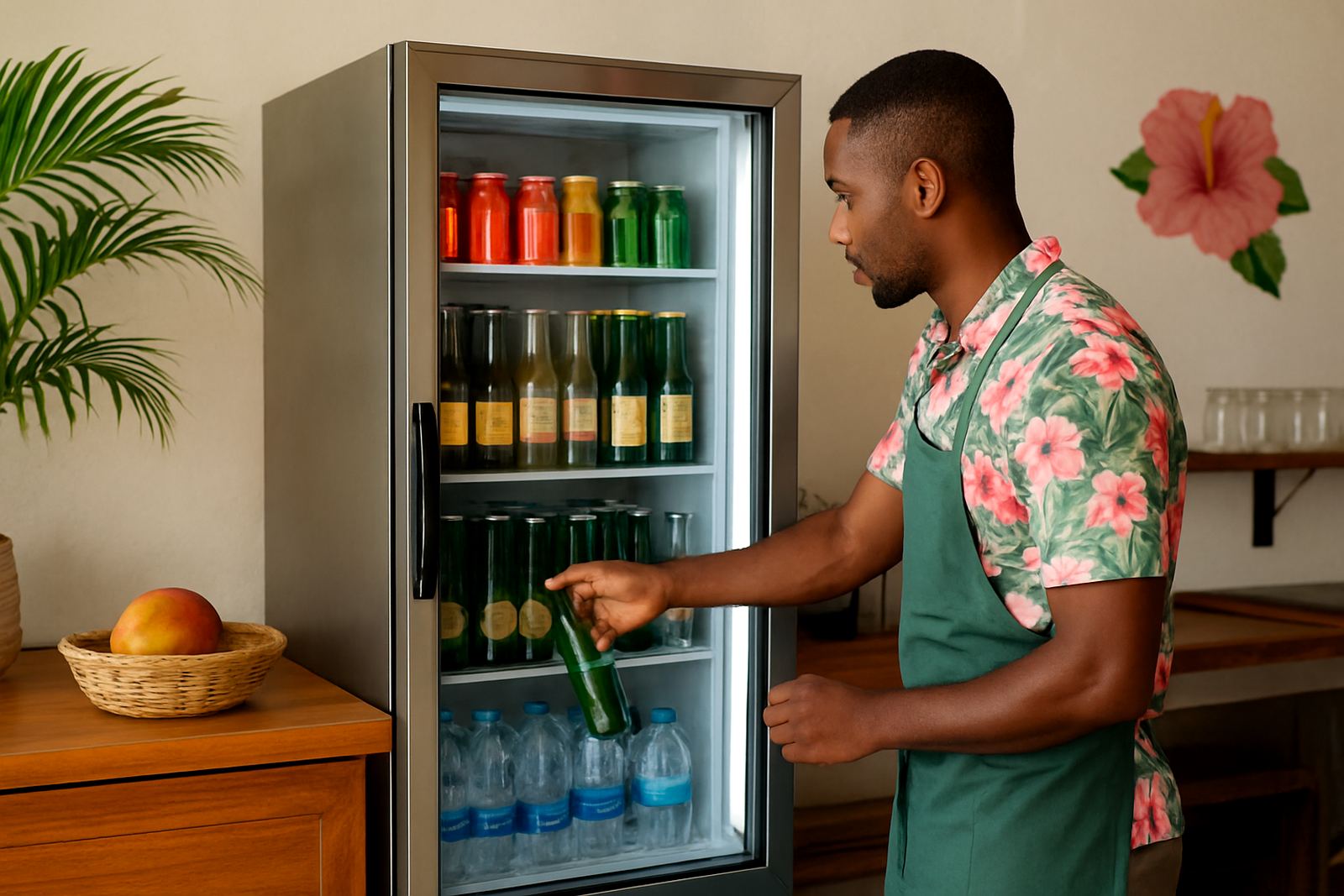
A bottle cooler is a chilled display cabinet built to hold bottled and canned drinks at serving temperature while keeping them visible and easy to grab. In a café, tavern, take-away, bottle store or staff canteen, it helps you move stock faster because customers and staff can see what is available without opening a main cold room. That saves cold air, cuts wastage and keeps service moving when the lunch rush hits.
Most units use a solid refrigerated base with a glass or solid front, internal shelving and a fan-assisted cooling system. Temperature is usually set between 1 and 8 °C, depending on the drinks you store and how often the door opens. In Cape Town coastal air, especially near Milnerton, Sea Point or Fish Hoek, a proper installation matters because salt and humidity can shorten the life of cheap fittings and loose electrical connections.
We work with bottle coolers for small front-of-house spaces and larger service areas, from one-door models to multi-door units for higher volume trade. If you need a unit for daily turnover rather than long term storage, the cabinet should be sized for easy loading, quick recovery after opening and simple cleaning between shifts.
Size and layout options that suit the space you have
Bottle coolers come in several footprints, so the first question is where the unit must sit and how many drinks it needs to hold. A compact under-counter style unit suits a narrow bar, while a larger upright cabinet works well in a restaurant, hotel breakfast area or sports club. Some businesses want a single door for a tight corner. Others need two or three doors to handle peak trade and back-up stock.
- Small counter units for limited floor space and light daily use
- Single-door cabinets for cafés, salons and offices
- Two-door and three-door units for bars, bottle stores and high-turnover venues
- Glass door options for product display and quicker stock checks
- Solid door options where the cabinet sits behind the counter or in a prep area
Size also affects shelving. Adjustable shelves help you store mixed bottle heights, while stronger shelving is better for heavy glass stock. If you sell soft drinks, mixers, water and larger bottles, check the internal height between shelves before you order. A unit that looks big on the outside can be awkward inside if the spacing is too tight.
Where bottle coolers work best in Cape Town businesses
Bottle coolers suit any place that needs cold drinks ready at point of sale. We install and service units for cafés in Claremont, bars in the CBD, take-away shops in Bellville, guest houses in Somerset West, and small outlets in Milnerton and the Peninsula. They are also useful in staff kitchens, convenience stores and waiting areas where people need cold drinks without opening a larger fridge.
In a busy venue, the best location is close to the serving point but away from direct sun, ovens and dishwashers. Heat from cooking equipment makes the compressor work harder and can push power use up. If the unit sits near a doorway or in a windy spot, dust and warm air will also affect performance. A level floor, good air flow around the cabinet and a clear path for daily cleaning all help the cooler keep temperature steady.
For mixed-use sites, we often advise planning the unit around foot traffic and staff movement. If the door opens against a narrow passage, the unit becomes a nuisance. If it is too far from the till or bar, service slows down. Small details like this matter more than people think, especialy in a tight space.
Installation, power and refrigerant points to check
A bottle cooler needs correct placement, proper power and enough ventilation to run well. Most units run on standard 220 V to 240 V single-phase power, but the plug and current draw must still match the site. Where load-shedding is part of daily life, it helps to know whether the cabinet will restart automatically after power returns and whether your backup supply can carry the compressor start-up load.
Good installation also means leaving enough space around the condenser for air flow. If the back of the unit is pushed hard against a wall, heat builds up and cooling drops. In coastal areas, clean air flow is important because dust and salt mix with moisture and form grime on coils and fans. That grime can cause higher electricity use and shorter compressor life.
- Check the voltage and plug type before delivery
- Leave space at the back and sides for air movement
- Use a level floor so doors seal properly
- Keep the unit away from direct heat and sunlight
- Confirm whether the cabinet uses a gas charge that can be tested and topped up when needed
Our team can assess the site, install the unit and test the temperature pull-down after commissioning. If you already have a cooler that is running warm, cycling too often or showing frost where it should not, we can check for leaks, blocked airflow and worn components.
Care, cleaning and service that keep drinks cold
Daily care is simple but important. Wipe spills before they become sticky, keep door seals clean and make sure the vents are not blocked by stock boxes or crates. Shelves should be lifted out and washed regularly, especially in venues that handle sweet drinks or sticky mixers. A dirty condenser makes the unit work harder, and that can show up as warm stock by the end of the day.
Regular servicing should include temperature checks, fan testing, cleaning of coils, inspection of door gaskets and a check for unusual noise or vibration. If the unit is not reaching set temperature, the problem may be a low refrigerant charge, a faulty thermostat, a dirty condenser or a weak compressor start component. These faults often start small and become costly if left too long.
For bottle coolers that sit in humid or salty air, service intervals matter even more. A clean unit runs better, lasts longer and gives fewer surprises during a busy weekend. We also advise checking the cabinet after any power interruption. If the lights are on but the temperature is climbing, it may have tripped on overload and need a proper reset or repair.
What to confirm before you place an order
Before ordering, measure the space carefully and check how the cooler will enter the room, not just where it will stand. A doorway, counter lip or narrow passage can turn a good purchase into a delivery problem. Then match the cabinet to your stock mix, daily volume and staff workflow. A unit that is too small gets overfilled. A unit that is too large wastes space and power.
Ask these points before you confirm the order:
- How many bottles or cans must fit at peak trade
- Whether you need glass doors for display or solid doors for back-of-house use
- What temperature range is needed for your drinks
- Whether shelves can be moved for taller stock
- What power supply is available on site
- How the unit will be cleaned and serviced after installation
If you are replacing an old cooler, compare the footprint, door swing and power draw with the new unit. It is also worth checking whether the old cabinet struggled because of poor ventilation, gas loss or worn seals. That tells you whether you need a like-for-like replacement or a better suited model for the space.
Cape Town supply and after-sales support
Tropical Refrigeration has served Cape Town and the Cape Peninsula since 2013 from our Montague Gardens base. We handle bottle cooler installs, fault finding, gas refills, compressor issues, thermostat replacement and ongoing servicing for businesses in the CBD, Milnerton, Bellville, Claremont, Somerset West and Fish Hoek. Our team works with practical site conditions, from small front bars to busy commercial outlets that cannot afford long downtime.
If your bottle cooler is not holding temperature, leaking gas or making a new noise, we can inspect it and advise on repair or replacement. We also support related refrigeration equipment, so if your drinks cabinet is part of a larger cold room or prep area, the whole setup can be checked as one system rather than piecemeal.
For bookings and service queries, contact bookings@tropicalrefrigeration.co.za. Good cold storage should be simple to use and easy to keep going, and that starts with the right cabinet in the right place.
Key facts
| Product type | Bottle cooler for chilled beverage storage and display |
|---|---|
| Typical temperature range | 1 °C to 8 °C, depending on product load and site conditions |
| Power supply | 220 V to 240 V single-phase |
| Common sizes | Compact, single-door, two-door and three-door units |
| Construction | Refrigerated cabinet with adjustable shelving and fan-assisted cooling |
| Best suited to | Bars, cafés, take-away shops, bottle stores, hotels and staff canteens |