Guesthouse brief: cooler rooms without upsetting bookings
The client was a small guesthouse in Milnerton, serving holiday and business travellers who arrive late, leave early and expect a quiet room at night. The owner wanted air-conditioning in each bedroom, but the property could not afford long room closures, noisy work during breakfast hours, or a system that pushed electricity use too high during Cape Town summer peaks.
The brief was simple on paper: fit split aircons room by room, keep pipe runs neat, and make sure each room could be controlled separately. The building already had mixed wall finishes and narrow roof spaces, so we had to work around existing plaster, furniture, and the normal guesthouse routine. The owner also wanted a solution that would cope with coastal humidity and still perform on hot north-westerly afternoons in Milnerton.
- Property type: 8 room guesthouse
- Area: Milnerton, Cape Town
- Goal: improve sleep comfort in peak summer
- Priority: low noise, tidy pipework, phased work
Site checks, room layouts and electrical limits
Before any drilling started, we carried out a full walk-through of each bedroom, the passage walls, and the outside mounting points. We checked where the condensers could sit without blocking walkways or creating a nuisance for neighbours. We also looked at the existing electrical board so we could plan the loads properly and avoid overtaxing circuits when several rooms were running at once.
Milnerton properties can be exposed to salt in the air, wind-driven dust and damp conditions near the coast, so the installation plan had to suit that environment. We measured each room, checked the wall thickness, identified the shortest sensible pipe routes, and marked positions that would keep the indoor units clear of curtains and bed headboards. A guesthouse has to look orderly, so the final placements mattered as much as the cooling capacity.
- Checked wall positions, drainage fall and external unit clearance
- Measured pipe runs to reduce material use and heat loss
- Confirmed electrical capacity room by room
- Selected mounting points that would not interfere with guest movement
What we supplied and installed
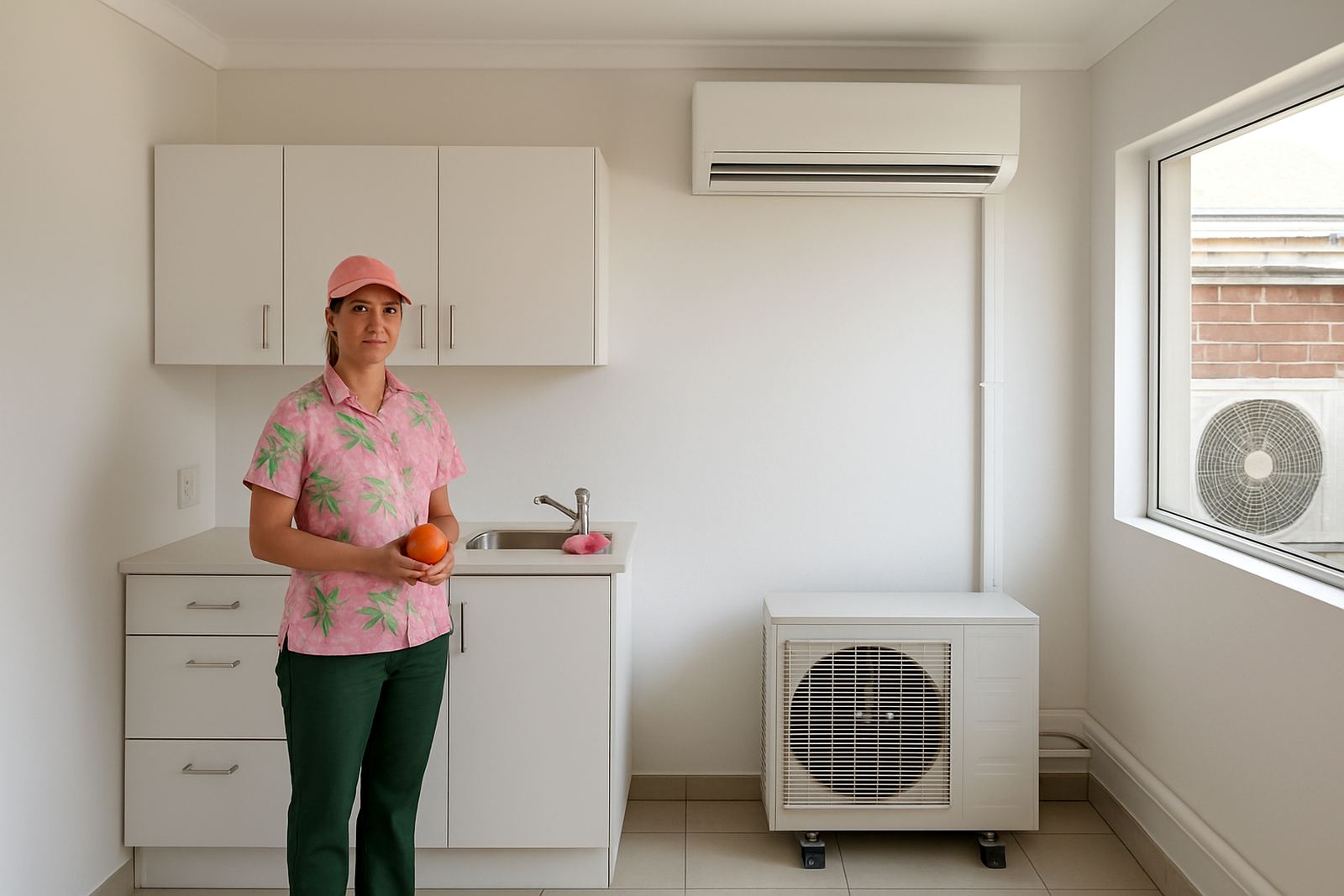
We supplied and installed individual split systems for each bedroom, each one sized to suit the room volume and sun exposure. The indoor units were mounted high on the wall for even air distribution, with external condenser units fixed in positions that allowed service access and good airflow. Every installation included insulated refrigerant piping, wall sleeves, condensate drainage, isolation, and proper weatherproofing at the outside points.
We also arranged the installations in stages, so the guesthouse could keep trading while the work was underway. Bedrooms were done one at a time, then tested before we moved to the next room. That approach kept disruption low and let the owner keep the place open. The whole job ran over 2 weeks, including planning, fittings, commissioning and final checks.
- Split aircon systems fitted room by room
- Refrigerant pipework insulated and neatly clipped
- Condensate drains checked for reliable fall
- Outdoor units positioned for service access and airflow
- Each room tested before handover
Working around guests, finishes and Cape weather
A guesthouse job needs a cleaner approach than a normal house install because people are moving in and out, and every room has to be ready for the next booking. We kept noise down, covered working areas, and avoided unnecessary trips through occupied spaces. In some rooms we had to route pipework through tighter corners than ideal, so we took extra time to keep the wall finishes neat and the final result straight.
Summer in Cape Town can be uncomfortable by late morning, but the bigger challenge in Milnerton is often the humidity and heat build-up after a still day. The units had to cool quickly, dry the room properly, and not cycle too aggressively. We fine-tuned the settings during testing so the owner could explain the controls to guests without confusion. Little things matter in hospitality, and a noisy or badly placed unit gets noticed fast.
We also left service space around each external unit because guesthouse owners need practical access for maintenance, filter cleaning and future repairs. If a condenser is boxed in too tightly, it becomes a problem the first time a technician has to work on it.
Commissioning, handover and what changed after installation
Once all the units were installed, we pressure-tested the line sets, checked the vacuum on each circuit, and verified cooling performance room by room. We then ran the systems under load and confirmed that condensate was draining correctly and that the indoor units were responding properly to remote control settings. Final handover included basic use guidance for the owner and the housekeeping team.
The result was immediate. Rooms stayed more comfortable through the hotter parts of the day, guests could set their own temperature, and the owner no longer relied on open windows or standing fans. That matters in a guesthouse because comfort complaints are usually about sleep, not just heat. With the split systems in place, the rooms were quieter, better controlled, and far easier to prepare for arrivals.
- Better guest comfort during summer stays
- Separate control for each room
- Lower noise than portable cooling options
- Cleaner room presentation for hospitality use
What we would do again on a similar Milnerton project
If we were starting the same type of job again, we would follow the same phased approach. For a working guesthouse, that method keeps the business trading and gives the owner confidence that each room is being finished properly before the next one begins. We would also keep the electrical review at the front of the project, because that is where many small hospitality sites run into delays.
For a coastal property near the Cape Peninsula, we would again plan for corrosion, salt air and regular maintenance access. A good installation is not only about cold air, it is about keeping the system practical to clean, service and use month after month. That is especially true when rooms are occupied daily and staff need a simple, repeatable setup.
This Milnerton project showed that a careful split aircon installation can improve comfort without creating noise, clutter or downtime. The guesthouse now has a setup that suits Cape Town summers and the reality of running accommodation in a busy neighbourhood.
Key facts
| Project type | Room-by-room split aircon installation |
|---|---|
| Location | Milnerton, Cape Town |
| Property type | 8 room guesthouse |
| Timeline | 2 weeks from site check to handover |
| Scope | Supply, installation, testing and commissioning |
| Key consideration | Low noise, coastal humidity, guest turnover, tidy pipework |