Why a gas top-up is not a cure
When a cooling system starts blowing warm air, cycling longer than usual, or struggling to pull down temperature, many people ask for a gas refill straight away. That sounds simple, but refrigerant does not get used up like petrol. If the level is low, there is usually a leak, a loose joint, damaged pipework, or a problem inside the system that needs attention.
A proper top-up without fault-finding may get the unit going for a short time, then it fails again. That is when the bill starts climbing. You pay for gas, then you pay again for another call-out, and the real fault still sits there. We see this often in Cape Town homes, offices, and small shops where systems are pushed hard through summer and then struggle even more after power interruptions.
What a technician should check first
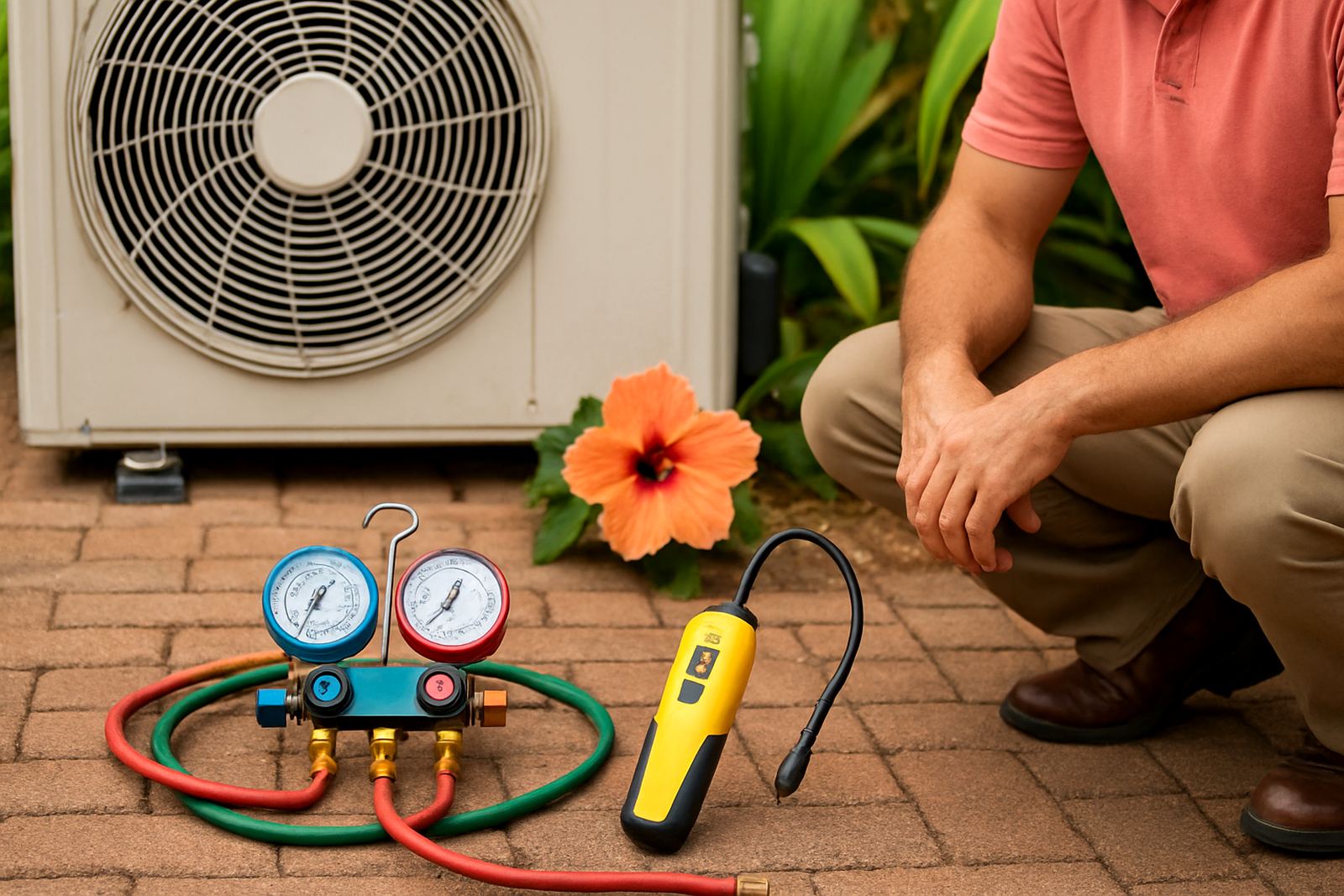
A good repair starts with basic checks, not guesses. The technician should inspect airflow, listen for unusual noises, test pressures, look for oil marks around joints, and check whether coils are dirty or blocked. On refrigeration equipment, door seals, thermostat settings, and fan operation matter just as much as gas levels.
- Visible signs of leakage around pipes, valves, and fittings
- Ice on the evaporator or suction line
- Dirty indoor or outdoor coils
- Weak airflow from blocked filters or a failing fan
- Electrical faults after load-shedding or power surges
If the system is undercharged because of a leak, the leak must be fixed before any gas is added. If the compressor is weak, the thermostat is faulty, or the condenser is clogged with dust, a regas will not solve the problem. It may even mask the fault long enough for more damage to happen.
Cape Town conditions that make leaks more common
In the Cape Peninsula, weather and placement matter. Coastal humidity can speed up corrosion on fittings and coils. In areas like Milnerton and Fish Hoek, salt in the air can shorten the life of exposed parts. In Bellville, dust build-up around outdoor units is a common issue. In the CBD, older buildings often have cramped installations and long pipe runs that are harder to service properly.
Power cuts and voltage dips can also stress compressors, contactors, and control boards. After load-shedding, a system may start up against a higher load and reveal a weak part that was already on its way out. That is why a quick gas fill is rarely the full answer. You need to know why the system lost cooling in the first place.
For cold rooms and freezers, a small leak can cause more than discomfort. It can affect stock, spoil food, and put pressure on municipal compliance where temperature control is critical for business operations.
When a regas makes sense and when it does not
A gas top-up is only sensible after the system has been checked and the leak repaired, or when a controlled recovery and recharge is needed during a proper repair. That way the technician knows how much refrigerant the system should hold and can verify that the pressures and temperatures are within range.
It does not make sense when the unit has an active leak, a blocked coil, a damaged compressor, or poor airflow. It also does not help if the system was installed badly in the first place. A badly run pipe line, poor insulation, or a badly sized unit will keep causing trouble. The right fix may be repair, part replacement, or in some cases a full service with correction of the installation fault.
- Use a regas after leak repair and system testing
- Repair damaged pipework, valves, or coils before charging
- Replace failing parts such as thermostats, fans, or compressors where needed
- Service filters and coils so the system can actually cool properly
A local example from a Somerset West office
A small office in Somerset West called us about an aircon that had stopped cooling properly before a busy week. They had already been told to “just put gas in”. The unit was undercharged, yes, but the cause was a slow leak at a flare joint outside. The indoor filters were also heavily clogged, which made the system work harder than needed.
We repaired the joint, checked for further leakage, cleaned the filters and coils, then recharged the system to the correct level. The office noticed the difference straight away. More important, the problem did not return the next month. If they had only asked for gas, the leak would have carried on and the same issue would have come back after a few days or weeks.
How we handle repairs, regas and follow-up
At Tropical Refrigeration, we handle home and office air-conditioning plus commercial refrigeration across Cape Town from our Montague Gardens base. We serve the CBD, Milnerton, Bellville, Claremont, Somerset West and Fish Hoek, with practical fault-finding before any gas work is done. That approach saves time and keeps equipment running properly in local conditions.
Our team checks the likely cause, explains what needs fixing, and only proceeds once the system is ready for a correct recharge. We do repairs, leak detection, aircon gas refill, aircon service, cold room repairs, freezer repairs, compressor replacement, thermostat replacement and ventilation servicing. For business clients, that means less downtime and fewer repeat call-outs.
- Air-conditioning installs and repairs for homes and offices
- Gas refills after proper leak checks
- Cold room and freezer fault-finding
- Compressor and thermostat replacement
- Service support for commercial sites and smaller premises
What to do if your unit has lost cooling
If your unit is no longer cooling, switch it off if the airflow has dropped badly or if you hear odd noises. Do not keep running a system that is icing up or short cycling. The longer it runs like that, the more damage it can do. Arrange a proper inspection and ask for leak detection before any regas is quoted.
That one step often changes the whole repair. Sometimes it is a simple service. Sometimes a valve, thermostat or fan needs replacement. And sometimes the leak is the real issue. Either way, guessing is expensive and it usually comes back to bite you later, especially in Cape Town where the conditions are not kind to neglected systems.