Why clinic cooling must stay steady all day
Waiting rooms, consulting rooms and minor procedure areas all need different levels of cooling, but none of them should swing wildly between cold and stuffy. In Cape Town, that is harder than it sounds. A clinic near the CBD can get a full afternoon sun load, while a practice in Milnerton or Somerset West may face sea air, humidity and open doors coming and going all day.
When a unit cycles on and off too often, people notice it first. Patients feel uneasy, staff get tired, and a room that should feel calm starts to feel cramped. For clinics, the aim is not icy air. It is even temperature, clean airflow and equipment that keeps running during load-shedding and the hot spells that hit the Peninsula in summer.
- Keep waiting rooms comfortable without overcooling treatment areas.
- Use correctly sized units for each room, not one oversized unit for the whole practice.
- Plan for back-up power where medicine storage or sensitive equipment depends on cooling.
Where clinics in Cape Town usually lose cooling performance
Most cooling problems in a practice start with small issues. Filters clog up with dust, the drain line blocks, a thermostat sits in the wrong spot or the gas level drops slowly over time. In older buildings around Bellville and Claremont, poor insulation and repeated door opening can make the load worse. In Fish Hoek and other coastal areas, salty air can speed up corrosion on outdoor parts if maintenance slips.
We see the same pattern often: a system is working, just not well enough. Staff turn it colder to compensate, which adds wear and pushes electricity use up. If the airflow is weak, or if one room cools properly while the next stays warm, the issue usually sits in the installation, air distribution or a leak that needs proper testing.
- Warm air from a blocked filter or dirty indoor coil.
- Short cycling caused by poor thermostat placement.
- Gas loss from a leak in the line or flare connections.
- Outdoor unit corrosion in humid or coastal areas.
Small faults grow quickly in a busy clinic. Better to sort them before they start affecting patient comfort and fridge reliability.
The right setup for treatment rooms and waiting areas
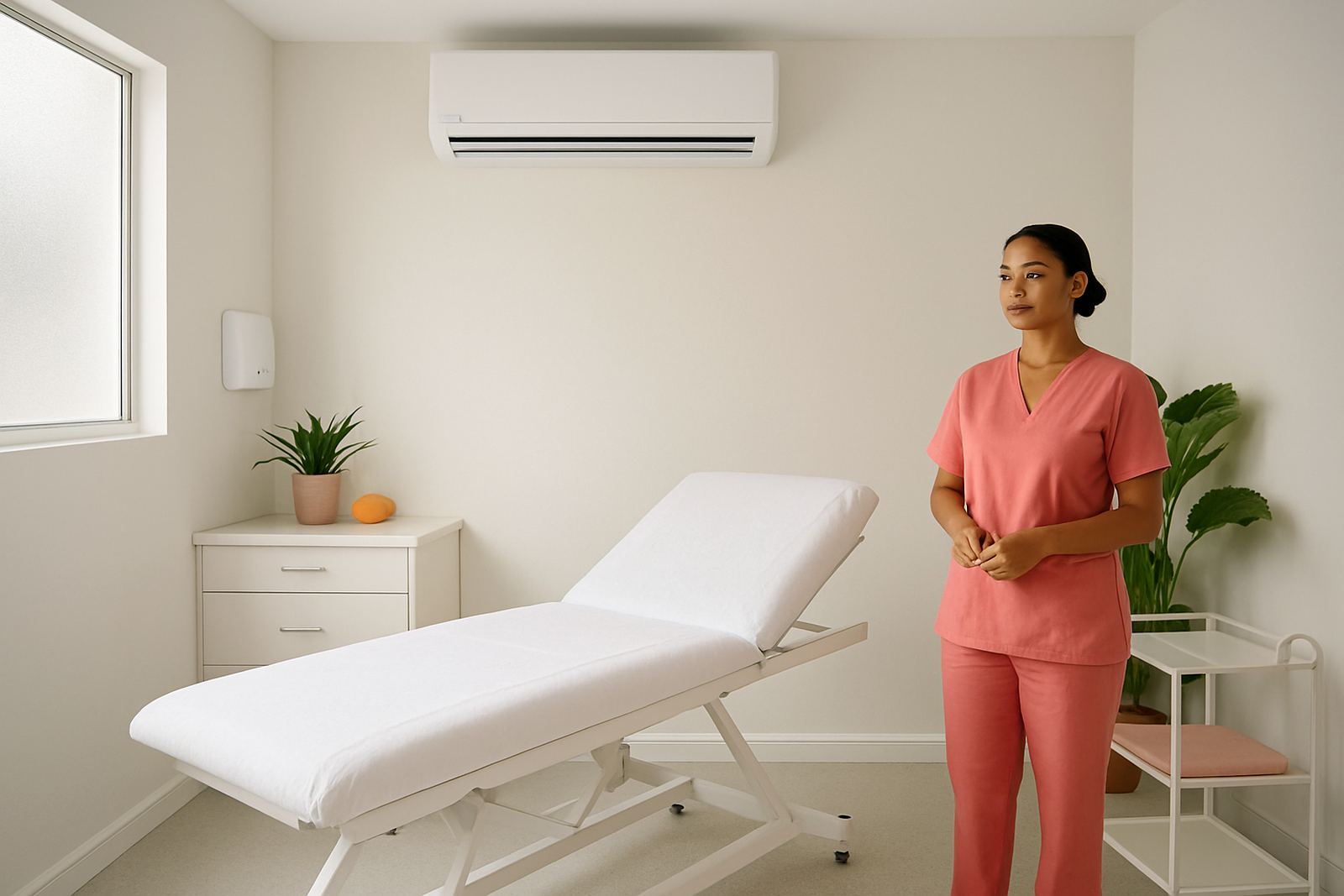
A clinic does not need one cooling plan for every room. A reception area with glass frontage needs something different from a quiet consultation room. Treatment spaces may need tighter control because people are in and out, doors open often, and some equipment gives off heat. The setup should match the room use, floor size and ceiling height, not just the budget.
At Tropical Refrigeration, the approach is practical. We look at the clinic layout, ask how many people use each space, and check where hot spots form during the day. In a small practice in the Cape Town CBD, one system might be enough for a waiting area and a separate unit for the back rooms. In a larger operation in Somerset West, split systems and proper ventilation servicing may be the better answer.
- Room-by-room sizing based on use, windows and occupancy.
- Airflow that avoids blowing directly onto patients or staff.
- Outdoor placement that allows service access and drainage.
- Quiet operation for consulting and recovery rooms.
Why gas refills are never the first answer
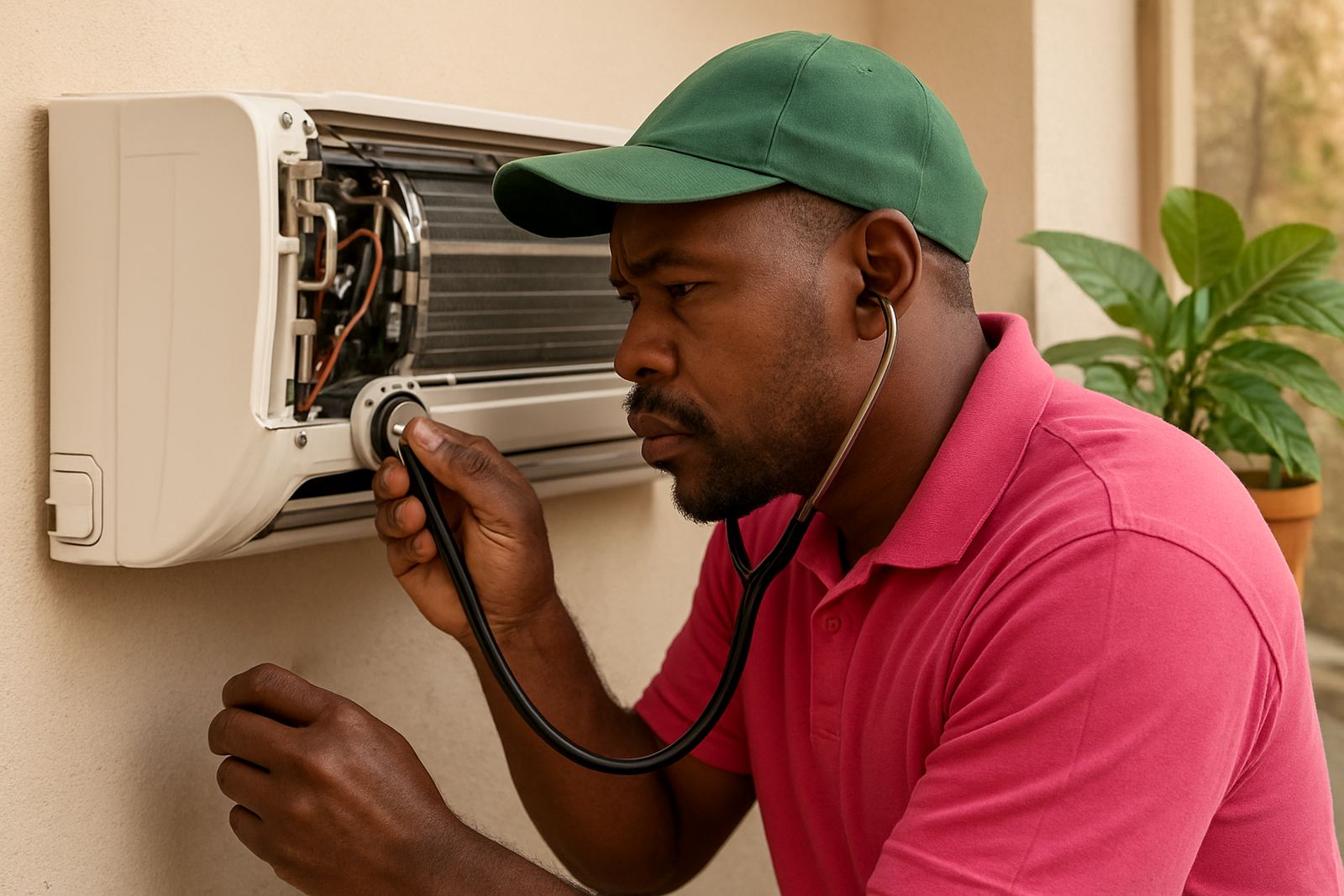
When cooling weakens, some people ask for a gas refill straight away. That can be a mistake. Refrigerant does not disappear on its own. If a clinic system has low gas, there is usually a leak, and that leak needs to be found and repaired before any refill makes sense. Otherwise the same fault comes back and the unit loses performance again.
For clinics, this matters because a cooling fault is often noticed at the worst time. A busy afternoon, a full waiting room, or a procedure room with too much heat in it can throw the whole day off. Proper leak detection saves time and money because it gets to the real cause. If a compressor is drawing too much current, or a thermostat keeps cutting out too soon, those issues should be checked at the same visit.
We also advise clinics to keep a simple service record. The date of the last clean, any parts replaced, and any warning signs from the unit all help when a system starts acting up again.
Cold storage for medicines and stock needs its own plan
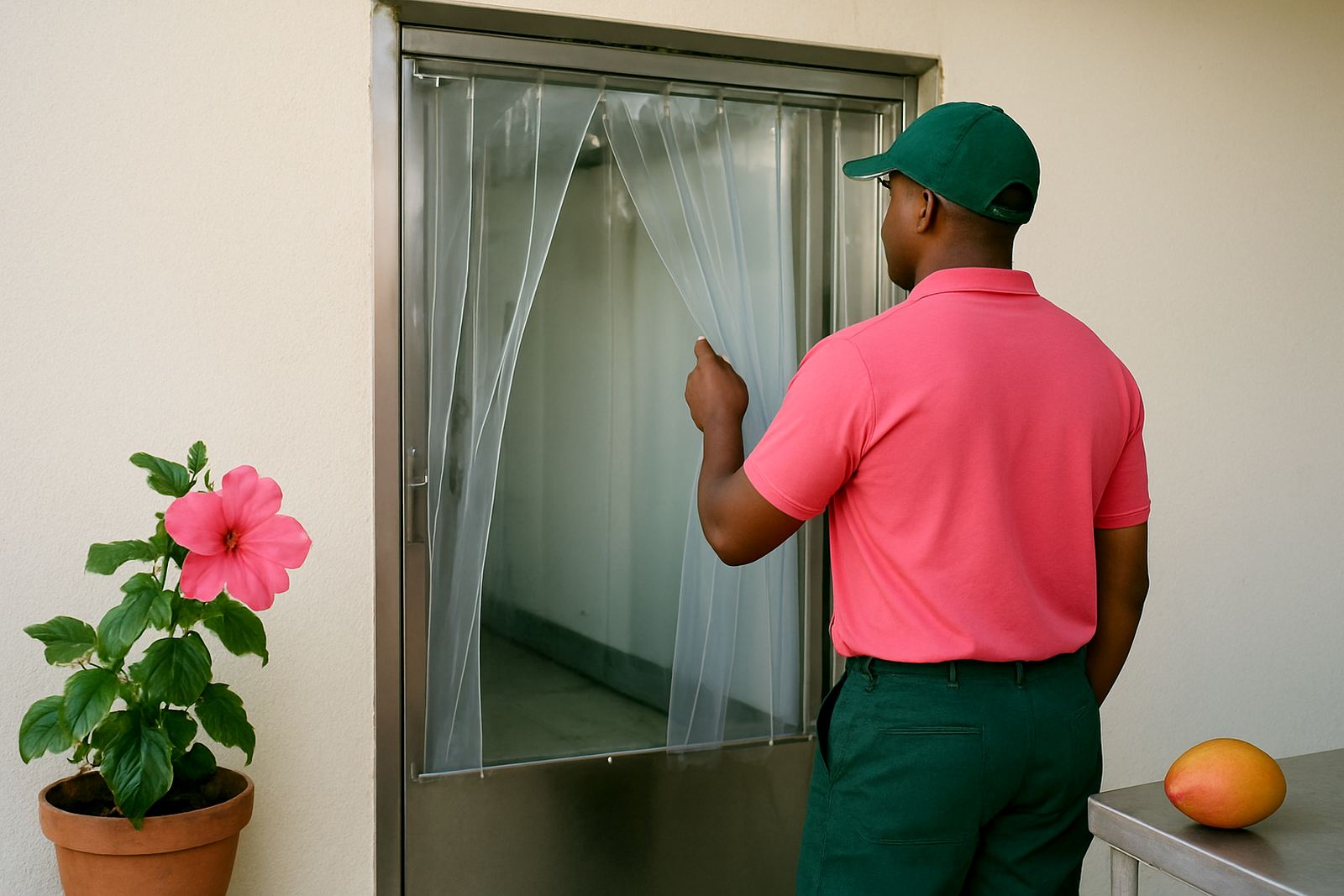
Many clinics rely on a small cold room, vaccine fridge or freezer for medicines, test samples and stock. These units should not be treated like standard household appliances. They need stable power, clean seals, and repairs from people who understand temperature-sensitive storage. A fridge that looks fine on the outside can still drift too warm inside if the thermostat is failing or the compressor is under strain.
We handle cold room repairs, freezer repairs, compressor replacement and thermostat replacement for medical and commercial spaces across Cape Town and the Peninsula. That means we check not only whether the unit is running, but whether it is holding temperature properly across the day and after power interruptions.
- Check door seals and hinges for air leakage.
- Keep condensers clean so the compressor does not overwork.
- Verify temperature recovery after load-shedding.
- Test alarms and backup arrangements where medicines are stored.
For any practice that stores medicines or samples, this is not an area to leave until the fridge starts making noise.
A local Cape Town example from a busy practice
A family clinic in Milnerton recently asked for help because the waiting room was getting too warm by late morning, while two consulting rooms felt uneven and a small medication fridge had started running longer than usual. The staff had been working around it with fans and lower thermostat settings, but the bill was climbing and patients were still uncomfortable.
We checked the full setup, cleaned the indoor units, traced a slow leak on one line and replaced a faulty thermostat on the fridge. The waiting area was rebalanced with better airflow, and the outdoor unit was serviced so it could handle the coastal conditions better. The clinic did not need a full replacement. It needed the right repairs in the right places, done in sequence.
That is often the reality with clinics in Cape Town. The answer is not always new equipment. Sometimes it is proper diagnosis, a careful fix and scheduled maintenance that keeps everything steady through summer heat, winter damp and the odd power cut.
What Tropical Refrigeration does for clinics
From our Montague Gardens base, Tropical Refrigeration supports clinics across Cape Town CBD, Milnerton, Bellville, Claremont, Somerset West and Fish Hoek. We install and repair air-conditioning for waiting rooms and treatment spaces, and we handle refrigeration systems that need dependable temperature control.
Our team includes Mandla Petersen, Anele Jacobs, Ridwaan Daniels, Lindiwe Mokoena, Keegan van Wyk and Zanele Ndlovu, so bookings, site work and follow-up are handled by people who know the realities of local service work. For clinics, that means clear communication, tidy workmanship and practical advice on what to service now and what can wait.
- Aircon installation, repairs, gas refills and service.
- Leak detection for cooling systems and fridge lines.
- Cold room, freezer and compressor repairs.
- Thermostat replacement and ventilation servicing.
If your clinic needs steadier cooling or a fridge that can be trusted, it helps to deal with the issue before it becomes a disruption. A calm room is good for patients, and a reliable system is good for business.