Why placement affects more than just comfort
A well chosen position helps the air move through the room properly, so the unit does not have to fight against itself. If an indoor unit blows straight onto a couch, a bed or a workstation it can feel harsh in one corner and weak in the rest of the room, which usually leads to people lowering the set temperature and wasting power.
We see this often in Cape Town homes and offices where the first install was done for speed instead of airflow. The result is usually poor cooling, hot spots near windows, and extra strain on the compressor. In summer, when the Cape Peninsula gets warm and still, that poor placement becomes obvious very quickly.
Indoor unit placement that works in real rooms
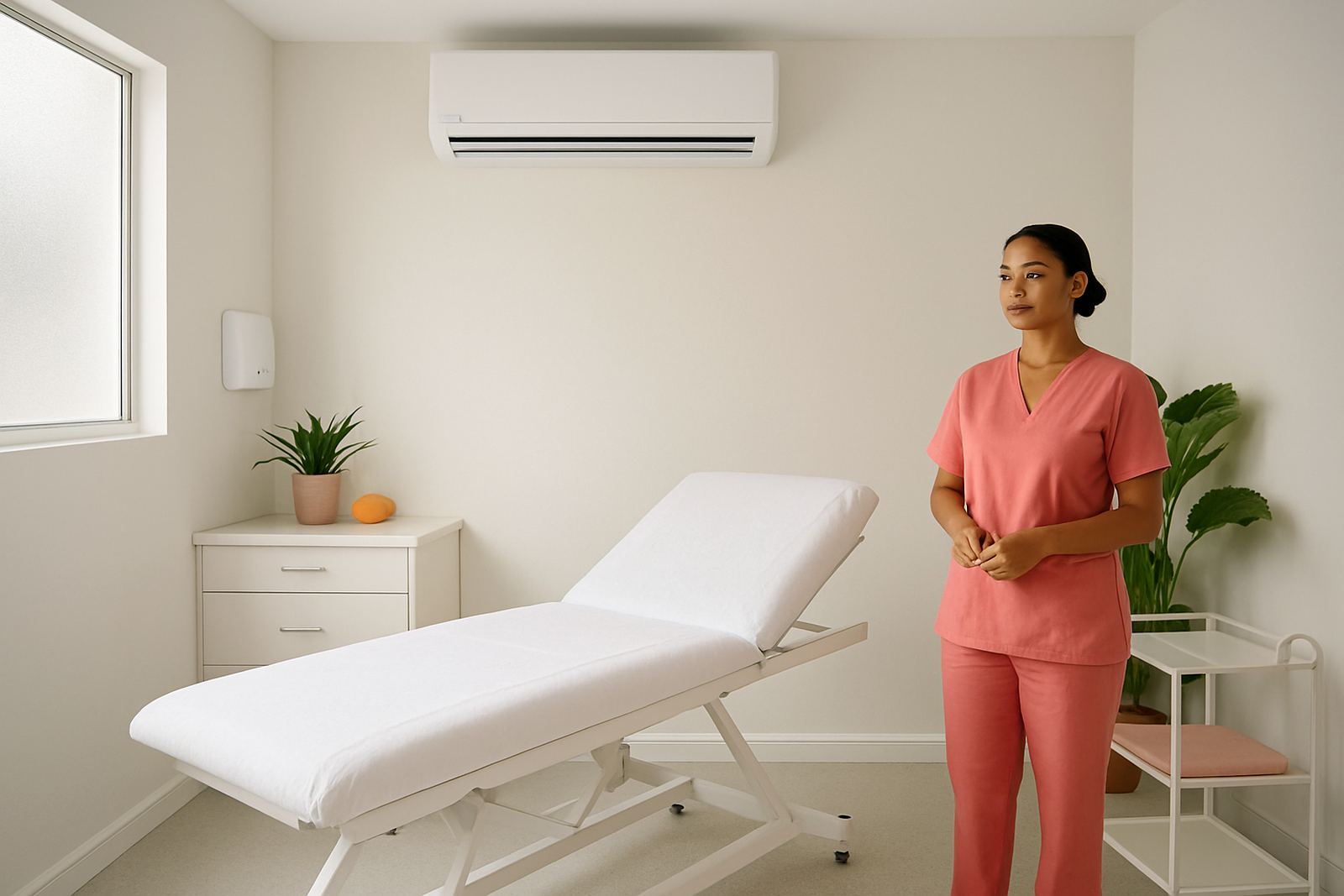
The indoor unit should sit where it can throw air across the room, not straight into a wall or cupboard. It also needs enough clear space around it for filters to breathe and for a technician to open the cover, check the drain and clean the coil properly.
- Place it high on a solid wall, usually near the top third of the room.
- Keep it away from direct sunlight and cooking heat where possible.
- Do not box it into a tight bulkhead with no side access.
- Avoid placing it above a TV, artwork or electronics that should not get constant cold air.
- Leave room for the condensate drain to run out correctly and without kinks.
In apartments around the Cape Town CBD and small offices in Bellville, wall space is often limited. In those cases, we look at the room shape, the window line and where people actually sit before choosing the final point. A unit placed one metre too far left or right can make a big difference to how even the room feels.
Outdoor unit placement and service access
The outdoor unit must have room to release heat. If it is pressed against a wall, hidden behind a grill with poor airflow, or mounted where dust and salt air collect, it will work harder and wear faster. That matters in coastal suburbs like Fish Hoek and Somerset West, where moisture in the air can speed up corrosion if the unit is badly positioned.
Service access matters just as much. When a technician can reach the valves, electrical isolator and fan safely, repairs are quicker and less disruptive. If the outdoor unit is installed above a ceiling, behind thorny landscaping or in a place that needs a ladder and a second person every time, the labour cost usually goes up and basic maintenance gets delayed.
- Keep the unit on a firm bracket or concrete base with proper clearance all round.
- Do not trap hot air in a narrow courtyard or enclosed balcony.
- Choose a spot that can be reached for cleaning, pressure checks and gas leak testing.
- Make sure rainwater, washing water and garden irrigation will not hit the electrics.
What goes wrong when a unit is placed badly
Bad placement usually shows up as uneven cooling, noisy operation, short cycling and higher electricity use. Sometimes the fault is not the machine at all, it is the room around it. A poorly sited unit may also drip because the drain falls the wrong way, or because the indoor unit is not level after a rushed install.
For commercial refrigeration and cold room equipment, the same rule applies. Compressors need ventilation and technicians need space to inspect them. If a freezer unit sits in a cramped corner with warm air trapped around it, the system can struggle during a power cut recovery or a hot spell after load-shedding. That is when callouts in places like Milnerton or Claremont often end with simple relocation advice rather than a full replacement.
A practical Cape Town example
A small accounting office in the CBD once had an indoor unit mounted directly above the only doorway and the outdoor unit fixed in a narrow service yard. The staff complained that the room felt cold near the door but warm at the back, and the service team had to squeeze past refuse bins to reach the outdoor unit. After reviewing the room layout, we shifted the indoor unit to a side wall with a clear throw across the counters and moved the outdoor unit to a better ventilated position with proper access.
The difference was immediate. The room cooled more evenly, the office stopped asking for lower and lower settings, and the maintenance visits became quicker. That is the real point of good placement, it saves time later and makes the system easier to live with.
- Better airflow through the room
- Less strain on the system
- Faster servicing and repairs
- Cleaner drain runs and fewer leaks
Planning for servicing from day one
When we plan an installation, we also plan for the next service call. That means checking how the filters will be cleaned, whether the drain can be flushed, and if there is safe access for leak detection, gas refill work or compressor checks. It sounds basic, but these details save a lot of trouble later on.
At Tropical Refrigeration, our team in Montague Gardens looks at the whole setup before starting work, from the room size to the building rules. In some complexes, there are strict limits on where external units may go, and in office parks there may be noise or access rules after business hours. Getting that right early avoids complaints later and keeps the system within practical use.
If you are fitting air-conditioning in a home or office, or sorting out a fridge, freezer or cold room problem, the placement should be decided with service access in mind, not only appearance. Good positioning is the simple bit that pays off for years.