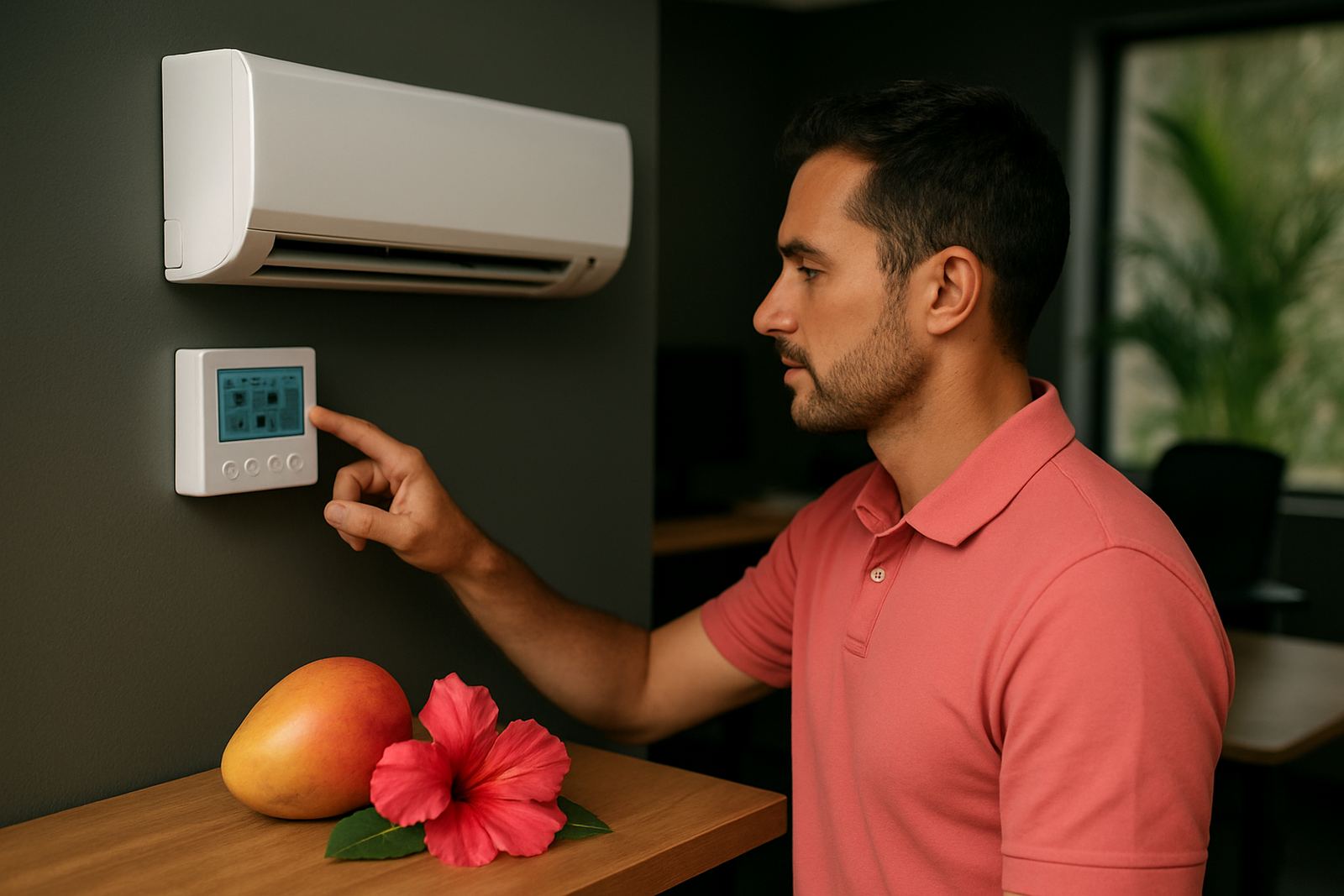
What a night setback actually does
A night setback lowers the temperature target after people leave, instead of switching everything off and then asking the plant to recover from scratch at 7 am. For many offices, clinics and smaller shops, that means less run time, fewer hard starts and a better chance of holding a steady indoor temperature the next day.
The point is not to let the building go cold. It is to give the equipment a lighter job overnight. In a Cape Town building that closes at 17:00 and opens again at 08:00, a modest setback can make a real difference on the meter, especially through winter when the outside air already helps to cool the inside.
Where setbacks make sense, and where they dont
Night setbacks work best in spaces with predictable occupancy and decent insulation. Think offices in the CBD, call centres in Bellville, consulting rooms in Claremont, and back-of-house areas in Milnerton or Montague Gardens. They can also suit selected commercial rooms that must stay within a range, but do not need full daytime comfort after hours.
- Good candidates: offices, boardrooms, reception areas, staff rooms and storage spaces with stable conditions.
- Use care: server rooms, food prep areas, product display fridges, wine stores and any room with strict temperature limits.
- Usually avoid: spaces with live stock, sensitive medicines or equipment that must run continuously.
If you are not sure, it is better to leave the setback mild and test the result for a week than to push the system too far and wake up to a hot or stuffy building.
How to choose the right setback temperature
There is no one number that suits every site, but a sensible starting point is a rise of about 2 to 4 degrees C overnight. So if the occupied setpoint is 22 degrees C, the night setback may sit around 24 to 26 degrees C. That small shift often saves more than people expect, because compressors and fans are not working as hard for hours on end.
In older buildings, or sites with big glass fronts in the CBD or Somerset West, a larger setback can lead to a slow morning recovery and complaints before 09:00. Coastal humidity can also make a room feel warm even when the temperature looks fine, so do not judge by numbers alone. Check how the space feels at opening time and adjust from there.
Anele Jacobs and the service team usually look at occupancy pattern, window exposure, and whether the unit is inverter driven or standard fixed speed before recommending a schedule.
Keep the system clean before you start adjusting schedules
A setback will not fix dirty filters, low gas, blocked drain lines or a weak compressor. It only works properly when the plant can breathe and cycle as intended. In Cape Town we see many systems that look inefficient on paper, when the real issue is a clogged filter, a small refrigerant leak or poor outdoor unit airflow from dust and salt.
- Clean filters regularly, especially in offices near the N1, the coast or construction areas.
- Check that outdoor units have clear airflow and are not baking against a wall.
- Look for water marks, icing, strange noises or a longer than normal pull-down time.
- Test thermostats and timers after a power outage, because some settings reset.
A little maintenance goes a long way. One loose connection or a blocked coil can wipe out most of the savings you hoped to get from the setback.
A practical Cape Town example from Montague Gardens to the CBD
Picture a small office in Montague Gardens with two split units, open from 08:00 to 17:30. The manager sets the units to hold 24 degrees C overnight instead of 22 degrees C, with a morning ramp-up starting at 06:30. The building is quieter after hours, the rooms are less stuffy by opening time, and the compressors are not asked to pull the temperature up from scratch every day.
Now compare that with a similar office in the Cape Town CBD where the building faces strong afternoon sun and the staff arrive early. If the setback is too high, the room may be slow to recover, which leads to complaints and a thermostat war. In that case, a smaller setback and an earlier start time may be the better choice.
The lesson is simple: set it for the way the building is actually used, not the way a brochure says it should work.
When to bring in a technician
If your setback causes ice on the indoor unit, short cycling, warm air at start-up or an obvious spike in noise, the issue needs a proper check. The same applies if the building never reaches temperature, even after a long lead-in period. In many cases the cure is not a bigger setback, but a repair, a gas refill, thermostat replacement or a more suitable control setting.
Tropical Refrigeration works across Cape Town and the Peninsula from our Montague Gardens base, with calls in Milnerton, Bellville, Claremont, Somerset West and Fish Hoek. For offices, home systems and selected commercial spaces, Mandla Petersen and the team can check whether your schedule suits the equipment and the building. If it does not, we will tell you straight.
- Aircon installation and reconfiguration
- Aircon repairs and gas refills
- Aircon service and leak detection
- Thermostat replacement and ventilation servicing
If your building feels right only after lunch or only when someone manually changes the settings, the system probably needs a proper plan, not another guess.