What that smell is telling you
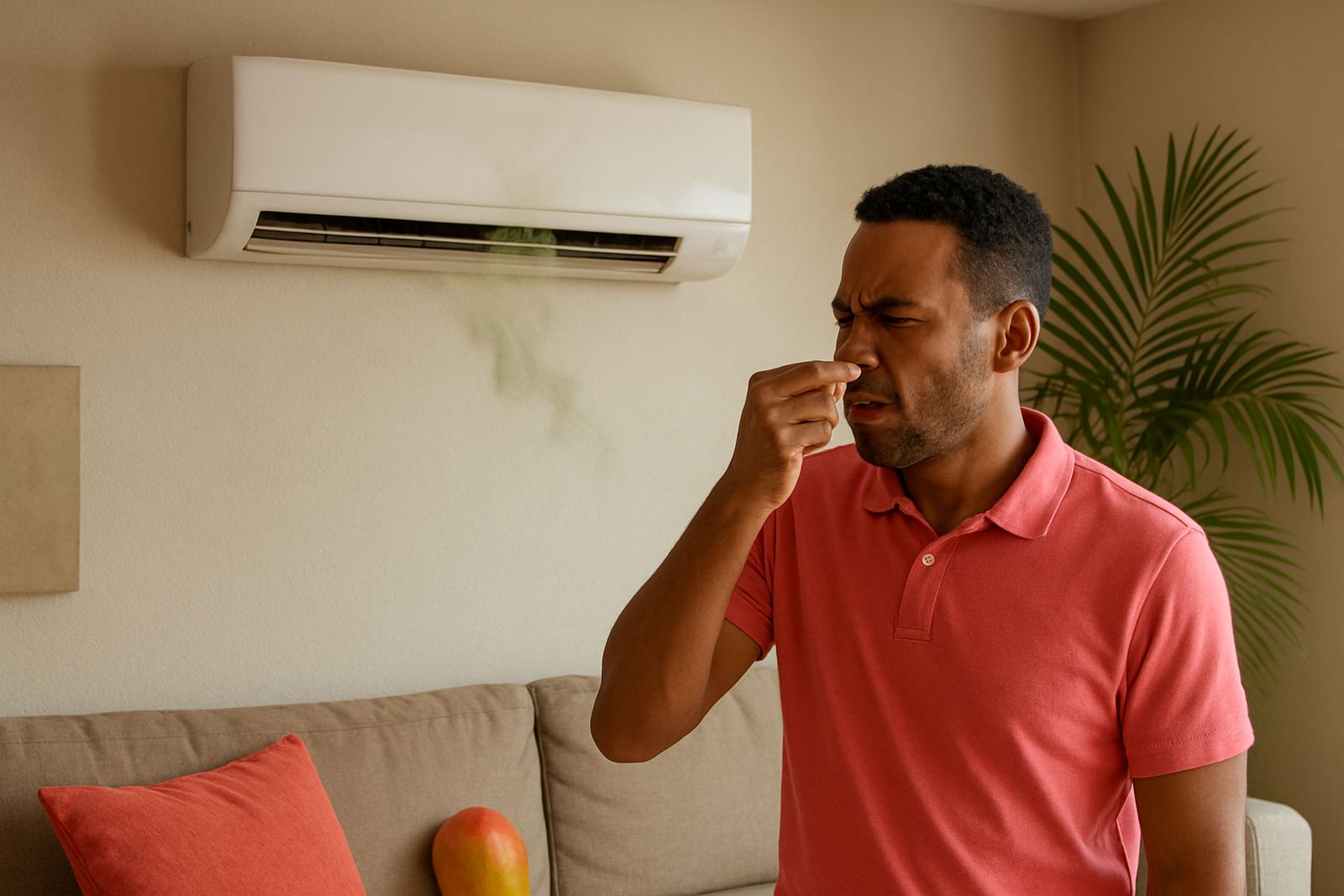
If an air conditioner gives off a musty, sour or dusty smell, the unit is usually trying to tell you something useful. In most cases the smell is linked to moisture sitting where it should not, dust holding damp inside the filter or tray, or a blockage in the drain line. A burning smell is different and should be checked right away because it can point to an electrical fault or overheated component.
In homes from Milnerton to Somerset West, the first complaint is often the same: the aircon cools, but the room smells stale when it starts up. That smell may only show for a few minutes, then it comes back stronger after a long run. It can happen more often in winter when units are used for heating and the indoor air stays closed up, or in summer when condensation is heavy and the system is working most of the day.
Moisture and mould in the indoor unit
Moisture is one of the main reasons aircons smell bad. If water is not draining away cleanly, it sits in the tray and around the coil, giving mould and bacteria a place to grow. Once that starts, every time the fan runs it pushes the smell back into the room. Sometimes the issue is just a dirty filter but often its a drain slope problem, a blocked pipe, or a tray that has not been cleaned properly for a long time.
During Cape Town winters, rooms stay closed and the unit may run less often. That means damp air and dust can stay trapped inside. Coastal humidity adds to the problem in areas closer to the peninsula, while offices in the CBD can get a mix of dust from traffic and closed-window use. If the smell is damp and earthy, think moisture first.
- Check whether the smell is strongest when the unit first starts
- Look for water marks below the indoor unit
- See if the drain pipe outside is dripping while the unit runs
Dust build-up and dirty filters
Dust does not always smell on its own, but once it gets damp it can produce a very noticeable stale odour. Filters trap airborne dust, hair and fibres. If they are not washed regularly, that dirt starts to affect airflow and the coil can pick up more grime. A restricted airflow also means the unit has to work harder, which can make the smell sharper and the room less comfortable.
In a home in Claremont with pets, or a small office in Bellville near a busy road, filters can load up quickly. If people smoke nearby, cook often, or run the system with windows open for long periods, the dirt builds faster. A simple filter clean can solve the issue on many units, but if the smell comes back within days, the coil and drain line need attention too.
- Wash the filters with clean water and let them dry fully
- Vacuum around the intake area before refitting them
- Keep doors and windows closed while the unit is running
Why drainage problems matter so much
A blocked or poorly installed drain line can create ongoing smell issues. Even a small kink in the pipe can hold water and sludge, which then feeds the odour every time the system cycles on. In some cases the unit is cooling fine but the smell keeps returning because the water cannot leave the tray properly. That is why a unit can smell after a repair even when the gas level is correct and the cooling is strong.
Drain faults are common after a rushed installation or after a system has been moved during a renovation. In apartments and offices with limited outside access, the drain line may not be easy to inspect, so the problem gets missed until water starts dripping indoors. If you notice a sour smell together with a dripping ceiling panel or wet wall patch, stop using the unit and have it checked.
When a burning smell is the warning sign
A burning smell is not the same as a musty one. It may point to wiring, a fan motor, a capacitor or another electrical part running too hot. Sometimes the smell appears only when the unit starts, which can mean a loose connection. If the smell is strong, switch the unit off at the wall and do not keep testing it. That is especially important in older properties where the wiring may already be under strain during load-shedding recovery and peak use.
Do not try to mask that smell with sprays or room fresheners. Those only cover the problem for a short time and can make it harder to trace the source later. A proper inspection should look at the electrical side, the fan section and the condition of the indoor components before the unit is used again.
- Switch off the unit if the smell is hot, sharp, or electrical
- Check whether the smell changes with fan speed
- Have any repeated tripping or humming checked promptly
What Cape Town property owners can do first
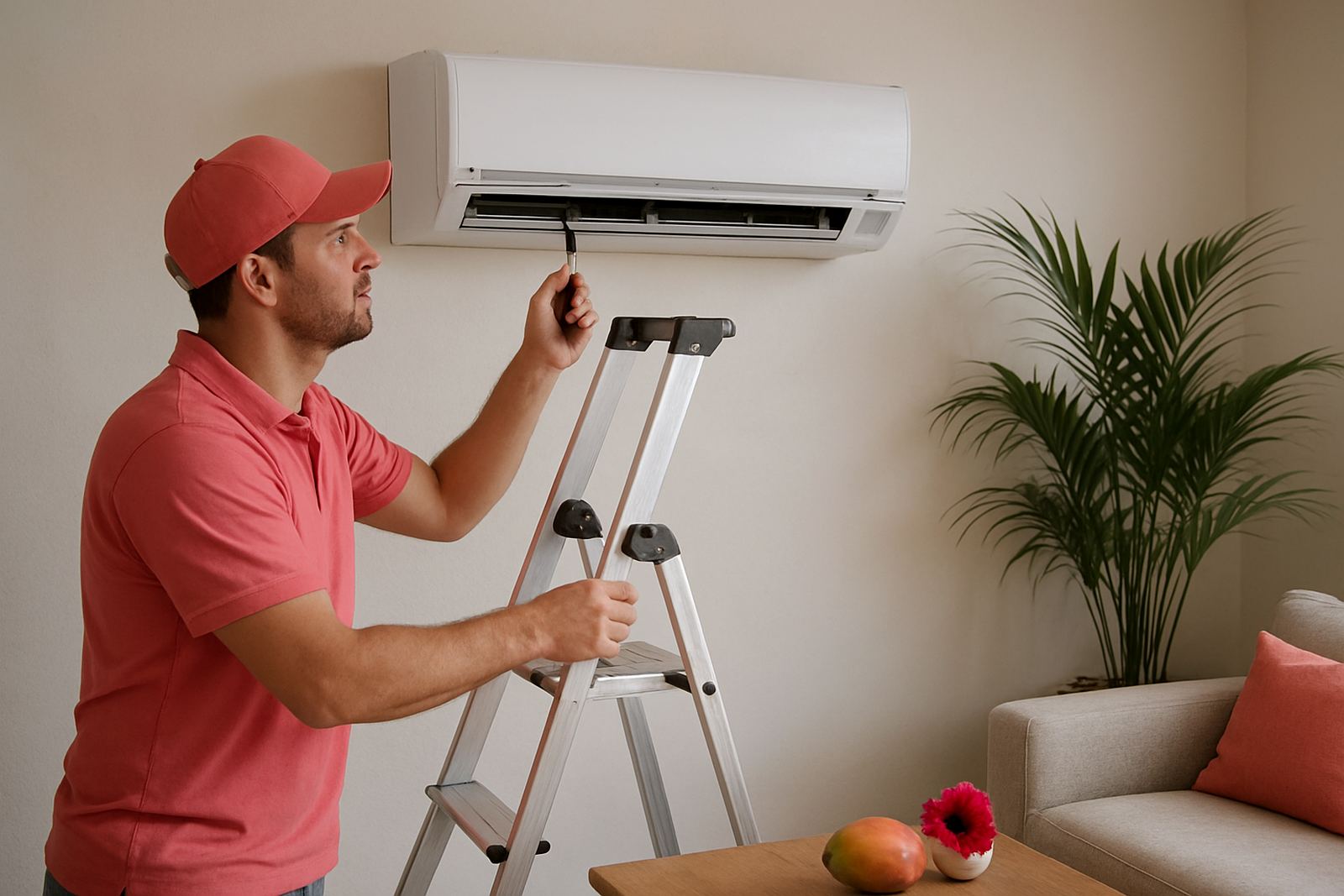
There are a few practical steps that help before a technician arrives. Start with the filters, then look for visible dirt, damp spots, or water dripping from the indoor unit. If the smell is strongest after a power cut or after the unit has been off for a while, that often points back to moisture sitting inside the system. If the smell appears only in one room, it may be an installation or airflow issue rather than a fault in the whole property.
For homeowners in Fish Hoek or Somerset West, sea air can add extra moisture and salt in the system over time. For offices in the Cape Town CBD, units often run long hours and need more regular servicing because people expect the room to smell clean as well as cool. A simple service can include filter cleaning, drain checks, coil cleaning and a look at the gas circuit if cooling has also dropped off.
- Book a service before the smell becomes constant
- Ask for drain line inspection, not only gas checks
- Keep records if the smell returns after each power interruption
Why a proper inspection saves time later
Smells are often the first sign of a bigger maintenance issue, and ignoring them usually means more cleaning, higher power use and avoidable breakdowns. If the cause is moisture, the same damp conditions can damage boards and motors over time. If the cause is dust, airflow and cooling performance will drop. If the cause is electrical, the risk is much more serious. Sorting the issue early usually costs less than waiting for the unit to fail in mid-summer.
Tropical Refrigeration works from Montague Gardens and serves Cape Town and the Peninsula, including Milnerton, Bellville, Claremont and the CBD. Our team can check aircon smells, drainage faults, leaks, filter condition and cooling performance, then advise whether the unit needs a service, a repair or a gas refill. If the odour has already spread through a home or office, it is better to find the source than keep spraying over it.