Why heat pumps make sense for Cape Town hot water needs
A heat pump moves heat from the air into the water cylinder instead of making heat from scratch with a high resistance element. That is why many suitable properties can see a noticeable drop in hot water electricity use, especially where geysers run for long periods or serve more than one bathroom. In a city like Cape Town, where winter mornings are cold and summer roofs can still run hot, that extra efficiency can matter across the year.
For a family home in Milnerton or a small office in Bellville, the main gain is not fancy technology. It is lower energy spend for the same hot water service, provided the unit is sized correctly and installed with proper airflow around it. A cramped install in a closed courtyard or next to blocked vents will cost more to run and often give trouble later.
What the savings usually come from
Heat pumps do not remove electricity use completely, but they can reduce it a lot compared with standard electric water heating. The actual saving depends on the size of the cylinder, the number of users, water draw-off habits, and whether the system is maintained. If the property has good insulation, sensible timer settings and no hidden water losses, the results are better again.
- Lower power draw for water heating compared with standard elements
- Better fit for homes with steady daily hot water use
- Useful for guest rooms, salons, small lodges and offices with regular demand
- Can reduce pressure during load-shedding if the hot water plan is set properly
- Works best when the cylinder, pipes and controls are in good condition
People sometimes expect a quick payback without checking the site first. That is where a proper inspection helps. A unit that is too small will work hard, while one that is too large for the demand may never earn back its cost as expected.
When a heat pump is a good fit, and when it is not
Heat pumps suit many Cape Town properties, but not every one. They are often a good choice for medium to high hot water use, such as a household with several showers, a small guest house, or a business with staff facilities. They can also work well in coastal areas like Fish Hoek and Somerset West where warm air is available for most of the year, although salty air means the unit needs the right materials and regular cleaning.
They are less attractive where hot water use is very low or very irregular. A single-occupant flat with minimal demand may not recover the extra cost in a sensible time. The same applies where the electrical supply is unstable because of existing wiring faults or poor controls. It is better to fix the basics first than to force in a new system and hope for the best.
- Check cylinder size before choosing a unit
- Look at daily hot water use, not just once-off peak use
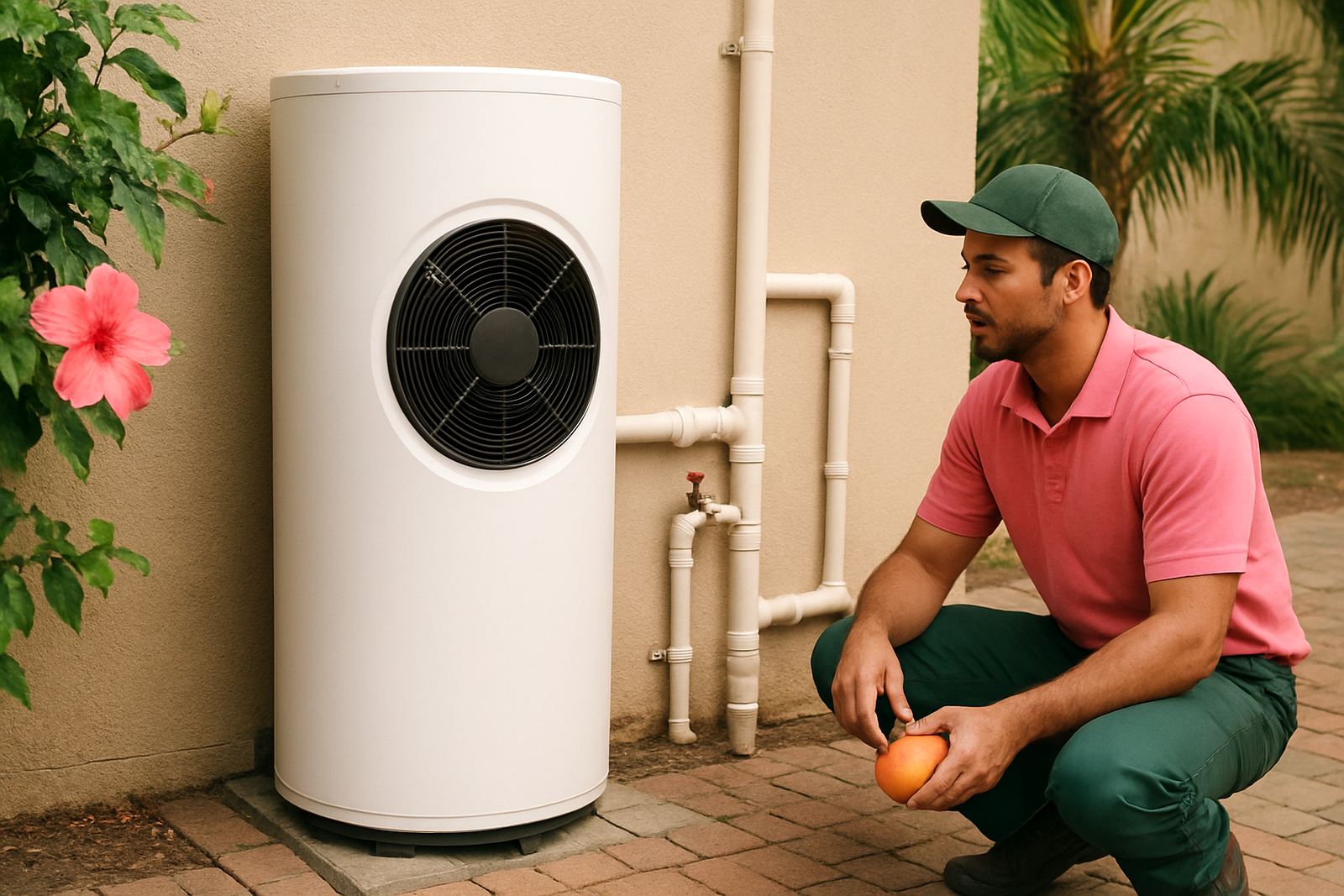
- Make sure the outside position has moving air, not trapped hot air
- Allow space for maintenance access and drainage
- Plan around load-shedding and any solar or backup supply already on site
What proper installation should include
A neat install is about more than putting the machine on a wall and switching it on. The pipe runs should be secure, the condensate drain should lead away cleanly, and the cylinder settings must suit the property. Electrical protection, isolation, and controls should all be checked before the first run. If the unit is installed near the coast, corrosion resistance matters too, because humid air and fine salt can shorten service life.
In a place like Montague Gardens, where mixed-use premises often have limited space and shared service yards, a careful layout makes future servicing easier. That saves time when filters need cleaning, sensors need checking, or a thermostat replacement becomes necessary. It also helps avoid nuisance noise for neighbours, which is worth keeping in mind in tighter suburban streets.
Local example: a small office in Cape Town CBD
A practical example is a small office in the Cape Town CBD with six staff and a tea room that uses hot water through the day. Before the change, the geyser was heating more often than needed and the monthly bill kept creeping up. After checking the load, cylinder condition and available wall space, a heat pump was set up with controls suited to office hours. The result was steadier hot water and less power waste outside working times.
That kind of job shows the main benefit clearly. The savings come from matching the equipment to the pattern of use. If the property changes later, the settings can usually be adjusted. If not, the system keeps doing its job with less manual attention and fewer surprise spikes in electricity use.
How Tropical Refrigeration handles the practical side
At Tropical Refrigeration, we look at the whole hot water picture before recommending a heat pump. That means checking the site, the cylinder, the electrical supply and the likely demand pattern. We also consider local conditions across Cape Town and the Peninsula, from CBD rooftops to homes in Claremont, Bellville and Somerset West, because each site has its own access, ventilation and service needs.
Where a property is suitable, we can help with installation, repairs and ongoing servicing so the unit keeps working as expected. Where it is not suitable, we will say so and point out what should be fixed first. That practical approach saves money and avoids problems later on.
- Site checks for homes and businesses
- Installation planning around space and airflow
- Support for repairs, controls and maintenance
- Advice for coastal conditions and load-shedding planning
If you are weighing up a heat pump for your property, start with the actual hot water use and the space available. The right system can pay its way, but only when it is matched properly and kept in good order.