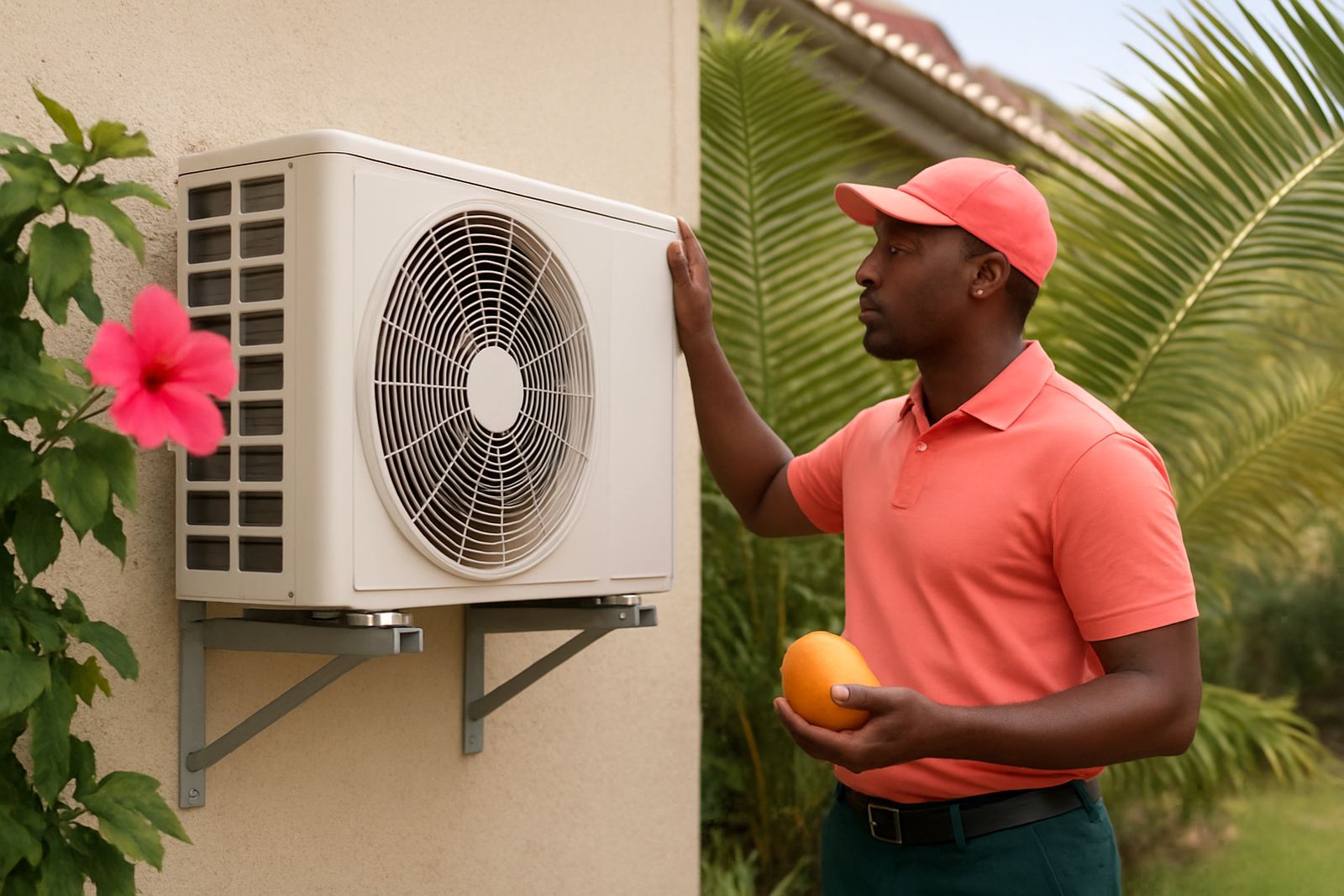
Why coastal aircons fail sooner in Cape Town
Units near the Atlantic and False Bay do not age at the same pace as inland systems. Salt settles on coils, casings and fixings, then moisture holds it there. Over time, that starts the rusting process, especially on outdoor units fitted close to the ground or in spots with poor airflow. In places like Fish Hoek, Milnerton and parts of the CBD, we see this all the time after a single winter season.
The early signs are easy to miss. The unit may still cool, but it runs longer to do the same job, uses more electricity and starts to sound strained. A blocked drain, a dirty condenser or a corroded contact point can turn into a full breakdown if it is left too long. In coastal work, prevention is usually cheaper than repairs.
Cleaning intervals that make sense near the sea
A good cleaning schedule depends on how exposed the unit is. A home in Somerset West set back from the water may not need the same attention as a shop in Sea Point or a cold room close to the harbour. Still, coastal units should be checked more often than inland systems. For most homes and offices in Cape Town, we recommend a service before summer and another after the wettest part of winter.
For commercial refrigeration and units in greasy or dusty environments, the interval should be shorter. Filters, coils and drains must be cleared before build-up causes strain. If the unit sits near a kitchen, workshop or loading bay, add more frequent inspections because grime sticks to salt and moisture, which speeds up corrosion and blocks airflow.
- Wash or replace filters regularly so air can move freely.
- Clean outdoor coils gently to remove salt, dust and insect build-up.
- Check drain lines for slime, algae and blockage.
- Inspect brackets, screws and casing for rust spots.
- Test the unit under load before peak summer heat arrives.
Choosing the right place for an outdoor unit
Placement matters just as much as cleaning. An outdoor unit mounted in direct sea spray, under a drip line or in a narrow passage will struggle faster than one with open airflow. In places like Cape Town CBD and along the Peninsula, we often advise mounting units slightly higher, off the ground and away from constant wind funnel points.
It also helps to avoid spots where rainwater pools or where the unit sits under trees that shed leaves and sap. If the area is exposed to salt wind, a shaded position with good circulation is usually better than a closed corner. The idea is to keep the unit dry where possible and give it space to breathe.
- Keep at least clear airflow around the unit, with no boxes or bins blocking it.
- Raise the unit off wet paving where saltwater can splash back.
- Do not mount it where hose water, gutters or roof runoff will hit it.
- Allow enough access for servicing without dismantling nearby fittings.
Small upgrades that slow corrosion
Coastal protection does not always need major work. A few practical upgrades can add years to a unit’s life. Anti-corrosion coatings on exposed metal parts help, as do better fixings and protective covers used only when the unit is switched off. In humid suburbs and near the beachfront, we often suggest checking the condition of screws, brackets and electrical terminals during every service.
For refrigeration equipment, this is just as important. Compressor area covers, clean electrical panels and sealed cable entry points reduce the chance of moisture creeping in. If a unit has already started rusting, it should be treated before the corrosion spreads through the casing or mounting points. Once metal starts flaking, repairs tend to get more expensive.
One small note that matters in Cape Town load-shedding: when power returns, strained systems can trip if they are dirty or already running hot. A unit that is well maintained usually handles those start-stop cycles better. That is not magic, just less strain on parts that were already working too hard.
When repairs are no longer enough
Sometimes cleaning and placement can only do so much. If a coastal unit keeps losing gas, if the condenser is badly corroded or if the compressor is drawing too much current, the problem may be past routine servicing. At that stage, patching the issue every few months becomes false economy. A proper diagnosis will show whether the unit needs a repair, a part replacement or a full change-out.
Signs that it is time to act include repeated water leaks, rust around fittings, warm air from an aircon that should be cooling, noisy starting, or a freezer that struggles to hold temperature during busy trade hours. Ignoring those warning signs can spoil stock, push up power bills and leave staff or customers uncomfortable when temperatures climb.
A Cape Peninsula example from the field
We recently looked at a small office near Fish Hoek that had two wall-mounted aircons and a medium-sized refrigeration unit. The systems were still fairly new, but the outdoor units had been installed too low and too close to an open parking area. Salt spray from the wind and fine dust from the road had settled on the coils. One unit was also dripping back onto its own bracket, which had already started to rust.
After cleaning, repositioning the worst affected unit and replacing a worn thermostat and a corroded fixing set, the whole site ran cleaner and quieter. The office also changed its cleaning routine, with the filters now checked monthly and the outdoor units washed down after heavy coastal weather. That kind of upkeep makes a real difference, especially where the sea air is constant and the weather turns fast.
If you manage a home, guest house, office or shop along the Cape Peninsula, the goal is simple: keep salt off the metal, keep water moving away from the unit and get small faults seen early. That is how coastal systems last longer.