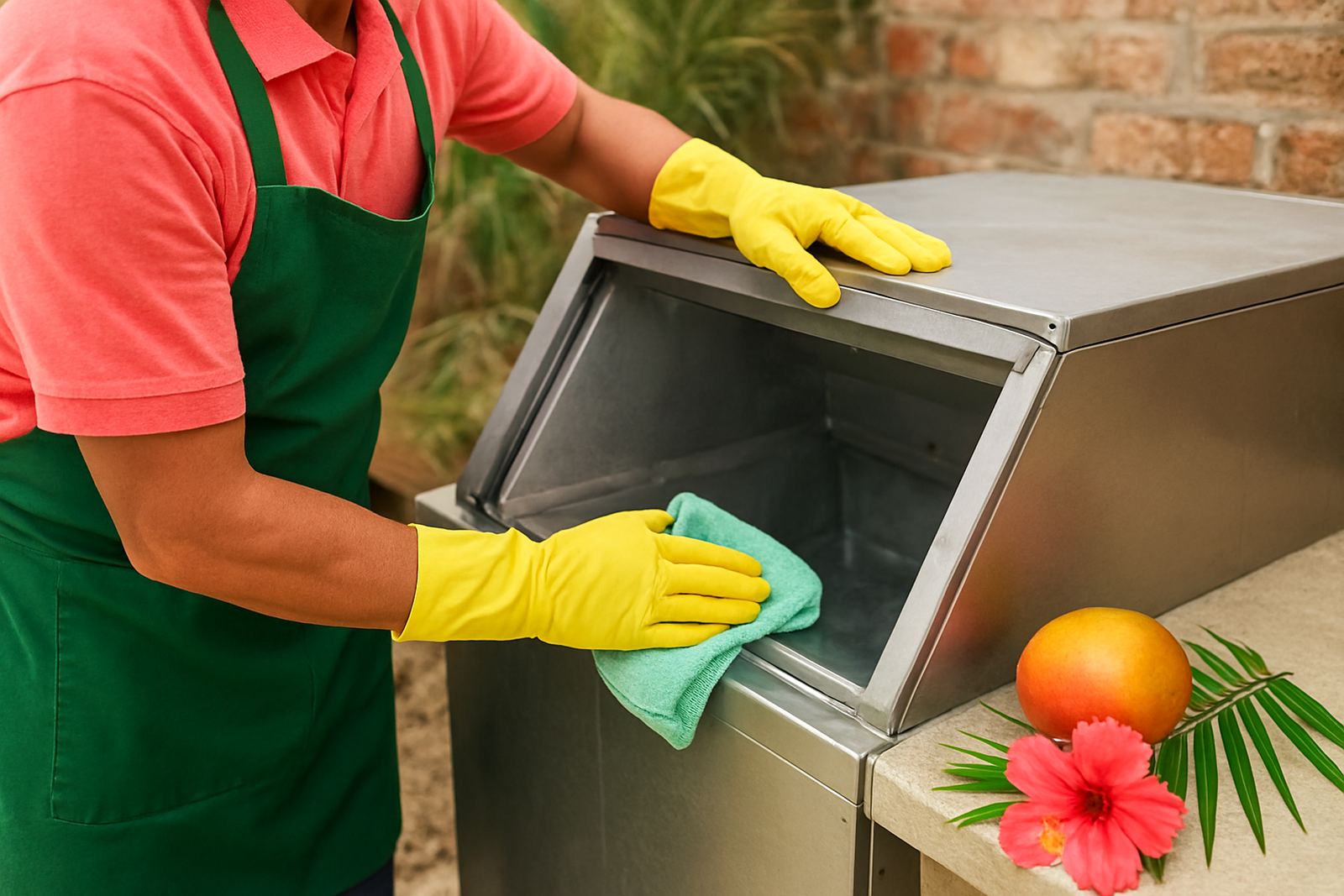
Why clean ice machines matter in Cape Town kitchens
An ice machine works in a damp, cool space, which makes it a good place for scale, slime, and fine dirt to build up if nobody keeps an eye on it. In busy kitchens, bars, guest houses, and small offices around Cape Town CBD, Milnerton, Bellville, Claremont, Somerset West and Fish Hoek, that build-up can affect the taste of the ice and the way the machine runs.
When an ice machine is left too long without cleaning, the machine has to work harder to freeze water through dirty surfaces. That often means slower output, cloudy cubes, odd smells, and more strain on pumps, valves, and sensors. In a city where many sites already deal with warm summers, salty air near the coast, and power interruptions, small hygiene problems can turn into a service visit before long.
Good hygiene also helps with food safety. Ice is treated as a food product in most commercial settings, so the machine, bin, scoop, and surrounding area should be kept clean. If ice is used for drinks, display, or food prep, any contamination ends up directly with the customer, not hidden away in the plant room.
What dirt and build-up usually hide inside the machine
Most people only wipe the outside of the unit and forget what is happening inside the storage bin, water path, and air vents. In Cape Town conditions, the common culprits are dust from open doors and loading bays, mineral scale from water, and bacteria that grow where moisture sits for too long. You may also see rust on fixings, blocked drains, or a musty smell if the machine is in a cramped corner with poor airflow.
- Scale on evaporator plates or freezing surfaces
- Slime in bins, water trays, and drain lines
- Dust on filters, coils, and air inlets
- Blocked drain points that leave standing water
- Rust or corrosion on screws, brackets, and panels
Machines placed close to ovens, dishwashers, or strong extraction fans can get dirty faster because heat and grease linger in the air. Near the coast, salt in the air adds another layer of wear. If the machine is in a back room or under a counter, it may look fine from the outside while the inside is already due for a proper clean.
A cleaning schedule that suits real working conditions
There is no single timetable that suits every site, but there should be a routine. A quiet office machine may need less attention than a restaurant or bottle store that uses ice all day. As a simple rule, the scoop and outside surfaces should be cleaned daily, the bin checked regularly, and a full hygienic service done at set intervals depending on use and water quality.
For commercial sites in Cape Town, it is wise to plan the cleaning around trading hours and delivery times so the machine can be switched off, drained, and restarted without rushing. If the machine sits idle over a weekend or after a power cut, it should be checked before use again. Standing water after load-shedding is a common reason for bad smells and dirty first batches.
- Daily: wipe the scoop, door handles, and external surfaces
- Weekly: check the bin, drain area, and visible water lines
- Monthly: inspect filters, vents, and intake areas for dust
- Quarterly or as needed: full internal clean and hygiene inspection
If your water supply is hard, or if you see white scale forming quickly, the schedule may need tightening. A machine that is clean on paper but regularly ignored between services will still fail early. It only takes a small blockage or slimy patch to affect output, and then the unit starts giving trouble at the worst time.
Signs your ice machine needs attention now
Most machines give warning signs before they fail. Staff often notice the smell first, then the taste, and only later the reduced output. If ice starts looking cloudy, soft, or uneven, that can point to dirty water paths, poor cooling, or an issue with the freezing surface. A machine that used to fill the bin by lunch and now struggles by mid afternoon should be checked.
Listen for pumps that are running longer than usual, fans that sound strained, or repeated shutdowns after a power interruption. If the machine trips the breaker, leaks water, or keeps making ice with broken shapes, there may be both a hygiene issue and a mechanical fault. A clean machine should still run properly, so if it does not, the problem may be deeper than dirt alone.
- Ice tastes stale, metallic, or has a smell
- Cube size is uneven or the ice is hollow
- Water is pooling under the unit
- The bin has slime or black specks
- Output drops after load-shedding or warm weather
At that point it is better to switch the unit off and get it inspected than to keep using it and risk spoiling product. A quick clean may solve some issues, but if there is a blocked drain, worn seal, or failing component, the machine will keep giving grief.
How hygiene links to breakdown prevention and lower running costs
Clean equipment usually lasts longer. That is true with ice machines too, because dirty systems run hotter, cycle longer, and put more pressure on moving parts. When the condenser, filters, and water path are kept clear, the machine does not have to fight through dust, scale, and moisture. That can lower electricity use a bit and help the unit hold output on hot days.
For businesses already dealing with power cuts, every extra minute of recovery time matters. A machine that has been neglected may not restart cleanly after an outage. Water can stagnate, sensors can misread levels, and the unit may cycle badly once power returns. In coastal suburbs where humidity is high, poor maintenance can also speed up corrosion on fittings and fans. It is small stuff at first, then suddenly the machine is off for half a day.
Regular hygiene also helps protect the rest of the refrigeration system. If air cannot move properly through a dirty unit, the compressor and controls work harder than they should. That is how a simple cleaning job can prevent a compressor replacement later on. It is cheaper to keep a machine in good order than to sort out a spoiled batch and an emergency breakdown.
What to ask for during a proper service visit
A proper ice machine hygiene visit should not stop at wiping the outside and calling it done. The technician should check the full water path, clean the storage area, inspect the drain, and confirm the machine is freezing correctly once restarted. If there is a smell or visible residue, that needs attention too, not just a quick spray and wipe.
- Internal clean of bin, trays, and accessible water parts
- Inspection of filters, vents, and cooling surfaces
- Drain check for blockages or standing water
- Basic leak detection around fittings and connections
- Restart and test to confirm proper ice formation
At Tropical Refrigeration, we see these issues often in kitchens, cafés, offices, and guest houses across Cape Town and the Peninsula. In one Milnerton case, a machine in a small restaurant was producing ice with a sour smell every second week. The problem was a blocked drain and scale inside the bin area, not the water supply. Once the unit was cleaned properly and the service routine tightened, the complaints stopped and the machine held output again.
That kind of result is normal when the machine is cleaned before the fault grows into a bigger repair. Good hygiene is not a once off chore, it is part of keeping the ice safe and the equipment reliable.