Why bedroom size is only the starting point
Most people begin with the floor area, and that is sensible, but it is only the start. A 12 m² bedroom in Milnerton with a shaded window may need a very different unit to a 12 m² room in Somerset West that gets late afternoon sun and has a corrugated roof above it.
In practice, we look at the length and width of the room, then check ceiling height, window size, curtain type and how much heat comes in during the day. In Cape Town homes, especially older properties and apartments near the coast, the same room can behave very differently from one street to the next.
A quick guide helps, but it should never be the whole answer. Bedroom comfort is about how quickly the room heats up, how well it holds cool air, and how often the door opens during the night.
A simple sizing guide for common bedroom sizes
There is no single formula that fits every bedroom, but these broad guides are useful when you are planning a new installation or replacing an old unit.
- Up to 10 m²: often a 9 000 BTU unit is enough in a shaded room with standard insulation.
- 10 m² to 16 m²: many bedrooms in this range suit 9 000 BTU to 12 000 BTU, depending on sun and ceiling height.
- 16 m² to 22 m²: 12 000 BTU to 18 000 BTU may be needed, especially with big windows or a top floor roof space.
- Over 22 m²: larger bedrooms or main suites often need careful checking before a final size is chosen.
These figures are a starting point only. A room facing west, with afternoon sun and thin blinds, can behave like a much larger space. On the other hand, a small north-facing room with good insulation may need less cooling than expected.
Sun load, insulation and ceiling height change everything
Sun load is one of the biggest reasons bedroom aircon sizing goes wrong. A west-facing bedroom in Bellville can hold heat well into the evening, especially after a warm day. The same room in Fish Hoek may cool faster if it has less direct sun and a sea breeze moving through the house.
Insulation matters too. Roof insulation, ceiling boards, cavity walls and even the type of curtains make a real difference. If the bedroom sits under a tiled roof with poor insulation, the unit works harder. If the room has large glass doors, the heat gain can be high even when the room itself is not very big.
Ceiling height also plays a part. A standard 2.4 m bedroom is one thing, but a room with a higher ceiling or exposed roof pitch holds more air and often needs more cooling capacity. That is why two rooms of the same floor area can need different units.
What happens when the unit is too small or too large
An undersized unit runs for long periods and still does not get the room comfortable. You hear it working hard, but the bedroom stays warm near the pillow area and stuffy by midnight. In summer that usually means poor sleep and higher electricity use because the system never really catches up.
An oversized unit brings its own problems. It may cool the room quickly, then switch off before it has removed enough humidity. The result can be cold air without real comfort, which is common in coastal areas where the air already carries moisture.
- Too small: long run times, warm spots, noisy operation and higher wear.
- Too large: short cycling, uneven cooling and a clammy feeling in humid weather.
- Correct size: steady cooling, better sleep and fewer complaints after midnight.
For bedrooms, steady performance matters more than a fast blast of cold air. The goal is a room that settles quietly and stays comfortable through the night.
Cape Town examples from real homes
Take a 3.2 m by 3.8 m bedroom in Claremont with a standard window and decent ceiling insulation. That room may do well with a 9 000 BTU unit. Now compare it with a similar size room in Somerset West that has a bigger glass opening, afternoon sun and a roof space above it. That room may need 12 000 BTU to stay comfortable on a hot summer night.
We also see smaller bedrooms in Cape Town CBD apartments where the issue is not size, but heat build-up from the building itself and limited cross ventilation. In those cases, the unit needs to handle trapped heat and not just the room dimensions.
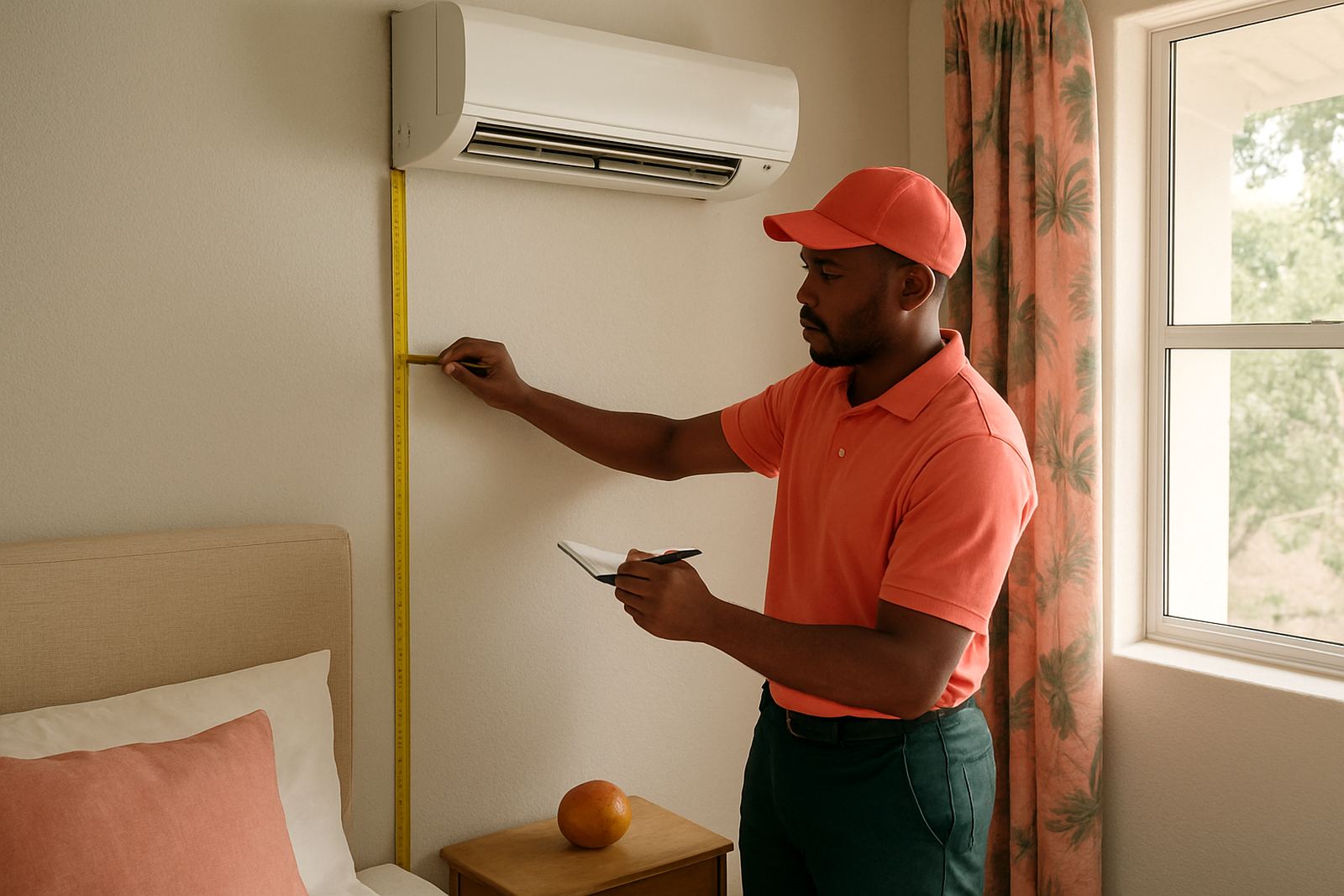
That is why a proper site check beats guesswork every time. A quick measurement and a look at the room conditions can prevent buying something thats underpowered or bigger than needed.
Bedroom features that should be checked before you buy
If you are planning an aircon for a bedroom, check these points before choosing the size. They often change the final recommendation more than the room dimensions do.
- Room length, width and ceiling height.
- Window size, direction and whether the room gets morning or afternoon sun.
- Roof type and insulation above the room.
- How many people usually sleep in the room.
- Whether the room is closed off or opened often during the night.
- Nearby heat sources such as a geyser cupboard or connected bathroom.
In some homes, a quiet installation is also important. Bedrooms near a nursery or next to a shared passage need careful placement so the indoor unit does not blow directly onto the bed.
Getting the sizing right before installation day
The best time to think about sizing is before the unit is bought or mounted. Once the equipment is on the wall, changing course becomes more costly. A correct choice helps with sleep, power use and long term reliability, especially during summer peak heat and load-shedding recovery when systems switch on and off more often.
For homes and apartments across Cape Town and the Peninsula, a practical check can save time and money. Whether the bedroom is in Milnerton, Bellville, Fish Hoek or a flat near the CBD, the same rule applies: measure the room, check the sun, look at the insulation and choose for the actual conditions, not a rough estimate.
That approach gives you a bedroom that cools properly without fighting the room all night. It is the difference between an aircon that feels right and one that always seems to be working too hard.