Why coastal installs need a different plan
In Cape Town and along the Peninsula, the main issue is not only heat. It is the mix of salt in the air, strong wind, winter rain and fast changes in temperature. An outdoor unit that would do fine inland can start showing corrosion sooner near the sea, especially in Fish Hoek, Milnerton, the CBD and other exposed areas.
That is why a coastal install starts with placement. The unit should be out of direct salt spray where possible, but still have enough clear air around it to breathe. A unit squeezed into a tight courtyard or against a wall that traps heat will work harder and use more power. With load-shedding and hot spells, the last thing you need is a system that is already struggling before summer starts.
Choose the right position before drilling any holes
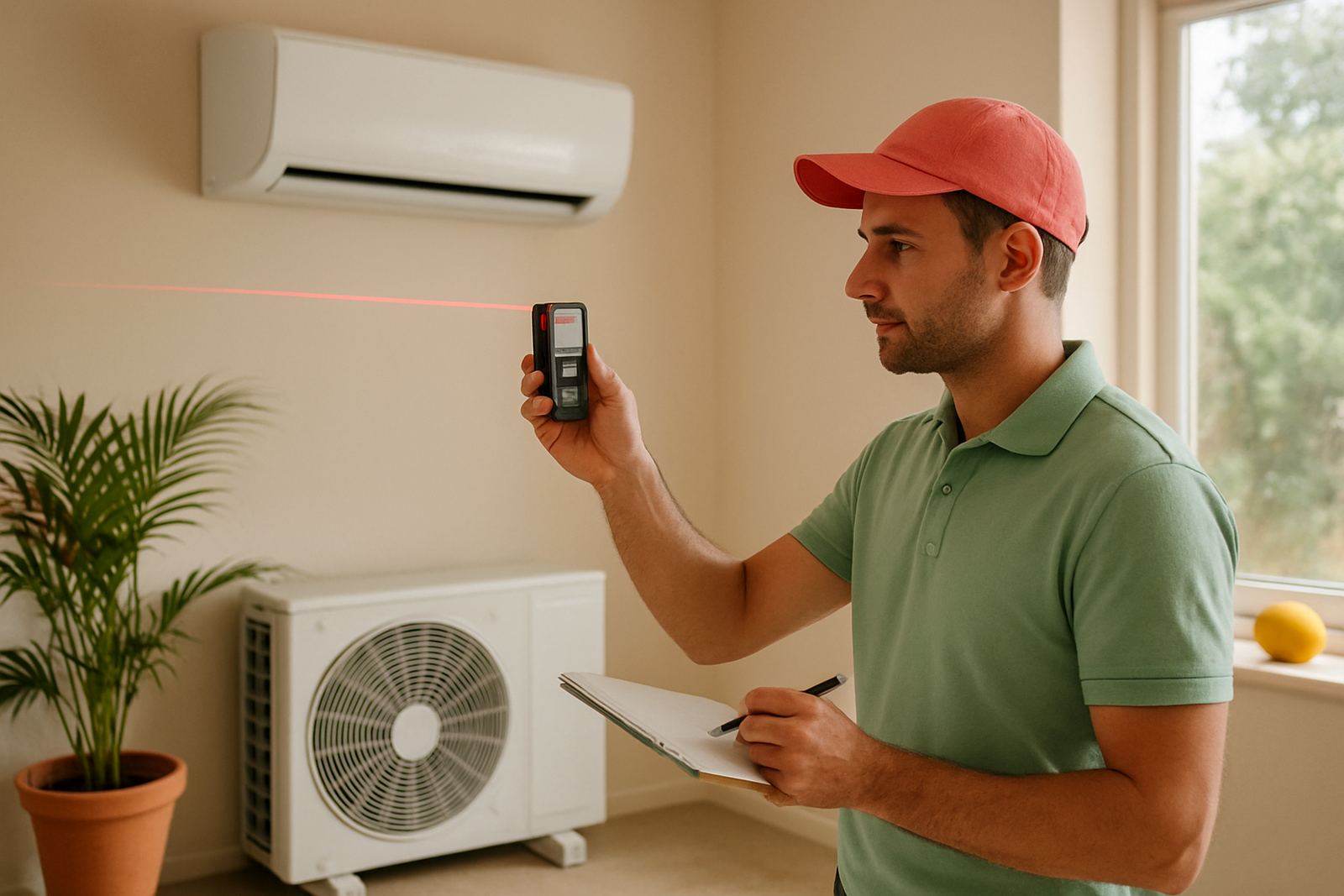
The best install is the one planned properly from the start. We look at where the indoor unit can cool the room evenly, where the outdoor unit can sit safely, and how the piping and wiring can run without making the system awkward to service later. In a home, that may mean choosing a side wall instead of a front wall that gets hit by rain. In an office, it may mean avoiding a boardroom corner that bakes in afternoon sun.
- Keep the outdoor unit off the ground and clear of standing water.
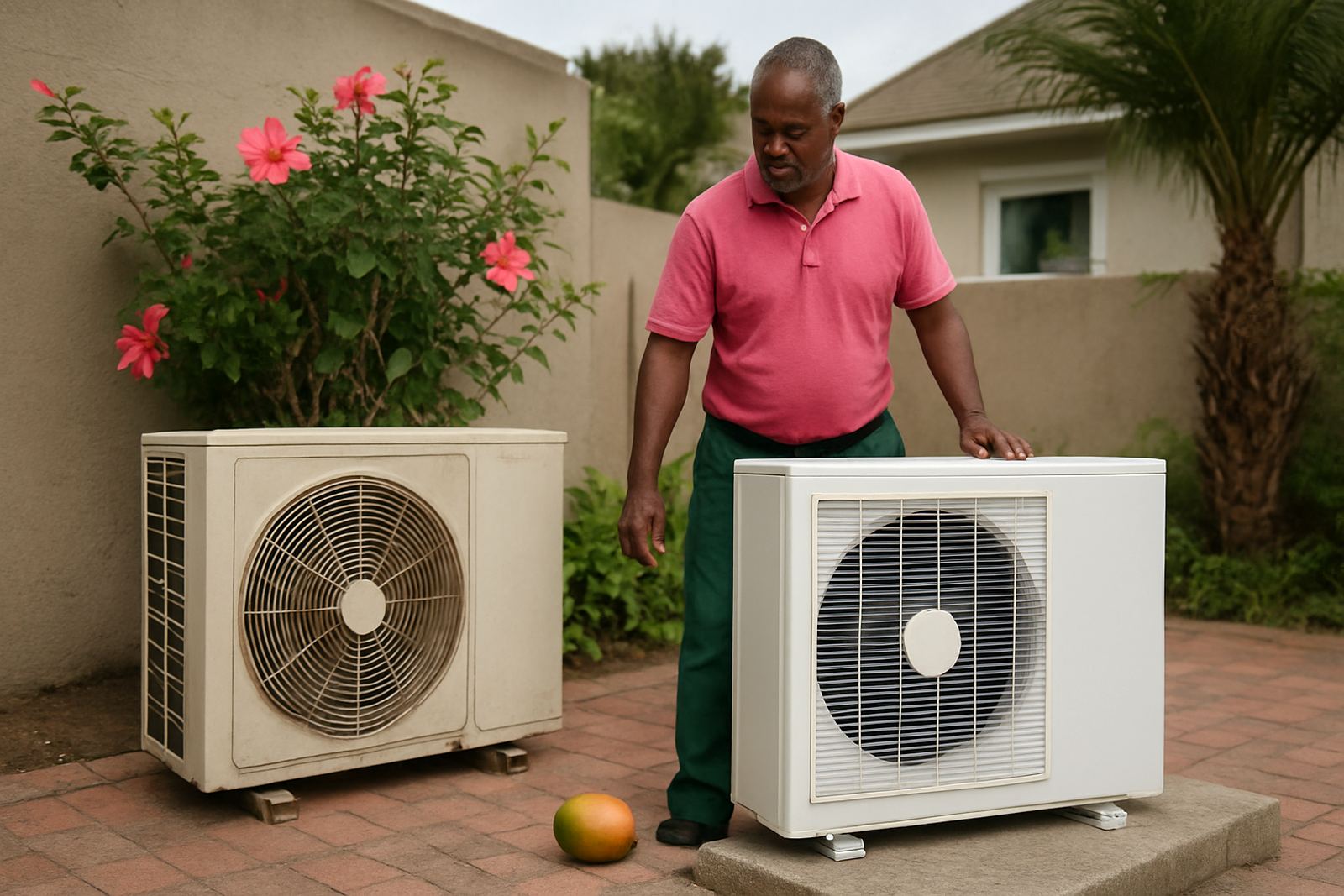
- Allow space around the unit for airflow and future servicing.
- Avoid spots where wind drives sand, salt or rain straight into the coil.
- Check that brackets, slabs or mounting frames suit the wall type.
- Plan the line set route so it is neat, short and protected.
If the property is close to the ocean, we also think about how easy it will be to rinse and maintain the unit later. A good position saves money over time, and it makes a real difference once the first winter of wet weather and the summer sea breeze have done their work.
What coastal hardware should be checked on the day
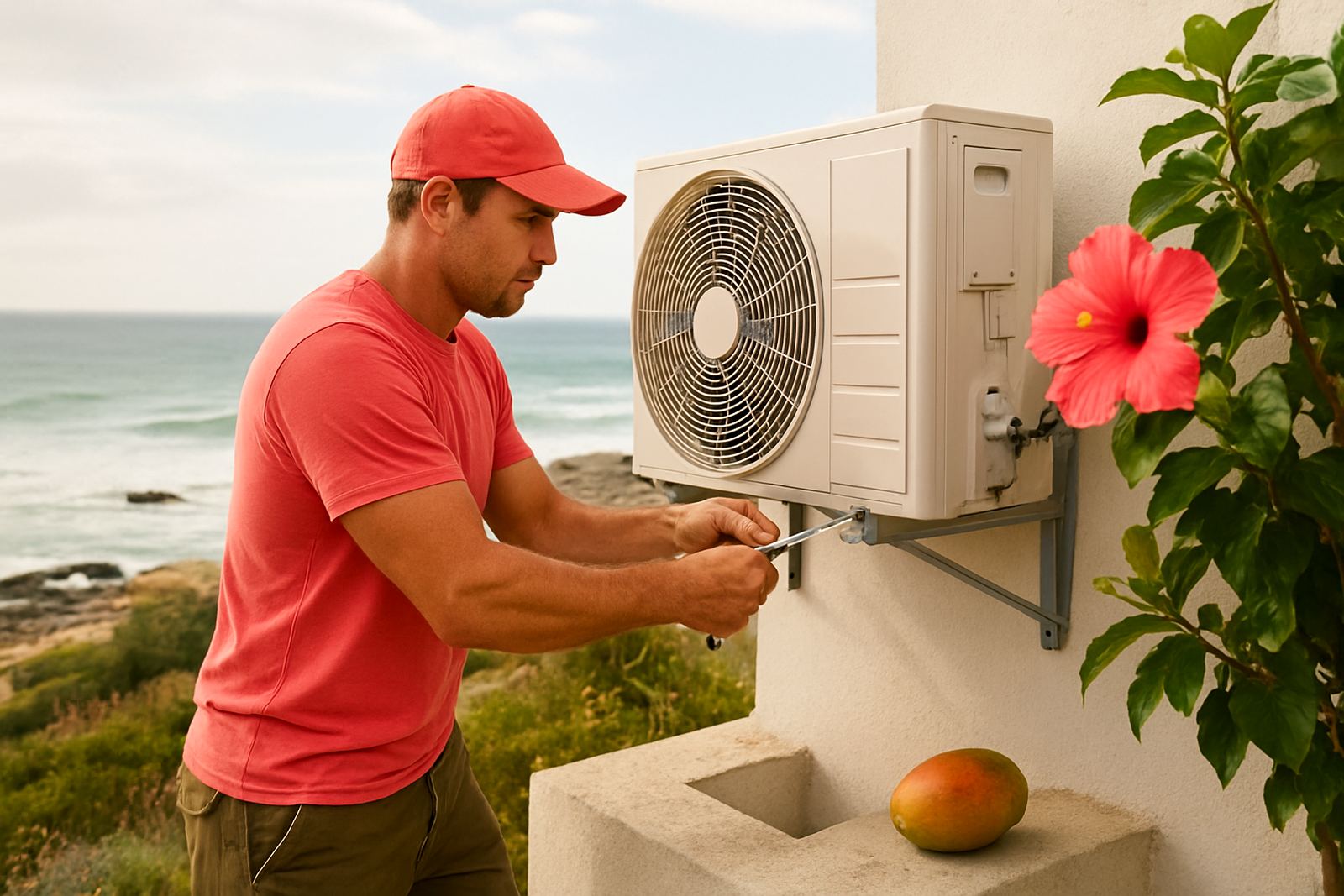
On coastal jobs, the small parts matter. Fasteners, brackets, drain points and electrical protection all need attention because they are the first things to suffer from moisture and corrosion. A cheap fix can become a call-out six months later if the outdoor section was not secured and sealed properly.
We check that the mounting surface is sound, the bracket or base is level, and the fixings are suitable for the location. We also make sure the condensate drain runs away cleanly so water does not drip onto walls or walkways. In apartment blocks and offices, this matters for neighbours, body corporates and municipal rules about where water may discharge. It is also worth confirming that the electrical supply can handle the unit and that isolation is easy for future maintenance.
- Use fixings that suit coastal conditions where possible.
- Seal wall penetrations neatly to keep out water and insects.
- Test drainage before the job is signed off.
- Check for safe access to the outdoor unit for cleaning and repairs.
Installation steps that reduce future corrosion
Once the position is set, the install should be done with corrosion in mind from start to finish. That means careful pipe bending, proper insulation, neat cable runs and no exposed copper left to weather. If the line set is left poorly protected, the coastal air will find its way in. A tidy install lasts longer and looks better too.
We also check refrigerant piping for pressure integrity and look for any signs of leaks before commissioning. Coastal homes often have limited shade and more direct sunlight, so a unit that is already slightly undercharged will show poor cooling much sooner. After startup, we run the system through cooling and observe the temperature drop, fan operation and drainage. It sounds simple, but this is where many future problems are prevented.
For homes in Somerset West or Claremont that are not on the direct shoreline, the same principles still apply. You may have a little less salt exposure, but moisture and seasonal dust still affect the unit. A proper install should fit the actual property, not just the brochure picture.
Office and light commercial spaces need a different check list
Office air-conditioning in the Cape Town CBD, Bellville or Milnerton often has more people, more glass and more equipment heat to deal with. Coastal air still matters, but so does the way the room is used. A unit placed above a photocopy area or in a corridor can struggle to move air where it is needed. The result is hot spots, complaints and higher power use.
For these spaces, we check room layout, ceiling height, occupancy and whether the system will be used during peak load-shedding times. If the business has backup power, the aircon should be sized and wired with that in mind. If the building has strict access rules, the outdoor unit must still be reachable for cleaning, gas leak checks and compressor work. A unit that cannot be serviced easily often ends up costing more later on.
- Match the unit size to the room and its real use.
- Confirm roof, wall or yard access for maintenance.
- Allow for noise control where staff or customers sit nearby.
- Keep the outdoor section clear of bins, loading bays and dust sources.
Aftercare that keeps coastal systems running properly
A coastal installation is only part of the job. Regular servicing keeps the fins clean, checks for weak spots and catches leaks before the gas escapes and the unit starts short cycling. In humid months, filters clog faster and drainage issues show up sooner. That is why a service schedule matters just as much as the install itself.
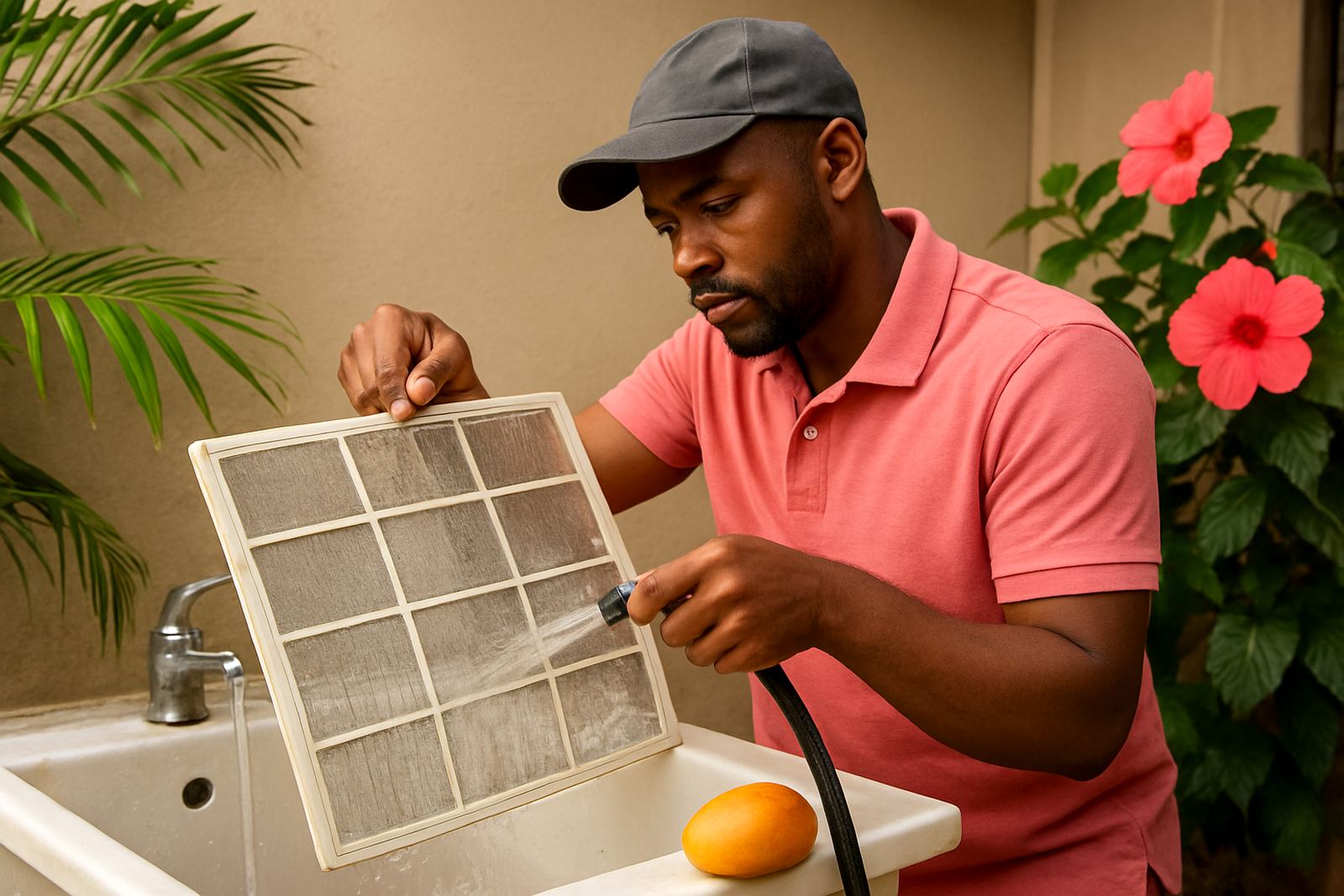
For most homes, a basic service once or twice a year is a good starting point. For offices, shops and light commercial sites, it may need to be more frequent depending on hours of use. If the property is close to the sea, we recommend checking the outdoor unit after strong winds or a heavy salt spray. A quick rinse and inspection can save a bigger repair later. If cooling drops off, ice forms, or the unit starts tripping, do not wait too long before getting it checked.
At Tropical Refrigeration, we handle coastal installs, repairs, gas refills, leak detection and compressor or thermostat replacement across Cape Town and the Cape Peninsula. Our Montague Gardens base supports jobs in the CBD, Milnerton, Bellville, Claremont, Somerset West and Fish Hoek, so we can get to site with the right parts and the right plan.