What a wine cooler does in daily use
A wine cooler is a temperature-controlled cabinet or undercounter unit made to hold wine at stable conditions. It is not the same as a normal bar fridge. Wine needs a steadier temperature, less vibration and controlled humidity so the corks stay in better condition and labels are easier to keep clean. For serving, many red wines are kept around 14 to 18 C while whites and sparkling wines are often stored cooler, around 6 to 12 C depending on the style and how they are presented.
For homes in Cape Town, a wine cooler is handy when you do not want bottles taking over the main fridge. For hospitality venues in the CBD, Claremont or Somerset West, it helps staff keep stock ready for service and avoids bottles being left in warm prep areas. In coastal areas like Fish Hoek, moisture and salt air can also affect appliances if they are placed too close to open doors or direct sea breeze, so placement matters.
- Typical use: serving temperature, short term holding and organised storage
- Common formats: freestanding, built-in and undercounter
- Temperature range: usually 5 C to 20 C, depending on the unit
Sizes and cabinet options for different spaces
Wine coolers come in several sizes, from compact 12 bottle units for a flat or small private bar to larger cabinets that hold 50, 80 or more bottles. The right size depends on how often stock turns over, whether the unit is for serving or storage, and how much space you have for door swing and ventilation. A small unit can fit in a kitchen nook or entertainment area, while a larger one suits a restaurant, guesthouse or cellar room.
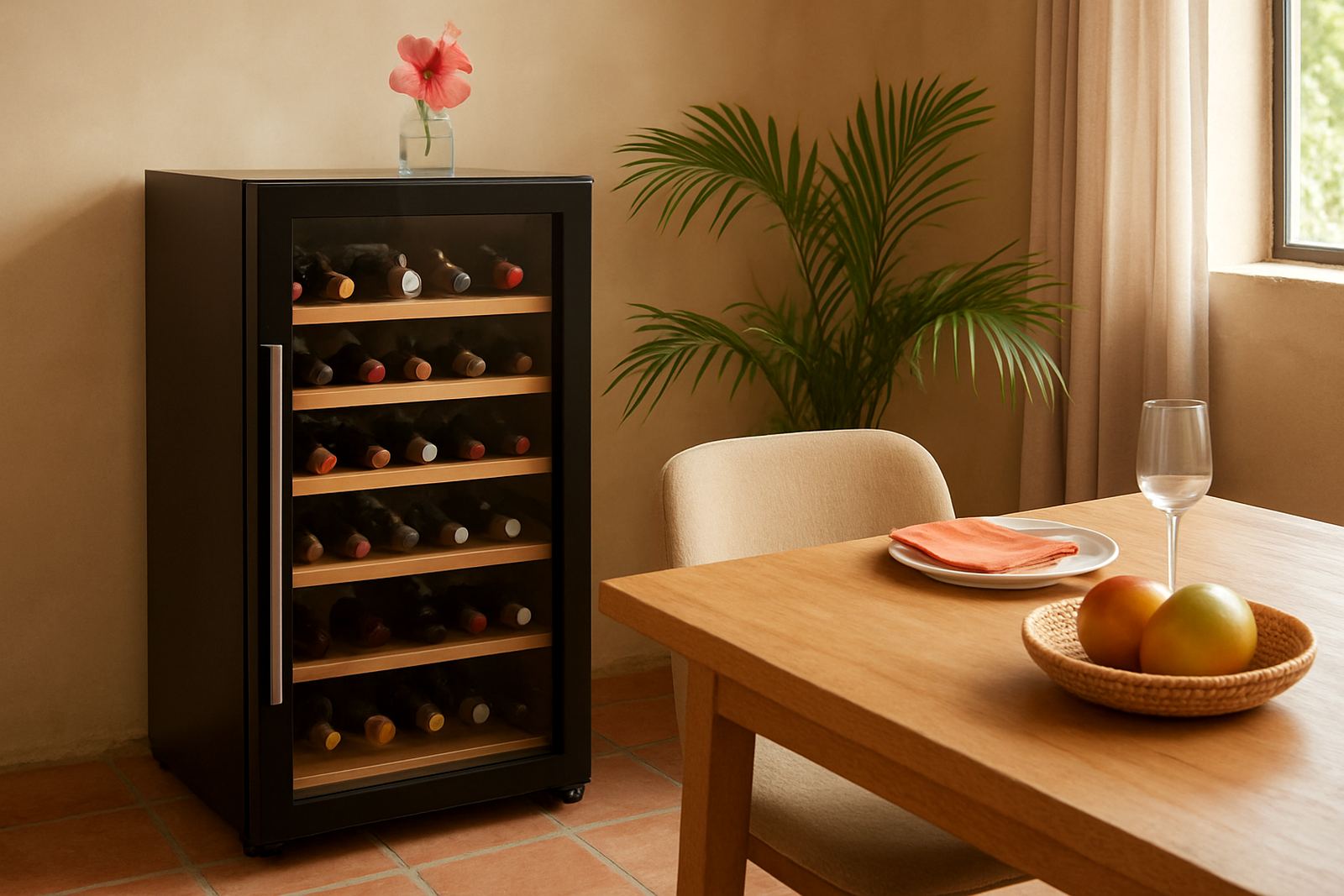
Choose the cabinet style carefully. Built-in units need a front ventilation setup and proper clearances around the frame. Freestanding units need airflow on the sides and back. Some units have single temperature zones, others have dual zones for reds and whites in the same cabinet. Glass doors are common for display, while solid or tinted doors are better where you want less light exposure.
- 12 to 20 bottles: homes, apartments and small office entertaining areas
- 24 to 40 bottles: family homes, private bars and small venues
- 50 bottles plus: restaurants, wine shops and hospitality stock rooms
Where a wine cooler suits best in Cape Town
We see wine coolers used in apartments in the CBD, family homes in Bellville and Claremont, and hospitality spaces along the Peninsula. They work well in tasting rooms, wine sales areas, boutique guesthouses and private entertainment rooms. If the space gets warm in summer or if air conditioning is switched off after trading hours, a dedicated cooler gives better control than a kitchen fridge. It also keeps bottles away from odours from food prep and freezer cycles.
For commercial use, think about how the unit will be loaded and accessed. A restaurant may need quick access near the serving point, while a home may want a lower-noise unit in a dining area. If the unit sits in a busy passage or near the main bar, make sure the door can open fully and that staff can remove bottles without knocking them against counters. That small detail saves time and bottle breakage.
- Homes: neat storage and easier serving
- Restaurants and bars: stock control and faster service
- Guesthouses and tasting rooms: better presentation and temperature control
Power, ventilation and installation needs
Most wine coolers run on standard single phase electricity, but the installer must check the rating plate and the socket position before fitting. Units with compressors need proper airflow, level support and a stable supply. In areas where load-shedding still affects daily operations, many clients ask about how long the cabinet will hold temperature during an outage. The answer depends on insulation, room temperature and how often the door is opened. A well sealed unit will hold better than a cheap one that leaks warm air.
Built-in models need clear vent space, and freestanding models should not be pushed tight against a wall. If the unit is installed near an oven, dishwasher or direct sunlight, it will work harder and use more power. In coastal humidity, we also check for condensation risk around the door seal and hinges. For commercial premises, installation must suit the layout and any municipal or building rules for electrical work, especially where the cabinet forms part of a fitted counter run.
- Check the socket load and plug position before delivery
- Leave the specified clearance for airflow and heat dissipation
- Keep the unit away from ovens, direct sun and damp corners
Care, cleaning and regular servicing
Wine coolers do not need heavy maintenance, but they do need attention. Dust on the condenser or blocked vents can push the compressor harder and shorten the life of the unit. Door seals should be checked for cracks and the inside should be cleaned with a mild solution, not harsh chemicals that leave smell behind. If the cabinet is used daily in a venue, have it inspected during routine refrigeration servicing so small faults are picked up before they turn into warm bottles and spoiled stock.
If you notice uneven temperatures, the unit cycling too often, moisture inside the cabinet or unusual noise, it is time to call for a check. In our Cape Town work we often find simple issues like a dirty condenser, a failing thermostat or a weak fan motor. Those are fixable if they are handled early. For wine coolers that are used as part of a busy bar setup, planned servicing is better than waiting for a warm Friday evening when stock has to move fast.
- Clean the door seal and shelves regularly
- Keep vents clear and dust-free
- Book service if temperature drift or noise starts
What to check before you order
Before you order a wine cooler, check the bottle count, the cabinet width, the installed height and whether the unit must be built in or freestanding. Measure the opening carefully, including space for the door handle and hinge movement. If you want both red and white wine ready at different temperatures, ask for a dual zone unit. If the cooler will be seen by customers, choose a clean finish and lighting that suits the room rather than only looking at the brochure picture.
Also think about service access. A cooler that fits tightly into a cabinet run can be hard to remove later if the fan, thermostat or compressor needs work. Ask what the warranty covers, how the compressor is cooled, and whether spare parts are available locally. For commercial buyers, it helps to match the cooler to the actual bottle mix on site, because large format bottles and champagne take more space than standard Bordeaux bottles. That is where many people misjudge the size.
- Cabinet type: built-in or freestanding
- Capacity: match the real bottle mix, not only the bottle count
- Service access: leave room for future repairs and cleaning
Key facts
| Temperature range | 5 C to 20 C, model dependent |
|---|---|
| Capacity options | 12 to 80 plus bottles |
| Cabinet styles | Freestanding, built-in and undercounter |
| Door options | Glass, tinted glass or solid |
| Power supply | Standard single phase supply on most models |
| Best uses | Homes, restaurants, bars, tasting rooms and guesthouses |