Bellville café project brief
The client was a fast-moving neighbourhood café in Bellville with steady breakfast and lunch trade, a compact kitchen and limited storage space. Their main problem was simple: the dining room got warm by mid-morning and the back-of-house fridges were working too hard to keep up with constant door opening, hot pans and staff movement.
They asked us for a practical setup that would cool the customer area without blowing directly onto tables, and support the refrigeration side so milk, fillings and prepared items stayed within temperature on busy days. Because the café trades early and late, the system also had to recover quickly after load-shedding and not create extra noise for customers.
- Client type: independent café with dine-in and takeaway service
- Town: Bellville, Cape Town northern suburbs
- Work area: customer dining space, prep zone and back-of-house refrigeration
- Main issue: heat build-up, uneven cooling and overworked fridges
Site constraints we had to work around
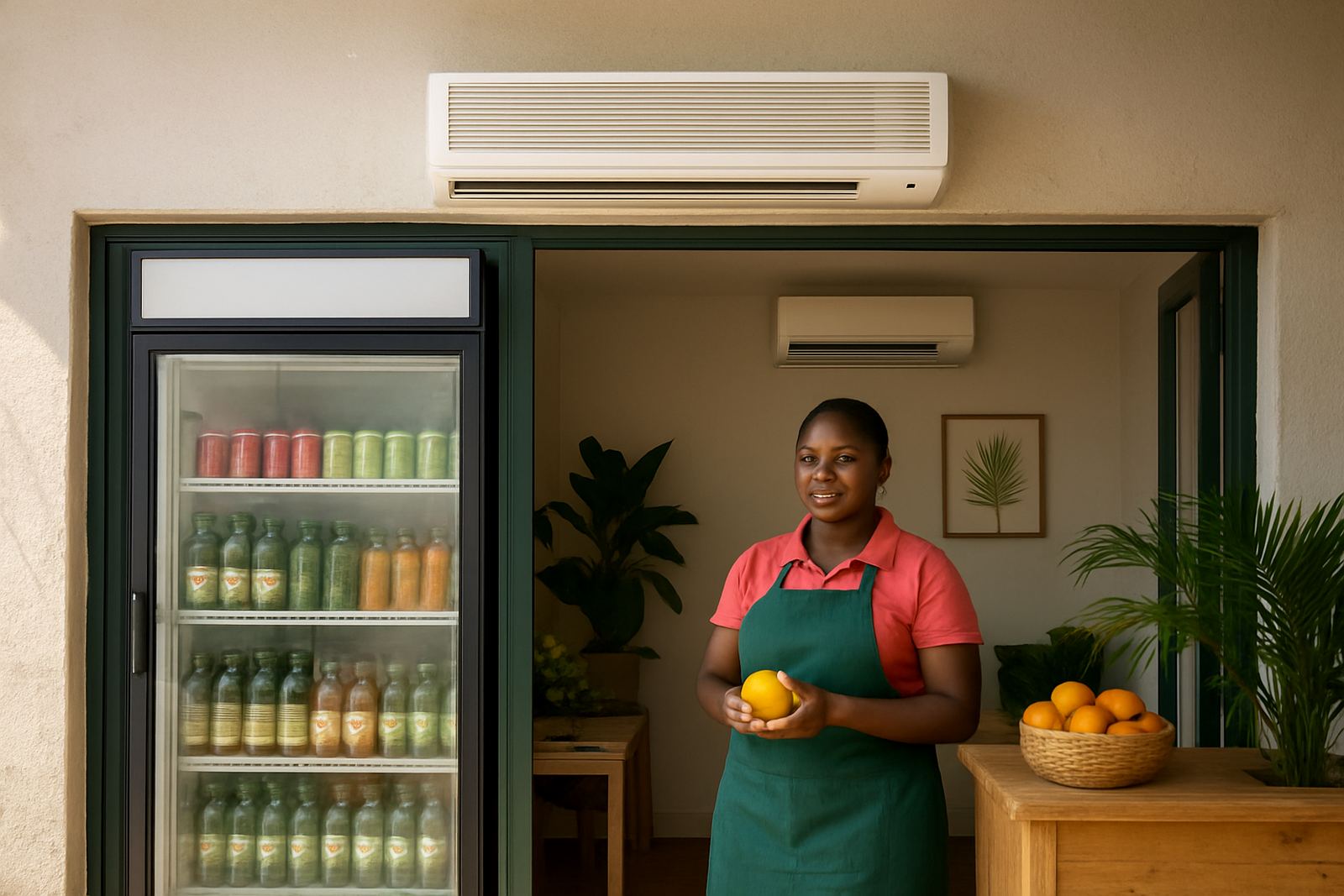
The site had low ceiling sections, a narrow service passage and limited outside wall space for neat pipe runs. There was also a risk of warm air entering every time the serving hatch opened, so placement mattered just as much as cooling capacity. On a site like this, you cant just fit the biggest unit and hope for the best.
Bellville can get hot and dry inland, then dusty traffic and roof heat add to the load. We also had to plan for the café’s trading hours and the reality of municipal-style access limitations in a busy centre, where work needs to be tidy, quick and non-disruptive. Our team scheduled the heavier work before opening time and kept the floor area clear for staff during service.
- Limited wall space for pipework and outdoor unit positioning
- Noise control needed for seated customers
- Existing refrigeration had to stay in use during the changeover
- Work had to fit around early trade and lunch peaks
What we supplied and installed
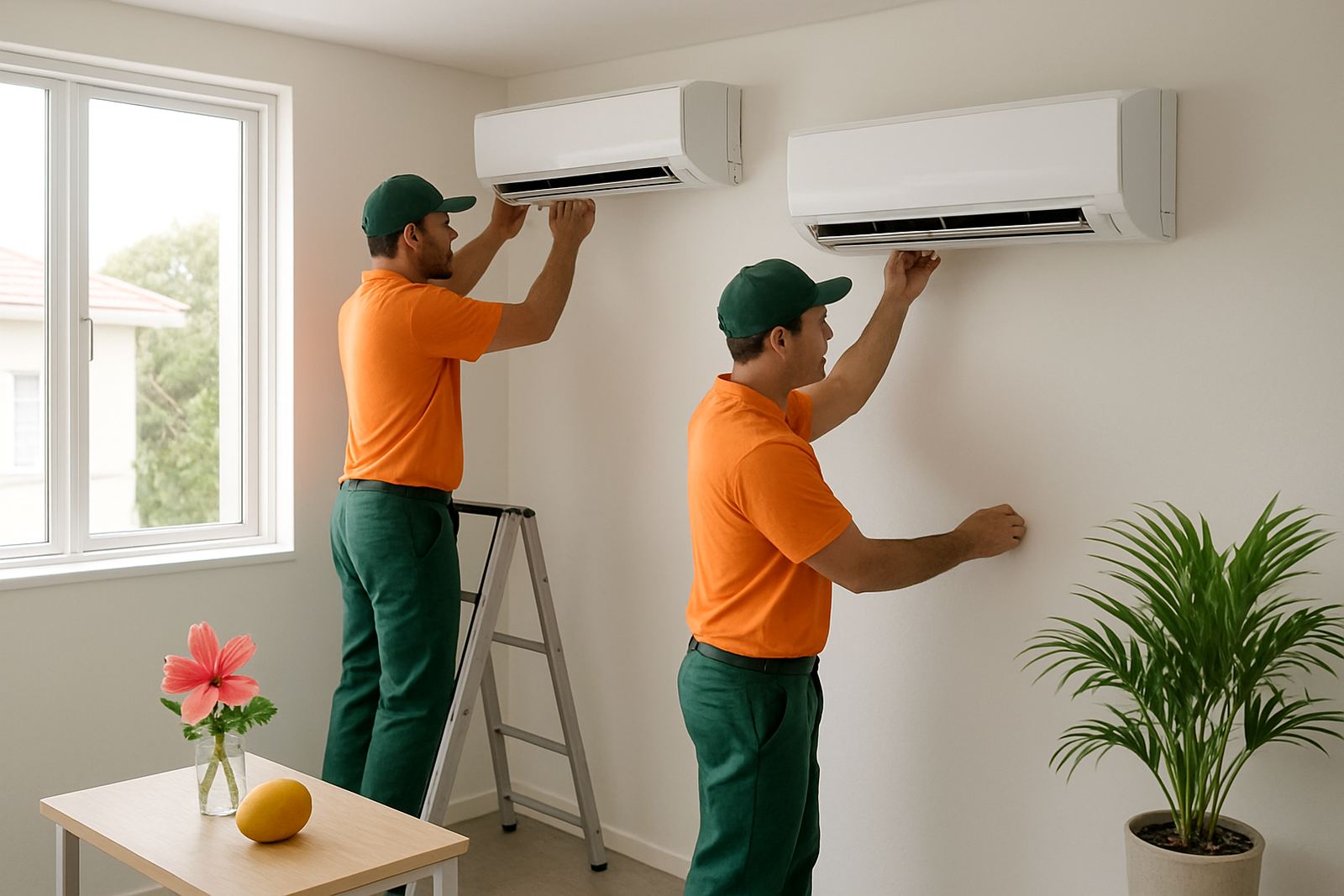
We supplied a correctly sized split air-conditioning setup for the dining area, selected for steady comfort rather than overcooling. The indoor unit was positioned to spread air across the seating area without creating a cold spot near the counter. We also checked the back-of-house refrigeration circuit, carried out leak testing and set up gas support where readings showed low charge on one of the units.
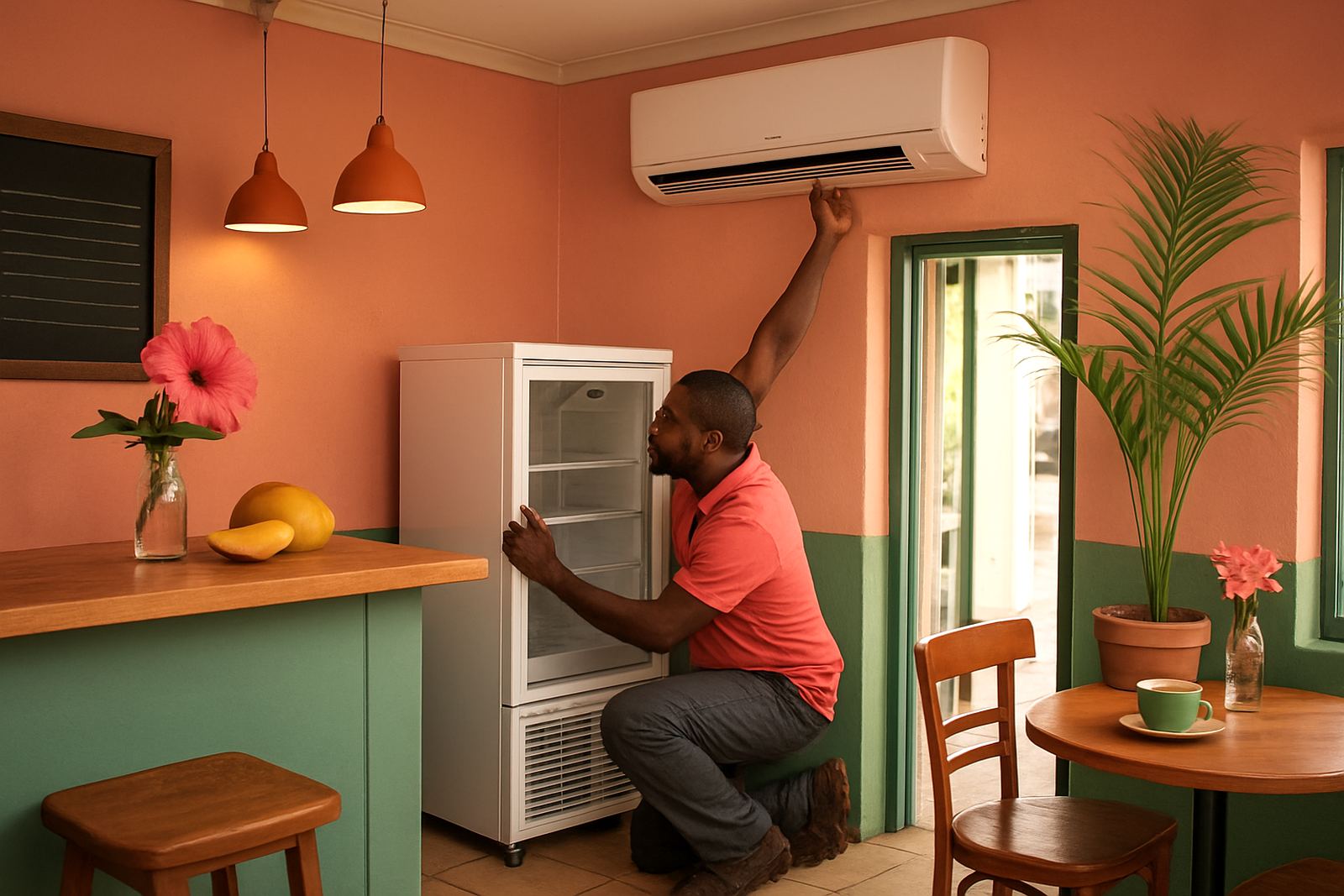
For the refrigeration side, we replaced a weak thermostat on one unit and serviced the condenser section to improve heat rejection. That helped the café hold temperature better during rush periods and reduced short cycling. We also cleaned drain lines, checked fan operation and made sure the defrost cycle was doing its job. Small things matter in a kitchen, especialy when the doors are opening every few minutes.
- 1 x correctly sized split aircon for dining area comfort
- Refrigeration leak detection and pressure testing
- Gas refill on a low-charge unit after leak checks
- Thermostat replacement and system cleaning
- Drain and fan checks to reduce service call-outs
Timeline from first visit to handover
The job took two weeks from inspection to handover. In week one, we assessed the room size, heat load, equipment layout and power supply, then confirmed where pipe routes could run without getting in the way of staff. We also checked the refrigeration units during live trading so we could see the real operating conditions rather than guess from a quiet-site visit.
In week two, our installation and service teams completed the aircon fitment, finished the refrigeration repairs and tested the full setup under load. The final visit was used for commissioning, temperature checks and staff handover. We showed the café manager how to set the aircon for daytime trade and when to call for service if a fridge starts running warmer than usual. We also left the team with clear reset steps after power cuts so they didnt lose time during load-shedding.
Results after commissioning
The dining area became more comfortable within the first trading day after handover, with better air movement and less hot air pooling near the counter. Staff reported that guests were staying seated longer, which helped the café hold its lunch trade without complaints about stuffiness. The back-of-house refrigeration also settled down, with more stable temperatures and fewer alarm-type checks from the team.
Because the refrigeration gear was not running flat out all the time, the café gained a little breathing room during busy service periods. That matters for food safety and for costs too, especially in summer and during power interruptions. A steady system means fewer emergency calls and less waste from product spoilage.
- More even temperature in the customer seating area
- Less strain on refrigeration during peak service
- Quieter operation in the dining space
- Better response after outages and daily restart cycles
Why this approach worked for Bellville
We did not treat this as a simple aircon install. The café needed one plan for comfort and another for food storage, and both had to work together. That meant proper sizing, tidy routing, service access and a repair plan that respected the way a café actually runs. In a busy Bellville setting, that practical order makes the difference between a short fix and a lasting result.
For projects like this, we would use the same approach again: inspect during trading hours, confirm the heat load, check the refrigeration first and then fit the cooling system around the site’s real limits. If the unit choices are right from day one, the staff spend less time thinking about equipment and more time serving customers. It keeps the kitchen moving and avoids unnecessary call backs.
What we would repeat on the next café job
The key lesson was to keep the scope tight and the communication clear. We made sure the manager knew what was happening each day, when the power would be isolated and what signs to watch for after handover. That kept pressure off the team and reduced confusion during service.
If we were doing the same style of job again in Bellville, Claremont or Milnerton, we would follow the same steps: measure properly, allow for heat from equipment and people, test refrigeration under load and leave simple maintenance notes for the staff. That approach suits Cape Town cafés where space is tight, weather can shift quickly and load-shedding still affects daily trade.
Key facts
| Project type | Bellville café cooling and refrigeration support |
|---|---|
| Location | Bellville, Cape Town |
| Timeline | 2 weeks from assessment to handover |
| Aircon work | Split system installation for dining area comfort |
| Refrigeration work | Leak detection, gas refill, thermostat replacement and servicing |
| Key outcome | Steadier customer comfort and more reliable back-of-house cooling |