Why cooling downtime hurts small businesses fast
In Cape Town, a cooling fault is not only an inconvenience. For a restaurant in the CBD, a salon in Claremont, or a small grocer in Bellville, it can mean warm stock, unhappy customers and staff trying to work around a problem that should have been dealt with sooner. In summer the pressure is obvious, but even in winter a bad thermostat or low gas charge can push electricity use up while the unit still fails to hold temperature.
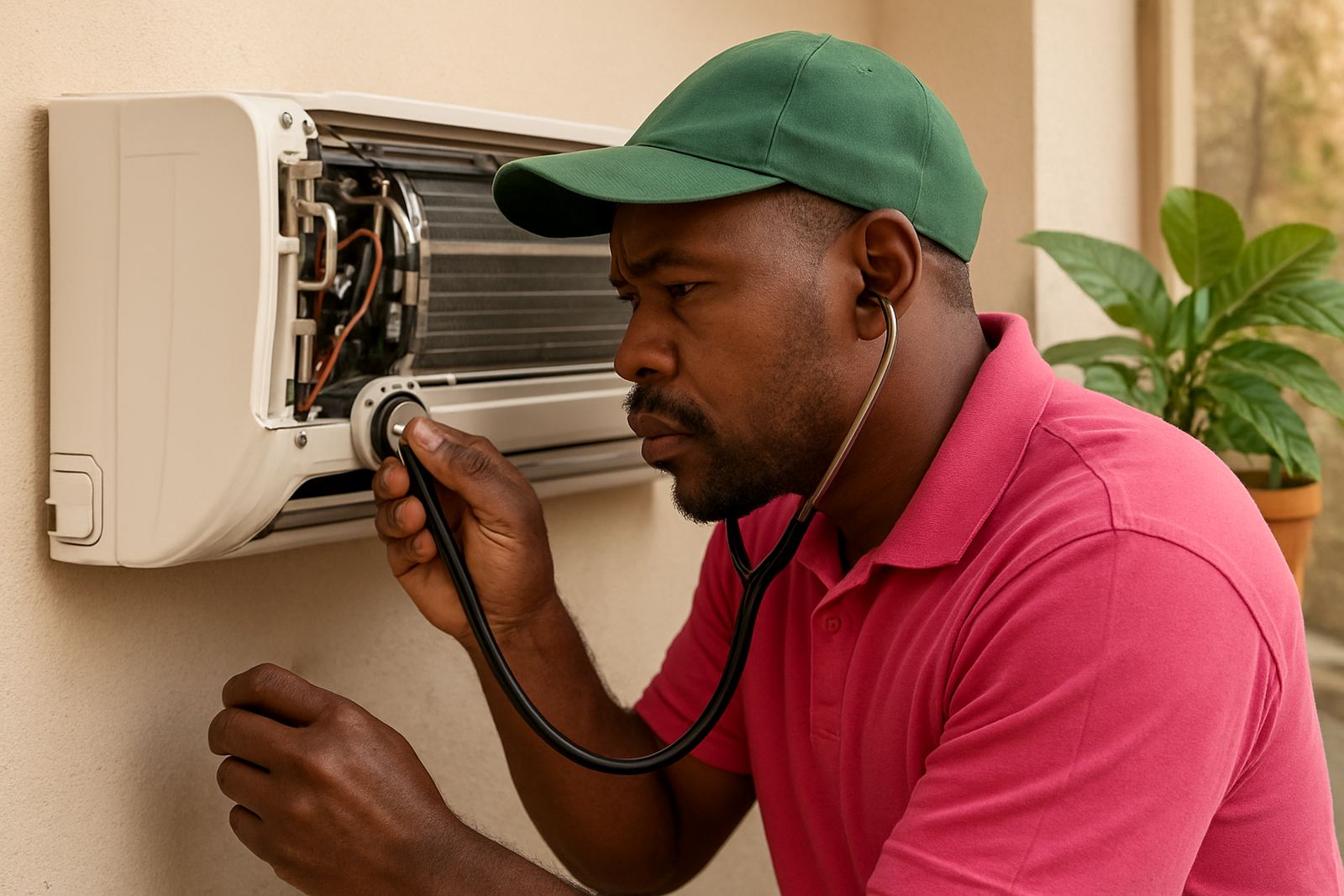
The biggest mistake is waiting until the unit stops completely. A noisy compressor, ice build-up on the pipework, weak airflow or short cycling are early signs that the system needs attention. If you report the fault while the unit is still running, the technician has a better chance of saving the equipment and limiting the down time. That small change often makes the difference between a simple repair and a spoiled stock problem.
What to check before you call for help
Most staff can do a quick visual check without tools. The aim is to gather useful facts, not to open equipment or guess at the cause. A clear report helps the service coordinator send the right technician with the right parts.
- Check whether the unit is still cooling at all, or only partly.
- Look for ice on coils, water dripping, or unusual noise.
- Confirm if the power tripped after load shedding or during a surge.
- Note the set temperature and the actual temperature in the room or fridge.
- Tell the technician if the fault started after cleaning, a storm, or a power cut.
For businesses near the coast, salt air and moisture can also speed up corrosion on outdoor components and fan motors. In places like Fish Hoek and parts of the Peninsula, that matters. A unit that is cleaned and serviced on time usually lasts longer than one that only gets attention after it fails.
Routine checks that keep systems running
A proper routine does not need to be complicated. It just needs to happen on time. Many cooling faults start small, with blocked filters, loose electrical connections, dirty condensers or a thermostat that is no longer reading correctly. These issues are cheaper to fix during a planned visit than in the middle of a busy Friday.
For aircon systems, a service should include filter cleaning, coil inspection, gas pressure checks and a look at the drainage line. For cold rooms and freezers, the focus is different. Door seals, defrost settings, compressor condition and fan operation matter more, because one weak part can affect the whole storage area.
- Set a service schedule before the hot season starts.
- Keep outdoor units clear of dust, leaves and building rubble.
- Do not block indoor return air paths with furniture or stock.
- Record odd sounds, smells or vibration as soon as they appear.
Routine checks also help with municipal and workplace hygiene expectations, especially where food is stored or prepared. A clean, well maintained system is easier to defend during an inspection than a unit that has been patched repeatedly.
Spare planning saves hours when something fails
Small businesses do not always need a full spare room of parts. They do, however, need a sensible plan for the pieces that fail often enough to cause delays. A thermostat, a fan motor, contactors, certain controls and refrigerant gas are common items that can slow down a repair if nobody has thought about them in advance.
Good spare planning starts with the age of the equipment, the usage pattern and the risk of the business if the unit goes down. A guesthouse in Somerset West may need a different plan from a butcher in the CBD or a takeaway in Milnerton. If stock losses are high, it is worth identifying which parts should be kept on hand and which can be sourced quickly.
Keeping a simple equipment list helps too. Include the make, model, installation date, service history and any past faults. When a technician arrives with that information, repair time usually drops. It also helps if the replacement part has to be matched to an older unit that was installed years ago and has had a few repairs already.
A Cape Town example: from slow panic to planned response
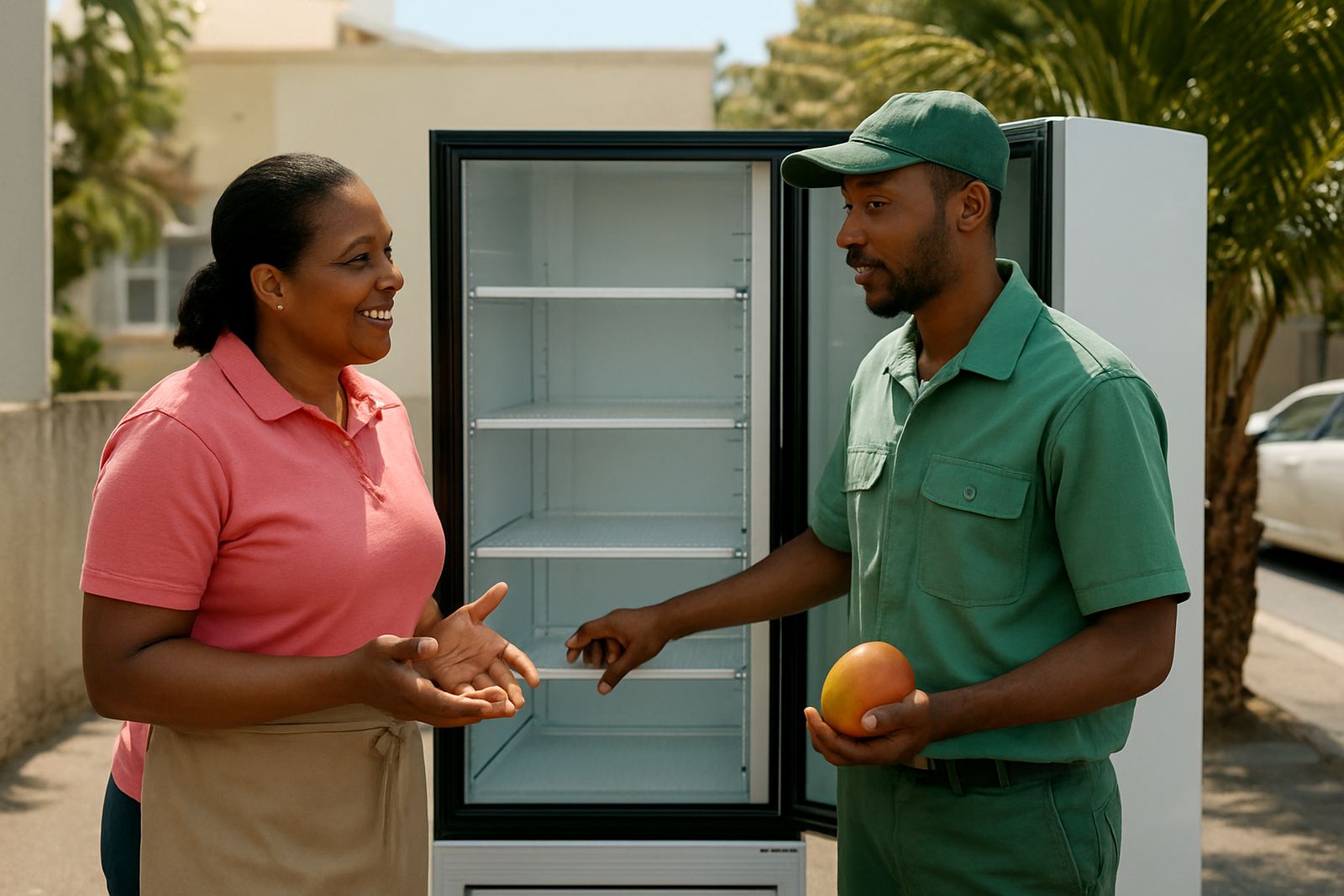
A small food retailer in the Cape Town CBD called after a freezer started warming overnight. Staff had noticed frost on the door seal for two weeks but did not log it because the unit still seemed to be running. By the time the issue was reported, the compressor was cycling hard and the temperature was drifting every hour. Stock had to be moved and part of the delivery was delayed.
After the repair, the owner changed the process. Staff now log temperature checks twice a day, and any frost, noise or door seal problem is reported immediately to the service coordinator. A basic spare list was added for the thermostat and fan motor, and the unit is serviced before the summer rush. The result was not magic, just better timing. The business recovered faster because the warning signs were acted on earlier.
When to book repairs instead of waiting
Some faults can wait a day or two. Others should not. If a cold room is climbing above safe storage temperature, if a freezer is building up heavy ice, or if an aircon is tripping repeatedly, the business should book repair work as soon as possible. Waiting often makes the fix bigger and dearer.
It is also worth arranging a check after power interruptions, lightning events or major site work. Electrical surges can damage controls and compressors even when the unit looks fine at first. A quick inspection can catch hidden problems before they cause another shutdown.
For businesses across Cape Town and the Peninsula, the common pattern is the same. The fastest recoveries happen when staff notice the fault early, the report is clear, and the technician can arrive with a proper plan. That is usually better than hoping the unit will keep going on its own.
A practical service plan for everyday use
If you want fewer cooling interruptions, keep the plan simple and realistic. Make sure one person knows how to report a fault, another keeps the service records, and the equipment is checked before the season puts pressure on it. That approach works for offices, shops, kitchens and storage spaces alike.
- Log temperatures morning and afternoon.
- Report faults the same day, not after the weekend.
- Schedule preventive servicing before peak heat or peak stock periods.
- Keep contact details for your service team where staff can find them quickly.
- Review older equipment before it reaches repeated fault stage.
Cooling downtime will never be zero, but it can be reduced. Fast reporting, routine checks and spare planning give small businesses a better chance of staying open, keeping stock safe and avoiding last minute scrambling when the heat is on.