Why one corner of the office always feels hotter
In Cape Town offices, hot spots usually show up in the same places: near windows, along open-plan edges, around meeting rooms with glass fronts, and beside printers or server cabinets. The system may be working, but the conditioned air is not reaching every part of the room evenly. That is common in older CBD buildings, as well as newer offices in Bellville and Milnerton where the layout changes after the original installation.
Glazing can make matters worse. Morning sun on a west-facing wall or late afternoon heat through large panes can push one section of the office several degrees higher than the rest. If the diffuser is blowing straight down a passage or into a corner, the cooler air never mixes properly and people sitting nearby feel the difference straight away. We see this often in open-plan offices where the furniture plan changed after the aircons were fitted.
A proper fix starts with finding out whether the problem is airflow, control, heat load or a combination of all three. Guessing usually leads to another service call two weeks later, and no one wants that.
Check the room before touching the unit
Before any repair or adjustment, look at the room itself. A clogged return air grille, closed door, stacked files or a cabinet sitting in front of a diffuser can upset the whole balance. In offices with split systems, even a simple change like moving workstations or adding a partition can create a warm strip across one side of the room.
Our team usually starts with a practical walk-through and then checks the unit settings, airflow direction and temperature drop. In some cases the issue is as simple as a dirty filter or a blocked return. In others, the unit is undersized for the actual room load, especially where the office has more staff, more equipment or stronger sun exposure than it had when the system was first installed.
- Check whether furniture is blocking supply or return airflow
- Look for direct sunlight through glass or skylights
- Confirm that doors to adjoining spaces are being left open or closed as needed
- Inspect filters, grilles and drain lines for dirt or dust build-up
If the office is in a coastal area like Fish Hoek or the Cape Peninsula, salt and moisture can also shorten the life of electrical parts and fan components. That does not mean the unit is failing, but it does mean servicing needs to stay on schedule.
Glazing, blinds and heat gain are part of the problem
Glass looks neat in an office, but it can be a major source of heat gain. Large windows, especially on the afternoon side of the building, can overpower a correctly sized aircon. A unit that feels fine in winter may struggle badly in summer once the sun load is added. This is why two rooms with the same square metreage can behave very differently.
Blinds and film can help, but they do not replace proper airflow. If the diffuser is dumping cold air into the centre of the room while the windows cook the edge area, you will still get complaints from staff sitting near the glass. The answer may be a better diffuser position, a second indoor unit, or a revised fan speed setting so the air reaches further across the room.
We also see offices where the thermostat is mounted in a bad spot. If it sits too close to a diffuser or in a shaded internal passage, it may shut the unit down before the warm zone has cooled. That small detail can cause a big argument over whether the system is “too cold” or “not cold enough”.
When a gas refill will not solve a warm zone
People often assume warm spots mean the unit is low on gas. Sometimes that is true, but not always. If there is a leak, poor installation spacing or a refrigerant issue, a refill may only hide the fault for a short time. Aircon gas refill work should go hand in hand with leak detection, because topping up again and again is expensive and hard on the system.
In an office, uneven cooling can also come from a weak fan motor, a blocked evaporator coil or a thermostat that is not reading correctly. If one side of the room is warm and the other side is freezing, the problem may be more about distribution than refrigerant level. A technician needs to test the whole circuit, not just add gas and walk away.
- Refrigerant leak causing low cooling output
- Fan or motor issue reducing air throw
- Thermostat sensing the wrong spot in the room
- Dirty coil limiting heat removal
- Incorrect unit size for the office load
On commercial jobs we also check whether the system cycles too often during load-shedding recovery. After power interruptions, some offices come back up in stages and the temperature swing can make weak points show up faster than usual.
A Cape Town office example from Montague Gardens to the CBD
A recent office call in the Cape Town area came from a company with an open-plan floor, glass meeting rooms and a bank of workstations close to the windows. Staff in the centre of the office were comfortable, but the side row kept getting warm by mid-afternoon. The aircons had been serviced, so the client expected a major repair. It turned out the main issue was diffuser placement combined with afternoon sun on the western glazing.
We adjusted the airflow direction, cleaned the system, checked the controls and recommended a simple change to the blind routine during peak sun. In one meeting room, a thermostat was also reading from a cooler internal wall, so it was cutting out too early. After the changes, the complaints dropped off and the office no longer had that one stubborn hot patch.
That is a good example of why warm zones need a site-specific fix. What works in Bellville may not be enough for a CBD office with more glass and less natural ventilation, and what works in Somerset West may need a different approach in a compact Milnerton workspace.
What our technicians look at during a hot spot call-out
At Tropical Refrigeration, we handle office hot spot problems as part of our aircon repairs and servicing work across Cape Town and the Peninsula. Based in Montague Gardens, we support offices in the CBD, Milnerton, Bellville, Claremont, Somerset West and Fish Hoek. Our approach is practical: test the unit, measure what the room is doing, and fix the real cause rather than chasing symptoms.
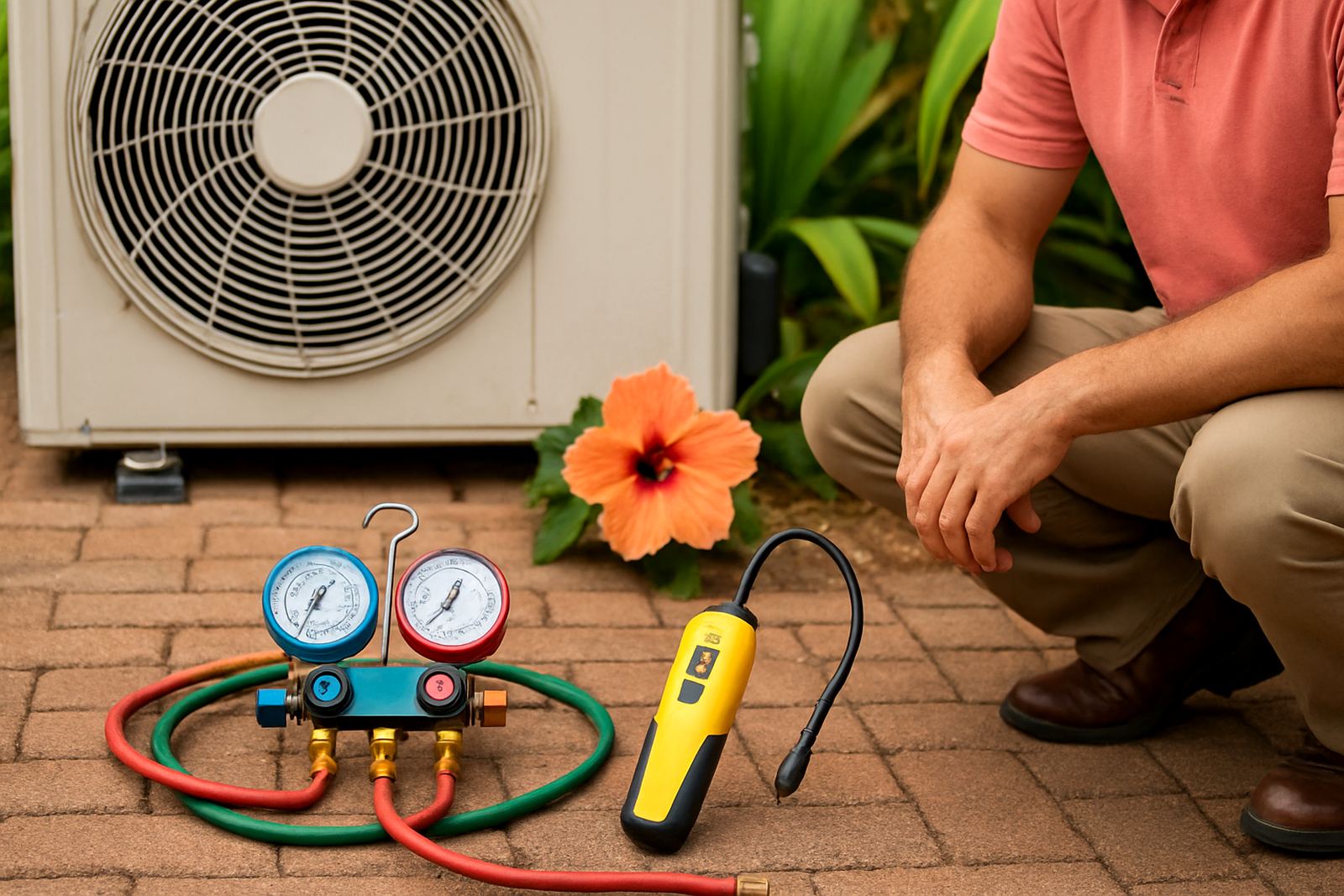
Typical checks include airflow direction, filter condition, coil cleanliness, thermostat position, refrigerant pressure, drain performance and signs of vibration or electrical wear. If the system needs a gas refill, we will look for the leak first. If the room layout is the issue, we will say so. If the unit is past its useful size for the space, it is better to know that upfront than keep spending money on short-term patches.
For offices running through hot spells and power cuts, regular servicing matters. Dust builds up quickly in busy workspaces and can make an ordinary unit feel weak long before it actually fails. A good service schedule keeps the air moving properly and gives you a better chance of avoiding uneven cooling when the next heat wave hits.
When to call us in before the next warm week
If staff are shifting seats to find cooler spots, the system is already telling you something. The same applies when one meeting room is always stuffy, the reception area feels fine but the back office does not, or the thermostat has to be turned down lower every week. Those signs are worth checking early, before the compressor or fan starts working harder than it should.
We can assist with aircon installation, repairs, gas refills, servicing and leak detection, as well as ventilation servicing for offices that need better air movement. For commercial refrigeration and cold room work, the same attention to airflow and temperature control applies. If your office has a hot corner that never quite sorts itself out, it usually has a reason. We can find it and fix it properly.