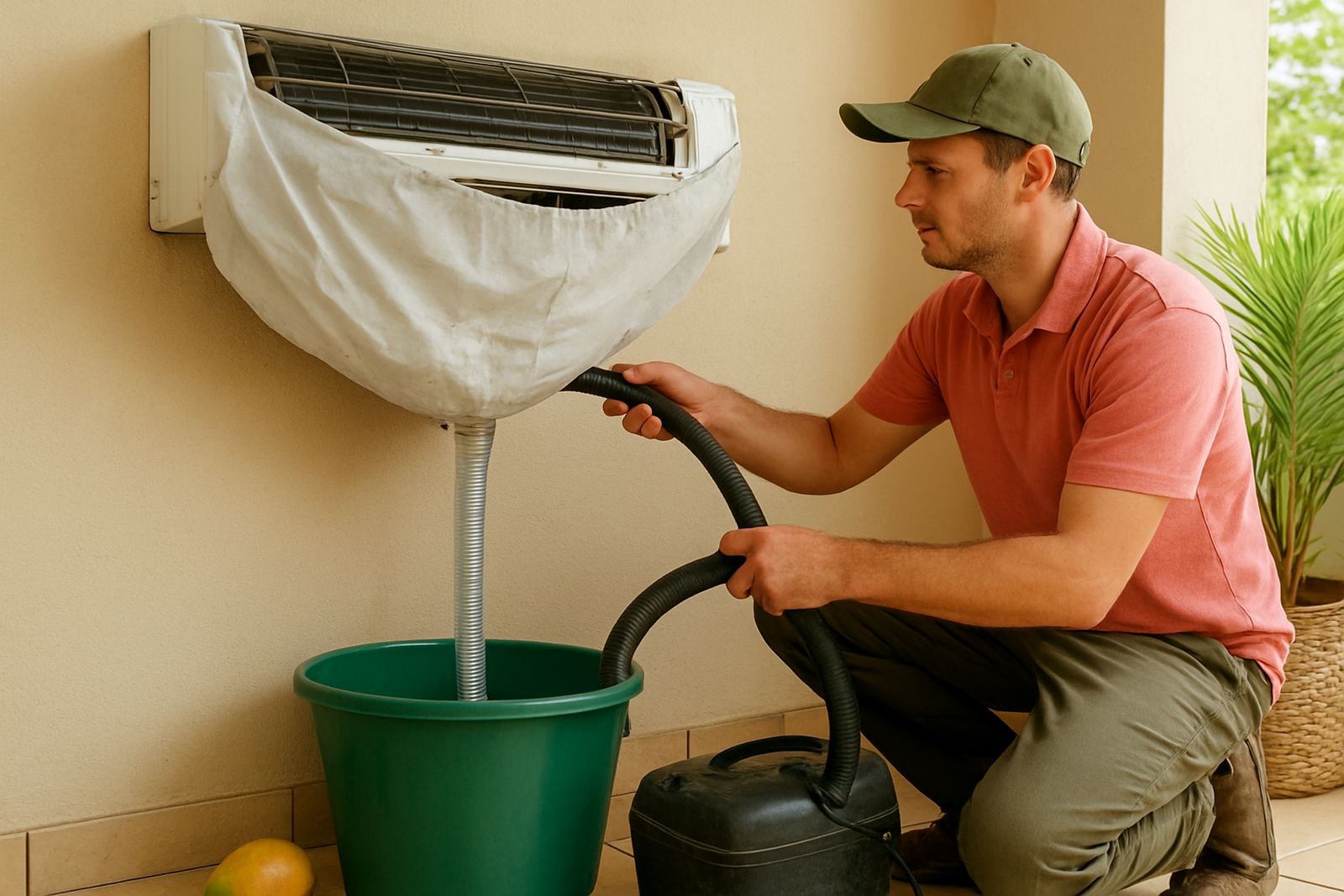
Musty Smell Around the Indoor Unit Usually Means Water Is Sitting Too Long
When an air conditioner starts giving off a stale or musty smell, people often blame dust in the filters. Sometimes that is part of it, but a blocked condensate drain is just as likely. The drain is meant to carry away the moisture your unit pulls from the air. If it slows down or stops, water sits in the tray and begins to smell. In coastal areas like Milnerton, Fish Hoek and Somerset West, the extra moisture in the air can make this happen quicker than people expect.
You may notice the smell most when the unit first starts up or after it has been running for a while. If the room is closed and the smell gets stronger, it is worth checking the drain before the problem spreads to the plasterboard or the carpet below. A quick inspection by a technician from Tropical Refrigeration can tell you whether it is a simple blockage, a fallen pipe section, or a deeper issue with the pan or pump.
Dripping From the Indoor Unit Is Never Normal
A healthy air conditioner should remove moisture quietly and send it away through the drain line. If you see dripping from the front grille, the corners of the casing, or a steady drop from the wall below the unit, the drain path is probably restricted. In many Cape Town installations, especially in older apartments and shopfronts, the pipe runs through tight spaces and a small kink can slow the water flow enough to cause overflow.
Do not ignore a few drops because they often turn into a steady leak once the unit has been running for an hour or two. That is when ceilings stain, walls bubble and electrical fittings nearby can become a concern. If the unit is on a high wall, the water may run inside the cavity before you notice it, which makes the damage harder to trace later.
- Water dripping from the front panel
- Wet marks on the wall below the unit
- Gurgling or trickling sounds after switch-on
- Short bursts of dripping that come and go
Overflow Marks and Brown Stains Show the Problem Has Been Building for a While
Overflow marks are the clearest sign that water has been escaping from the tray or drain route for some time. You might see brown lines on painted walls, a yellow ring on ceiling boards, or a small bulge in the paint near the indoor unit. These marks usually appear after repeated minor leaks, not just one bad day. By the time the stain is visible the drain has often been slow for weeks.
In offices around the Cape Town CBD and Bellville, these stains can lead to complaints from tenants and building managers because they show up above counters, filing areas and reception spaces. In a home, the first sign may be a patch near a curtain rail or along the skirting board. If you see any of this, it helps to book a proper aircon service and not wait for the next heat spell. The system may be working but the drainage side is already failing.
What Usually Blocks a Condensate Drain in Cape Town Properties
Condensate drains pick up fine dust, algae, mould, insect matter and sometimes bits of insulation or tape from a rushed installation. In dry inland conditions the buildup may happen slowly, but in Cape Town the mix of sea air, windblown dust and regular cycling during summer can speed things up. If the unit is used during load-shedding recovery periods or switched on and off often, that stop-start pattern can also leave water sitting in the line longer than usual.
Some of the most common causes we see are simple and preventable:
- Dust buildup in the drain tray
- Slime or algae inside the pipe
- A kinked or sagging drain line
- Poor fall on the pipe, so water does not run out properly
- A blocked outlet at the outside end
- Damage from a recent renovation or ceiling repair
At Tropical Refrigeration, our technicians check the drain path as part of repair work, gas refills and scheduled servicing because a clean filter alone does not solve every moisture problem. If the drainage route is weak, the unit can still leak even when the cooling side is fine.
A Quick Home Check Can Help You Catch It Early
You do not need to strip open the unit to spot early warning signs. A few simple checks can tell you when it is time to call for help. Start with the area directly under the indoor unit and look for damp patches, discolouration, or a smell that seems to hang in the room. Then check the outside drain exit if it is visible, especially on ground floor units. If water is coming out very slowly, or not at all when the system has been running, the line may be blocked.
Listen as well. A slow drain can make a soft bubbling or gurgling noise. That sound is easy to miss in a busy office, but it is often the first warning before overflow starts. If you are unsure, switch the unit off and arrange an inspection. Leaving it running can push more water into the pan and increase the chance of a ceiling stain.
- Smell the room after 15 to 30 minutes of operation
- Check for damp on the wall or skirting
- Look for water at the outside drain point
- Watch for repeated dripping after shutdown
Why Fast Action Matters for Homes, Shops and Offices
A blocked drain is not only a comfort issue. In a home, it can damage paint, ceilings, curtains and flooring. In a shop or office, it can affect stock, computers and customer areas. Water and electricity do not mix well, so a small drip near a light fitting or plug point should be treated seriously. The cost of clearing a drain is usually far less than patching damp ceilings or replacing damaged boards later.
For landlords and building managers, the bigger issue is that a leaking unit can trigger repeat complaints. The team at Tropical Refrigeration works across Cape Town, from Claremont and the CBD to Montague Gardens and Somerset West, so we see how quickly a minor blockage turns into a bigger maintenance call. A proper service, leak check and drain clean can keep the system running cleaner and quieter through the season.
When to Call Tropical Refrigeration for Drain Blockage Signs
If you have musty smells, dripping, overflow marks or repeated water pooling under an air conditioner, it is time to get the drain checked. That is especially important if the unit is older, has recently been reinstalled, or was last serviced a long time ago. Sometimes a blocked drain is the whole issue. Sometimes it points to a deeper problem with the pump, tray, slope or insulation. Either way, a trained technician can sort it out before the damage spreads.
Tropical Refrigeration has served Cape Town and the Cape Peninsula since 2013 from our Montague Gardens base. We handle aircon repairs, servicing, installations and gas refills for homes and offices, plus commercial refrigeration work such as cold room and freezer repairs. If you need help, email bookings@tropicalrefrigeration.co.za and our team can arrange a visit in your area. One quick call now can save a lot of clean-up later.