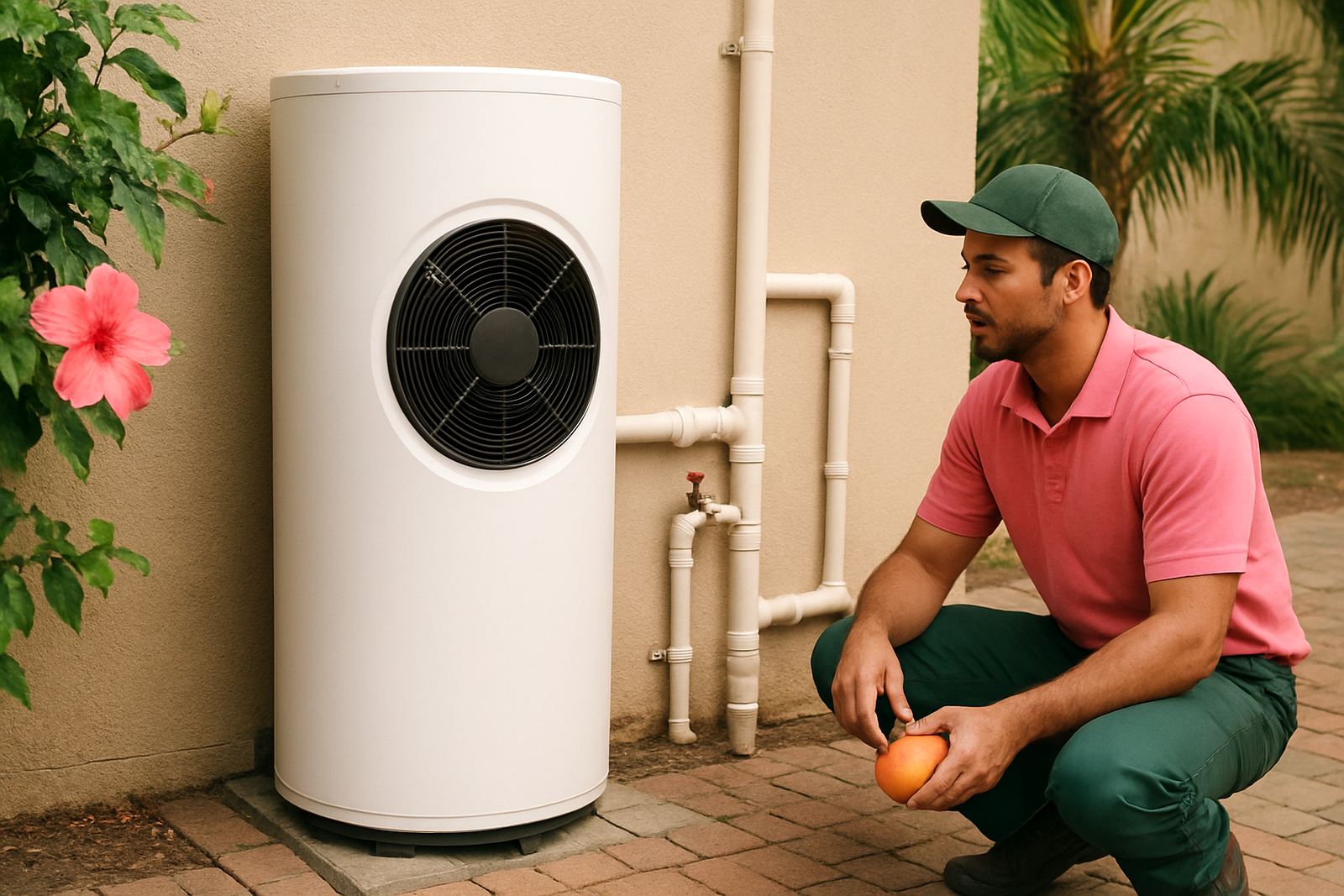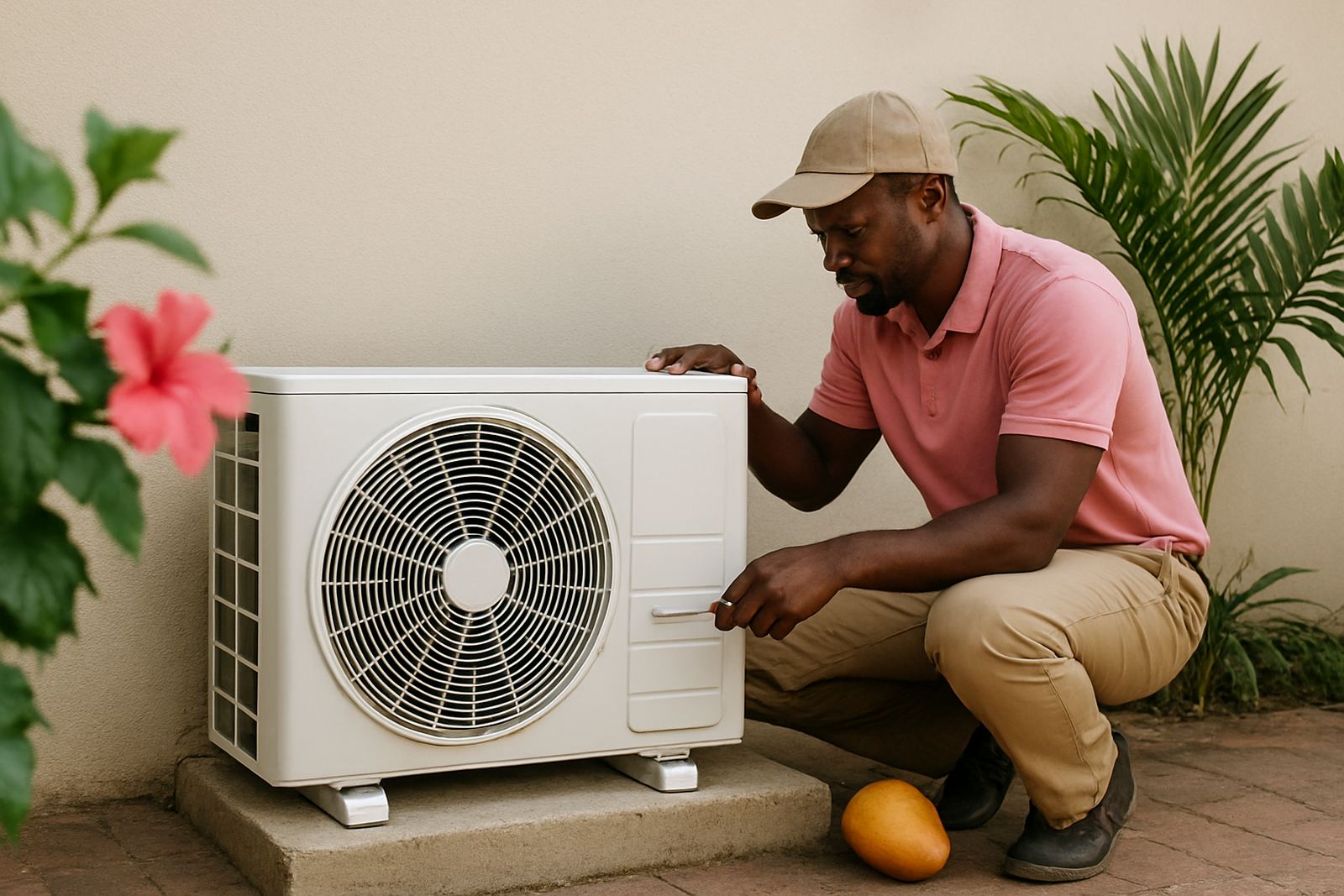
Why the outdoor unit needs clear air
The condenser on an aircon or refrigeration system must dump heat into the open air. When it sits in a tight corner, against a wall, under a roof overhang or behind stored items, hot air gets trapped and cycles back through the coil. That pushes up running time, indoor comfort drops, and the compressor has to labour longer than it should.
In Cape Town this matters even more because many units face salt air, windblown dust and heat off paving or zinc roofs. A unit in a parking bay or a narrow side passage can look fine from the outside, but if it is drawing in hot air from every side, it is still not breathing properly. We see this often in Milnerton, the CBD and along the Cape Peninsula where space is tight and installations are squeezed into whatever corner is available.
Spacing rules that save compressors
There is no single spacing rule for every model, but the basic principle is simple: give the unit open space on the intake and discharge sides. Leave enough room for air to move freely around the coil, and do not box the unit in with tools, bins, garden furniture or storage cages. A bit of space today can save a costly compressor replacement later.
- Keep the front and sides clear of clutter.
- Do not stack items against the grille or fan area.
- Leave access for cleaning and repairs.
- Mount the unit where service panels can open fully.
- Avoid tight alcoves that trap warm air and recirculate it.
If the unit is installed on a wall bracket, check that the bracket height still allows decent air movement below it. On rooftop or balcony installs, make sure other equipment is not blowing hot air straight into the condenser. We have seen a simple garden wall cause repeated high-pressure trips just because the unit was breathing its own hot air, which is a problem that looks small but turns expensive fast.
Shade helps, but covering is not the same as cooling
A condenser can benefit from shade in summer, especially on west-facing walls in Bellville, Somerset West and Claremont where afternoon sun is hard on equipment. Shade keeps the casing cooler and can lower strain on the system, but the shade must never block the airflow path. A cramped cover, canvas wrap or decorative screen can do more harm than good.
Use shade from a roof edge, louvred structure or nearby planting only if the unit still has open sides and enough room to throw out warm air. Avoid placing a condenser under a drip line, because constant water drip leads to rust and can cause electrical issues. Coastal humidity also means any trapped moisture lingers longer, so the unit needs dry, moving air rather than a sealed pocket of shade.
What bad airflow looks like on site
When airflow is poor, the symptoms usually show up before the unit fails completely. The system may run longer, stop and start too often, trip on pressure, or struggle to cool a room that used to reach temperature quickly. In refrigeration equipment, poor condenser airflow can also cause unstable cabinet temperatures and extra wear on the compressor.
- Warm air blasting back onto the wall or into a covered corner.
- Visible dirt, fluff or grease on the coil fins.
- Frequent tripping during hot weather or load-shedding recovery.
- Odd fan noise, vibration or short cycling.
- Higher electricity use without better cooling.
On commercial sites, a blocked condenser can lead to stock risk very fast. Cold rooms and freezers need steady heat rejection, and when the outdoor coil cannot lose heat, the system loses control. That is when a routine check becomes a call-out after hours, and nobody wants that in a busy kitchen or store room.
Cape Town conditions make airflow maintenance matter more
Cape Town’s mix of sea air, dust, wind and load-shedding puts extra pressure on outdoor units. Salt in the air can cling to fins and fans, then corrosion starts around fasteners and electrical parts. Dust from open yards or nearby roadworks fills the coil. After power cuts, units often restart into hot conditions, so any airflow problem gets exposed quickly.
That is why regular washing of the condenser coil matters. It should be cleaned with the right pressure and direction so the fins are not bent flat. If the fan motor is weak, the blade is damaged, or the coil is clogged with grease and fluff, airflow drops even if the unit is in a decent position. A neat installation still needs servicing now and then, otherwise the unit slowly works itself into trouble.
A practical Cape Peninsula example
A homeowner in Fish Hoek may place an outdoor unit in a narrow side yard to keep it out of sight. The space looks tidy, but the passage is enclosed by walls and a washing line, with the condenser sitting right beside a hot paving strip. On a calm afternoon the unit pulls warm air back over itself, the compressor runs harder, and the room never quite cools. The owner thinks the gas is low, but the real issue is airflow.
When we check a site like that, we look at spacing, fan condition, coil cleanliness and whether the unit needs a better mounting position. Sometimes the fix is simple, such as lifting the unit, clearing the space or moving stored items. Other times a full service is needed because poor airflow has already caused strain on the system. It is cheaper to sort the airflow now than to replace a compressor later, that is the plain truth.
What to ask before a new install or repair
If you are planning a new aircon or refrigeration job, ask where the condenser will sit and how air will move through that spot through summer and winter. A good installer will check access for maintenance, drainage, sun exposure and local conditions before drilling or mounting anything. In Cape Town, that includes wind, salt air, municipal rules where relevant, and whether the unit can be serviced without scaffolding or major disruption.
- Can the unit breathe freely on all working sides?
- Will it be easy to clean the coil and fan later?
- Is the spot protected from direct rain and drip lines?
- Will it sit clear of bins, walls, washing and stored goods?
- Can the system be reached quickly during a fault or service?
For home and office air-conditioning, as well as cold rooms and freezers, airflow is not a small detail. It is part of the job. If the condenser can reject heat properly, the whole system settles down, runs better and lasts longer.