Why indoor water leaks start at the drain line
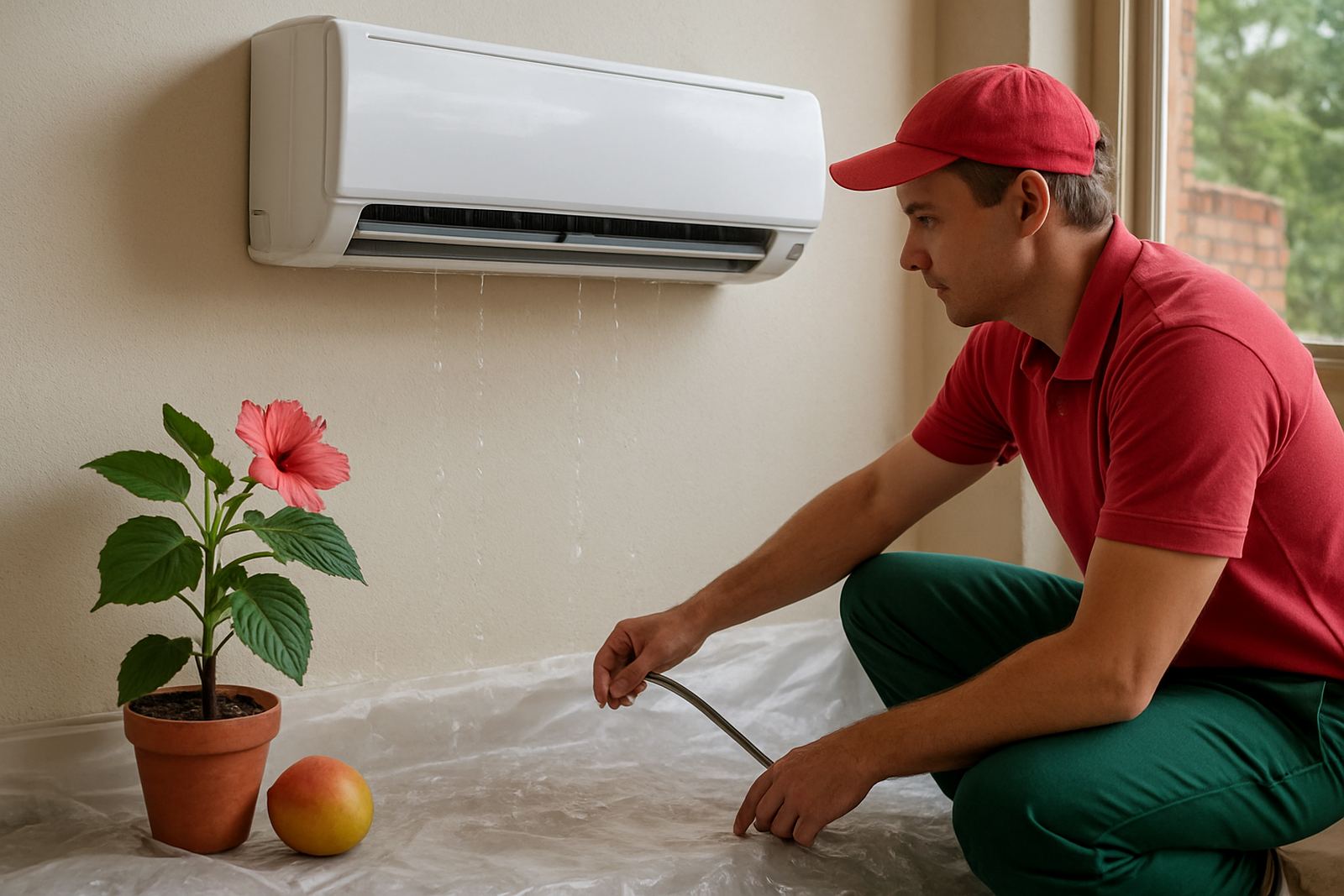
Most indoor leaks start with a simple drainage problem. Split units and cassette units both depend on a clear drain tray and a pipe that carries condensate away from the room. If that pipe gets blocked with slime, dust, algae or insects, water has nowhere to go and it starts dripping back inside.
We see this often in homes and offices from Milnerton to Bellville, especially where the unit runs for long hours. A filter that has not been cleaned in months lets dust load up on the evaporator coil, then the drip tray overflows. In some cases the drain pipe has a low spot or a bad joint, so water sits in the pipe instead of flowing out.
- Water dripping from the indoor cover or casing
- Wet marks below the unit or along the wall
- A gurgling sound from the drain pipe
- Musty smell when the unit starts
Poor installation levels can make a good unit leak
If the indoor unit was not mounted level, the condensate tray may not empty properly. Even a small tilt can send water to the wrong side of the tray and over the edge. We also find this after ceiling work, where the bracket shifts a few millimetres over time or the wall has settled a bit.
This is not always obvious to the eye. A unit can look straight but still have a bad fall on the drain end. That is why a proper inspection includes checking the bracket, drain slope and where the pipe exits the building. On the Cape Peninsula, older houses and converted flats can have tricky wall runs and hidden pipe bends that catch dirt.
- Indoor unit not sitting square on the wall plate
- Drain hose rising before it falls away
- Pipe pinched behind a cornice or cupboard
- Ceiling void with no access for cleaning
Dirty coils and filters add pressure to the drain tray
When the filter and coil are dirty, the system struggles to move air across the cold surface. That can cause icing on the evaporator coil. Once the ice melts, the tray gets more water than it can handle and the room gets a drip problem. It is a common call during the first warm spell after winter, when people switch units on for the first time and find water on the floor.
In offices around Cape Town CBD and Claremont, we often find the problem after a long spell of light use. The unit still cools, but not properly and the moisture control is off. Cleaning the coil, blower wheel and filter often fixes the leak before any parts need replacing.
Quick checks you can do before calling for service:
- Switch the unit off and check if the filter is clogged with dust
- Look for ice on the indoor coil or copper pipe
- Check whether the drain pipe is dripping outside
- Listen for a full tray sloshing when the fan starts
Low gas and weak airflow can look like a water problem
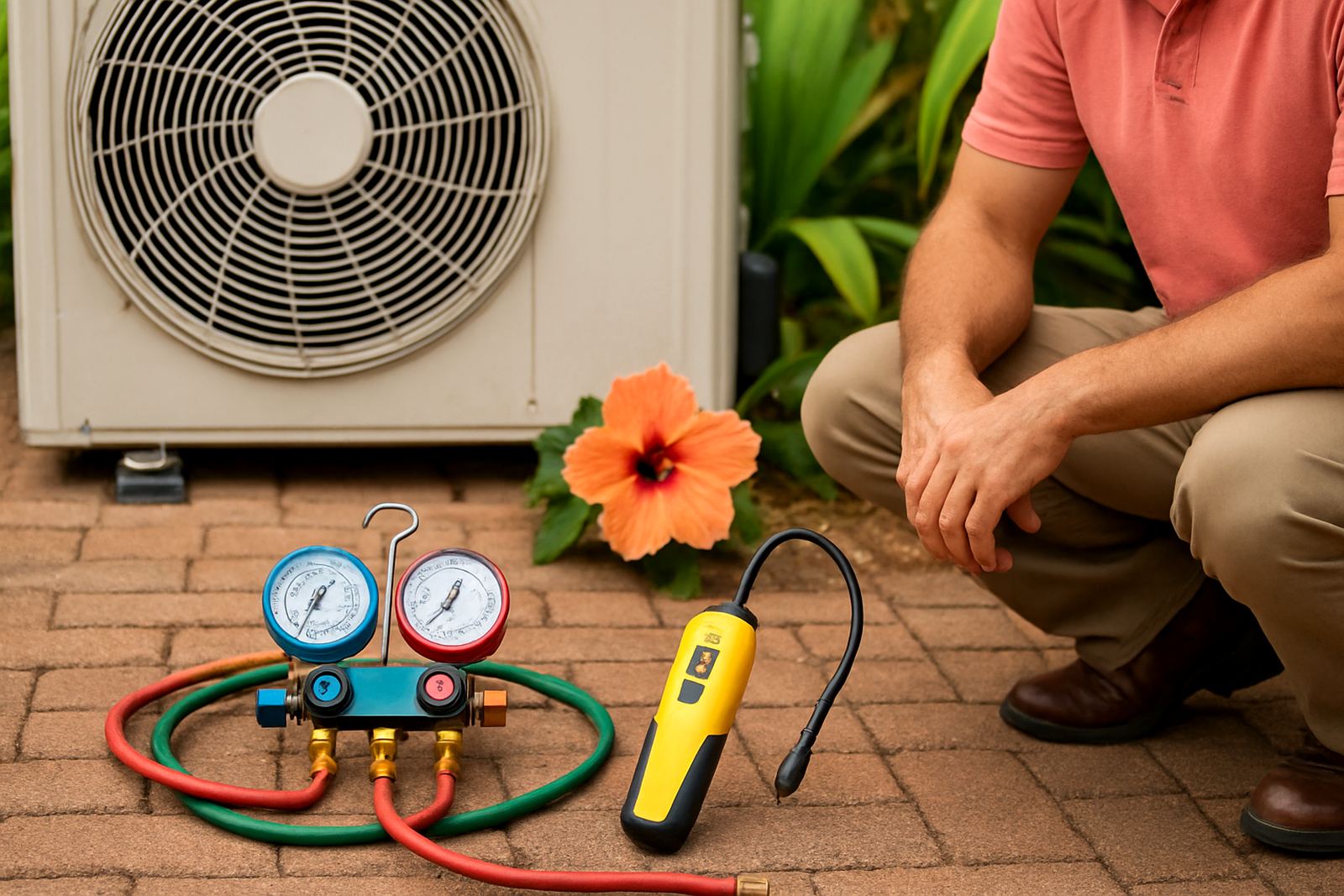
Not every indoor leak is only a drain issue. Low refrigerant gas can cause the indoor coil to get too cold and freeze. Then, when the ice melts, the water load becomes too much for the tray. Weak fan motors, blocked return air and dirty louvers can do the same thing because the coil does not get enough moving air.
If your unit leaks and also cools poorly, takes long to start dropping temperature or runs non stop during load shedding recovery, the fault may be bigger than a blocked drain. In that case the technician should check pressures, airflow and the condition of the coil together, not just flush the pipe and leave.
What to do before water reaches the ceiling board
If the leak is active, switch the unit off at the isolator and place a bucket or towel under the drip point. Do not keep running the unit while water is entering the wall or ceiling. That can lead to swollen board, stained paint and damage to electrical fittings nearby.
For landlords, shop owners and body corporates, it helps to log the issue early. In apartment blocks around Somerset West and Fish Hoek, building managers often need a clear report before they approve work. A technician should be able to tell you if the cause is a simple clean, a drain repair, a re-level or a refrigeration fault. Sometimes the drain line needs to be re-routed properly because the original run was just too flat.
- Turn the unit off if water is running into the room
- Keep furniture and papers away from the drip area
- Take a quick photo of where the water is coming from
- Check whether the outside drain outlet is blocked
A Cape Town example from a condo near the beachfront
We were called to a two bedroom flat near the Cape Town foreshore where water was dripping from the indoor unit onto a cabinet. The owner thought the unit had cracked, but the real issue was a blocked drain line with algae and fine dust. The coil was also dirty from coastal air and the unit had been mounted slightly off level after a previous ceiling repair.
We cleaned the coil, flushed the drain, corrected the fall and tested the unit under load. The leak stopped straight away. That kind of call is common along the coast where humidity is higher and units work harder during warm spells. A quick service now is usually cheaper than repainting a ceiling later.
When to book a repair instead of just a service
A regular service helps prevent most indoor leaks, but some problems need repair. If the drain tray is cracked, the pump has failed, the insulation around the pipe has broken down or the unit keeps freezing, then the fault needs a proper fix. Water leaks that return after cleaning usually mean there is still an underlying cause.
At Tropical Refrigeration, we handle home and office air-conditioning across Cape Town and the Peninsula from our Montague Gardens base. Our team can inspect the drain system, test airflow, check gas levels and sort out the source of the leak before it spreads. If you are seeing repeated dripping, best not leave it for the next hot spell.