Start With the Product, Not the Panels
Before any drawings or equipment choices, work out what will actually go into the freezer room. Are you storing meat, seafood, frozen meals, dough, ice cream, or mixed stock with different turnover rates? The product type affects the target temperature, the size of the room, the door usage, and how quickly warm air enters every time someone opens it.
Also think about how much stock must fit on the busiest day, not only an average week. Many cold rooms are under-sized because the owner planned for today’s stock, then forgot about a holiday rush, delivery delays or a supplier’s bulk order. A freezer room should allow for circulation around the product too, not only stacking from floor to ceiling.
- List every product category and its storage temperature.
- Measure peak stock volume, not just normal daily levels.
- Allow space for movement, cleaning and stock rotation.
- Check whether pallets, trolleys or crates must fit through the doorway.
Insulation and Floor Details That Prevent Ice Build-Up
Good insulation saves energy and keeps the compressor from running harder than it should. In Cape Town, coastal humidity can create extra moisture pressure, so panels, joints and the floor detail need proper sealing. Small gaps around corners, service penetrations and door frames can cause frost build-up, water ingress and uneven temperatures.
The floor is often forgotten. If the room sits on a slab, the floor build-up must stop cold transfer into the concrete below. If that is not done properly, you can get condensation, cracked surfaces and ice under the finish. That creates a safety risk for staff and a maintenance problem that gets expensive fast.
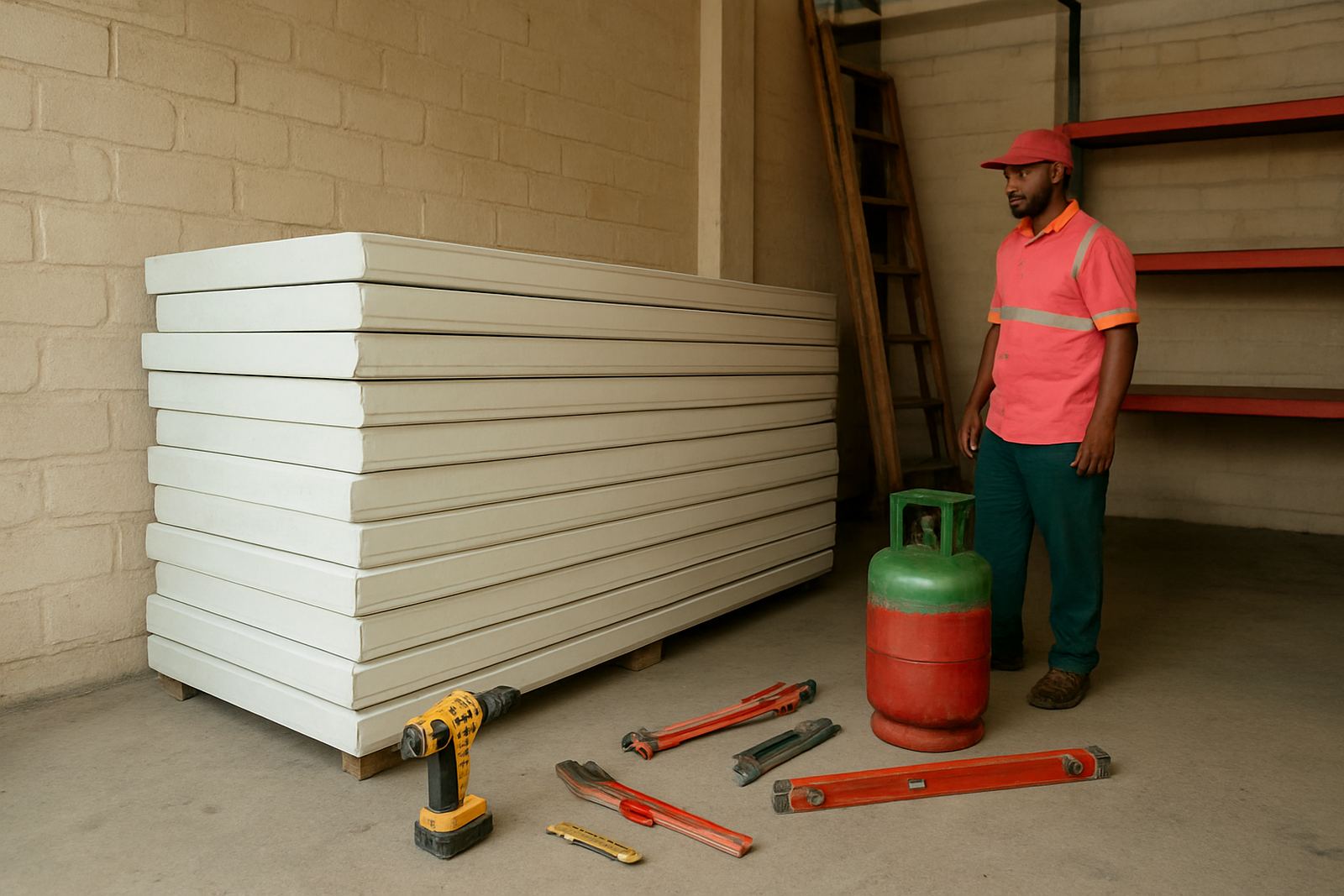
- Specify insulated wall and ceiling panels with sealed joins.
- Ask about floor insulation where the room sits on a slab.
- Seal pipe entries, electrical points and corners carefully.
- Use finishes that can handle cleaning, moisture and foot traffic.
Plan the Door, Access Route and Daily Workflow
The best freezer room in the world will still frustrate staff if the access route is awkward. Think about where deliveries arrive, where the product is unpacked, and how often the door opens during a shift. If the freezer room sits far from the prep area, warm air gets in more often and the team wastes time walking back and forth.
Door size matters too. A doorway that is too narrow slows down deliveries and can damage packaging or racking. If a forklift or pallet jack is used, the turning space must be checked before installation. In smaller Cape Town sites, especially CBD, Claremont or Bellville, access can be tight and the layout has to be planned around the building not against it.
- Keep the route from loading point to freezer room as short as possible.
- Check door width, opening direction and clear floor space.
- Consider strip curtains or fast-closing doors for busy rooms.
- Make sure emergency exit and staff safety rules are still met.
Size the Refrigeration System for Real Conditions
A freezer room is only as good as the refrigeration system matched to it. If the plant is too small, it will struggle on hot days, after stock loads, or when the door is opened frequently. If it is too large, it may short-cycle and waste power. The right sizing should consider room dimensions, insulation quality, product type, ambient temperature, usage patterns and local power conditions.
In Cape Town and the peninsula, summer heat, humidity and coastal air all affect performance. A room in Somerset West may face different ambient conditions than one in Milnerton or Fish Hoek, and that influences equipment selection. It also helps to plan for sensible maintenance access, because compressors, fans and controls should be reachable without forcing a full shutdown every time a minor repair is needed.
- Provide room dimensions, insulation details and product load information.
- Include daily door openings and peak stock delivery times.
- Allow for local ambient temperatures and coastal conditions.
- Keep service access in mind for future repairs and checks.
Build in Power Backup and Load-Shedding Protection
Freezer rooms in South Africa must be planned with power interruptions in mind. Even a short outage can affect temperature stability, especially when the room is opened often or already carrying a full load. It is worth planning what happens during load-shedding, a supply fault or a breaker trip before the system is installed.
This may include alarm monitoring, temperature logging, backup power support or a basic operating plan for staff. In some businesses, the best step is simple training: keep the door closed, limit traffic, and know who to call if temperatures start rising. A good plan reduces panic and protects stock value.
- Decide how long the room must hold temperature during an outage.
- Set up clear staff instructions for power cuts.
- Check if alarms or temperature alerts are needed.
- Keep an emergency contact list near the cold room area.
Maintenance Checks That Keep the Room Working
Once the freezer room is installed, regular servicing matters just as much as the build itself. Fans, thermostats, compressors and door seals should be checked before they fail. A small refrigerant leak or a weak seal can push running costs up and cause uneven cooling before anyone notices a visible problem.
For Cape Town businesses, routine checks should also include the condition of the condenser, drainage, defrost cycle and insulation joints. Salt in the air, dust in industrial areas and frequent door use all create wear. Catching issues early keeps product safe and helps avoid emergency call-outs after hours.
- Inspect door seals and hinges regularly.
- Check thermostat readings and product temperatures.
- Look for frost, water pooling or unusual compressor noise.
- Schedule servicing before peak season, not after a failure.