Start with the space you have, not the fridge you want
Before you compare cabinet sizes, measure the exact spot where the fridge will stand. Leave room for doors, airflow at the back or sides, and enough space for cleaning. In Cape Town shops we often see a unit squeezed into a corner where the motor cannot breathe properly, then it works harder, uses more power and fails early. If the floor is not level, sort that out first because a fridge that leans can give you drainage and door seal problems.
Check the route in as well. A fridge may fit inside the store but not through a narrow storeroom door, a mall entrance or a tight passage in a Fish Hoek café. Measure height, width and depth, then compare that to your available path from the street or loading bay.
- Measure the installation area in millimetres, including clearance for airflow.
- Check door width, passage turns and any steps on the delivery route.
- Confirm where the plug point is and whether the cable can reach safely.
- Allow space for daily stocking and cleaning around the unit.
Choose the display style that fits your products
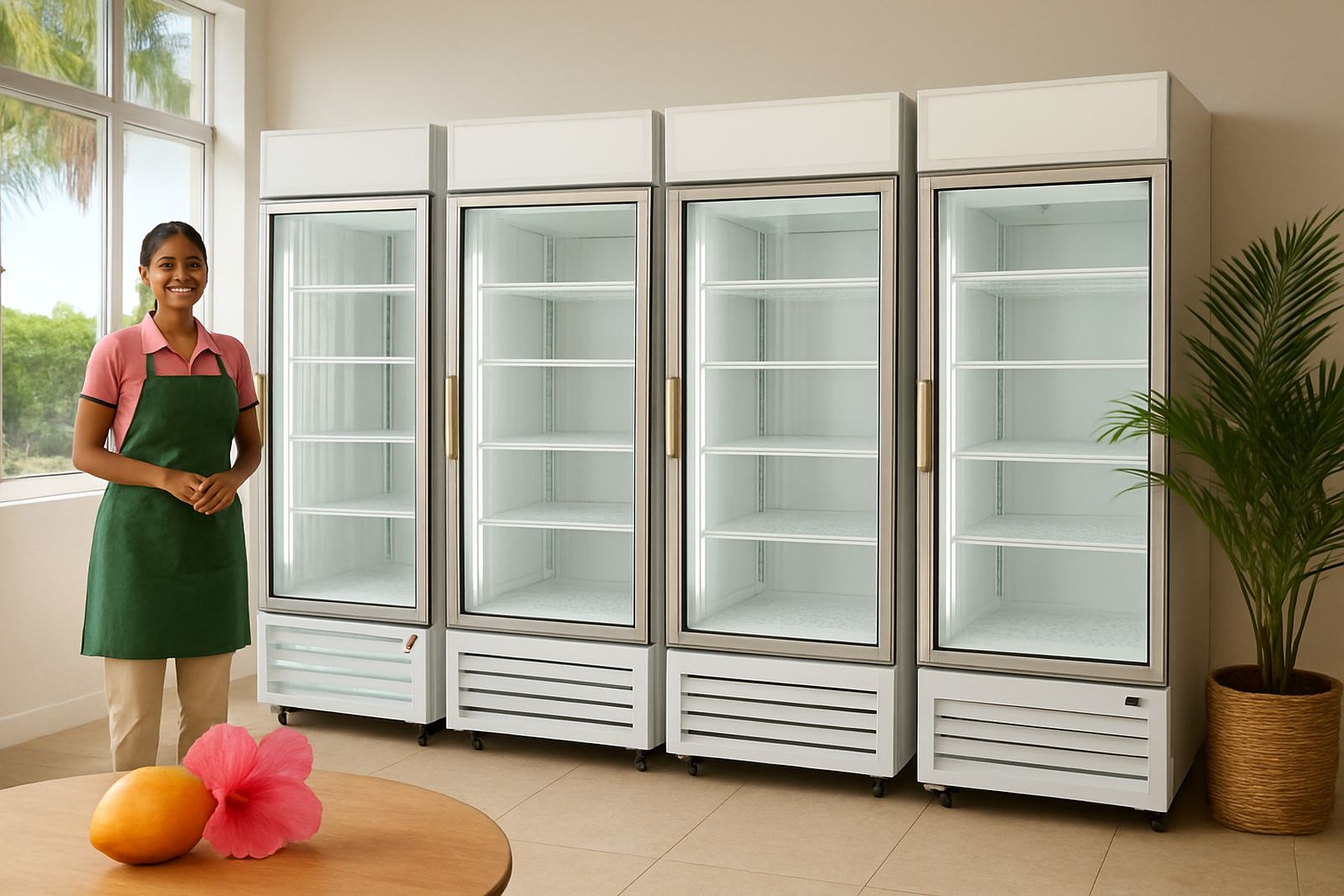
The type of display fridge depends on what you sell. A small upright cabinet suits drinks, dairy and pre-packed food. A larger multi-deck unit works better for grab-and-go items in a busy CBD shop. Countertop display fridges are useful where the serving area is tight, while glass door upright units suit bottle shops, bakeries and convenience stores that need quick access and clear viewing.
If you sell chilled items that get opened often, think about how the cabinet holds temperature in real use. A deli in Bellville with steady foot traffic will need a different setup to a Somerset West café that opens and closes the door less often. Curved glass, straight glass, single-door and double-door models all have their place, but the best one is the unit your staff can restock fast without blocking customers.
- Upright single-door cabinets for smaller ranges and narrow floors.
- Double-door units for higher stock volumes and quicker access.
- Open-front display units for self-service areas with fast turnover.
- Counter display fridges for cakes, wraps and point-of-sale items.
Match temperature control to the stock you keep
Display fridges are not all set up the same way. Some need a steady chilled range for drinks, yoghurt and dairy. Others must hold a lower temperature for meat, fish or prepared meals. If your stock is sensitive, ask for a unit with reliable thermostat control and a display that staff can check at a glance. That matters when the power trips during load shedding or when the shop is busy and doors stay open longer than they should.
For Cape Town businesses near the coast, humidity can also affect performance. Salt air and damp conditions can put extra strain on seals, fans and condensers. A unit that is not maintained properly will start frosting, sweating or cycling too often. If you already have a cold room or freezer on site, it helps to keep the refrigeration setup simple and serviceable so you are not juggling different fault patterns every week.
- Check the operating temperature range before you buy.
- Confirm whether the cabinet uses fan-assisted cooling or static cooling.
- Ask how it performs during power interruptions and restarts.
- Make sure the thermostat is easy for staff to read and adjust.
Plan for electricity, ventilation and daily use
A display fridge is only as good as the power and airflow around it. In older shops around Claremont or Milnerton, the electrical supply may already be carrying lights, tills, signs and other appliances. Add a fridge that draws too much current and you are setting yourself up for nuisance trips. We always advise checking the socket, isolation point and wiring before installation, especially where a business relies on generator backup or inverter support during outages.
Ventilation is just as important. Cabinets placed against a wall with no breathing space run hotter and waste power. Staff also need to get to the fan grille, shelves and drainage points for cleaning. A fridge that is difficult to clean becomes a hygiene problem quickly, especially where fresh food is handled daily.
When the unit is in place, train staff on simple daily habits. Keep the door closed, do not block the vents with boxes, and wipe up spills before they get into the seals. Small habits save money and reduce breakdowns, no matter whether the shop is in Cape Town CBD or out in Somerset West.
Installation and maintenance checks that prevent downtime
A display fridge should be installed level, secured and tested before stock goes in. The condenser must be clean, the door seals must close properly, and the thermostat must be calibrated to suit the cabinet. If the gas charge is wrong, the fan motor is failing, or the door heater is not working, the unit will struggle from day one. That is why a proper handover matters more than a quick drop-off and plug-in job.
For shops and cafés that depend on daily trade, routine servicing is cheaper than emergency repairs. Dust, grease and coastal moisture can all affect performance. In busy areas like Cape Town CBD or Bellville, doors open all day and the cabinet works harder than owners expect. A service visit can pick up early signs of leak, compressor strain or a thermostat that is drifting before stock is lost.
- Clean the condenser and fan area on a regular schedule.
- Check door seals for gaps, cracks and hard spots.
- Watch for ice build-up, warm spots or water pooling.
- Book a service if the cabinet runs constantly or sounds different.
A simple buying checklist for Cape Town businesses
Whether you run a deli in Fish Hoek, a café in Claremont or a convenience store in Milnerton, the best buying decision comes down to fit and function. A display fridge should suit your stock range, your floor space and your trading hours. It should also be practical for staff to load, clean and monitor every day. If you are comparing options, use the same checklist for each unit so you are not swayed by appearance alone.
- What is the exact footprint and door swing?
- Does the cabinet suit chilled drinks, dairy, prepared food or mixed stock?
- Will it run well on your current electrical supply?
- Is there enough airflow and access for maintenance?
- Can staff restock it quickly during busy periods?
- Is the temperature control clear and dependable?
For businesses that already use commercial refrigeration, it often pays to keep the equipment range consistent. That makes service easier, parts tracking simpler and staff training quicker. When a display fridge is selected with care, it supports sales instead of creating extra work.