The Tokai brief: cooler air without slowing the business
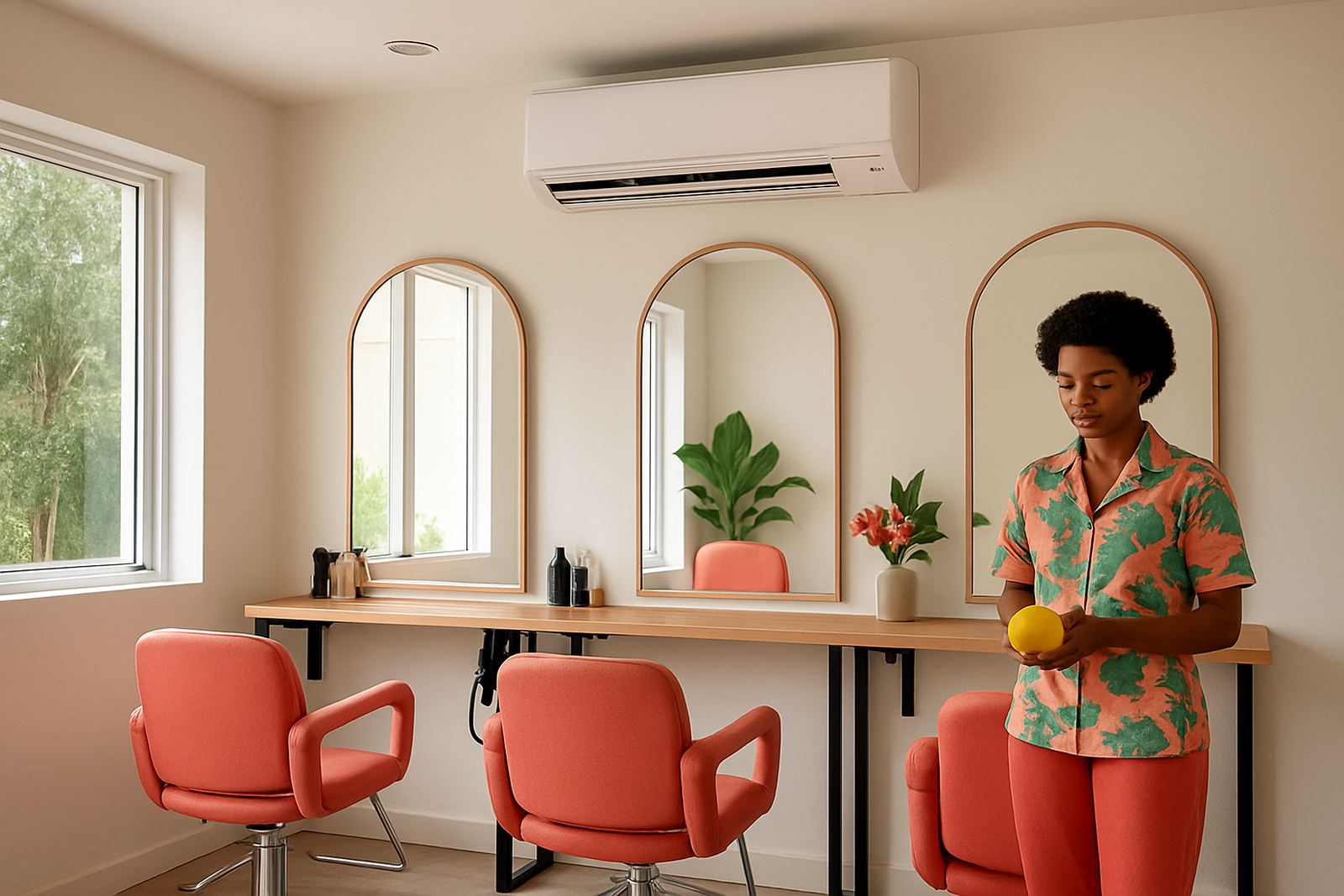
The client was a busy hair and beauty salon in Tokai, Cape Town, with treatment rooms, a wash area and a front section that filled up quickly in the afternoons. By 1pm the space felt stuffy, staff were opening doors for relief and the existing units were running hard without holding temperature. The brief was simple enough on paper: keep clients comfortable, reduce hot spots and make the system cope with the load from lighting, dryers and people moving in and out all day.
We first checked the room layout, ceiling height, glass exposure and where heat was entering from the west side in the late afternoon. Tokai can feel mild in the morning and then jump quite fast once the sun moves round, so the cooling setup needed to handle a real swing in demand. The salon also needed a cleaner install with tidy pipe runs and no noisy equipment close to the service chairs.
Key facts on the job included a mixed-use salon floor of about 110 square metres, two split units already on site, one underperforming indoor head and limited wall space for new pipe routes. There was no room for long downtime, and the owner asked us to keep the work to normal trading disruption only, no drama.
What was getting in the way
Several issues were stacking up. The older unit had weak airflow, the filters were clogged, and the gas charge was low enough to point to a leak or at least a loss through joints over time. One side of the salon also got direct afternoon sun, which pushed the temperature up right when the appointment book was busiest. In addition, the styling stations and product storage area added constant background heat, so the room never really settled.
We found that the existing distribution was not matching the way the salon used the space. Cold air was sitting too close to one wall while the opposite side stayed warmer. That created complaints from both staff and customers, especially when the humidity lifted. The team had also been working with doors open too often, which is never ideal in a Cape Town salon near busy foot traffic and road dust.
- Uneven temperature across the floor
- Restricted airflow around one indoor unit
- Signs of refrigerant loss on an older circuit
- Afternoon solar gain from the west side
- Noise and vibration near service areas
The system we supplied and installed
We supplied a replacement cooling layout built around inverter-type split air-conditioning for better modulation and lower power draw during lighter periods. The salon received one new high-wall indoor unit rated at 18 000 BTU and another at 24 000 BTU, sized to handle the open plan and the hotter side of the room. We used copper pipework sized to suit the line lengths on site, properly lagged with UV-resistant insulation, and routed the drains with enough fall so condensate would clear cleanly.
Where the old unit was still serviceable, we kept it in the plan after a full service, leak test and gas refill to the correct pressure range. That saved the client unnecessary replacement costs. We also added a condensate pump on one section where gravity drainage was not practical, and we set up wall brackets and anti-vibration pads to cut down on transmitted noise. On the ventilation side, we cleaned and rebalanced the existing extraction points so the room could breathe better during peak trade.
- 2 inverter split units sized for salon use
- 1 condensate pump for a limited drain route
- New insulated copper lines and control cabling
- Leak detection, pressure testing and gas refill on the retained circuit
- Filter cleaning and airflow rebalancing throughout
How we carried out the work over two weeks
The project ran over two weeks from first site visit to final sign-off. In week one we inspected the premises, confirmed the loads and marked out the routes so we could avoid interrupting reception, mirrors and product shelving. We did the dirty work early in the morning, then came back after closing for mounting and connection. That kept the floor usable for most of the week and gave the owner confidence that trade could continue.
In week two we completed the pipework, pressure tested the system, vacuumed the lines, charged the circuits and tested cooling under actual salon conditions. We measured temperature drop at different points in the room and checked for short cycling, vibration and drainage. The final step was training the staff on filter cleaning, remote control settings and the simple signs that tell you a unit may need attention before it fails. It is basic stuff, but in a busy salon it saves a lot of callouts.
We also left a short maintenance note for the owner, including the recommended service interval and how to keep the condenser area clear of dust and hair products. Cape Town coastal air can carry fine salt and grime, even a few kilometres inland, so regular washing and inspection matters more than many people expect.
The result in the salon after the upgrade
The difference was clear once the system was running under load. Afternoon temperatures inside the salon dropped to a steady working range and the hot spot near the front windows was pulled back into line. Staff reported fewer complaints from clients sitting under dryers or waiting near the entrance, and the room held its comfort better when the sun moved round after lunch. The owner also noticed that the units were no longer working flat out just to stay ahead of the heat.
Energy use is always a concern in Cape Town, especially with load-shedding and the stop-start nature of business power. The inverter equipment gave the client better control during partial load periods, and because the system was correctly sized, it did not have to fight itself all day. The salon now has a setup that is calmer, quieter and easier to maintain.
- More even temperature across the floor
- Better comfort for staff and clients
- Reduced noise near work stations
- Lower strain on the cooling equipment
- Cleaner drainage and less moisture build-up
What we would do again for a Tokai salon
If we were asked to do the same type of job again, we would follow the same approach: assess the real heat sources, size the equipment to the room and not just the wall space, and keep the installation tidy enough for a front-of-house business. Salons need cooling that works with people moving through the space, hair tools running and doors opening regularly. A unit that is fine in a small office can struggle in a service environment like this.
We would also keep recommending a mid-year service before the hottest stretch, plus a quick check on filters and drains after any heavy dust or coastal moisture period. That saves a lot of trouble later. In a place like Tokai, where afternoon heat and glass exposure can change the feel of a room very fast, practical maintenance matters more than fancy controls.
For this project, the client got a usable result without over-complicating the job. That is usually the goal on salon work, and it was the right fit here.
Key facts
| Project area | Tokai, Cape Town |
|---|---|
| Client type | Hair and beauty salon |
| Timeline | 2 weeks |
| Cooling equipment | 2 inverter split units |
| Capacity | 18 000 BTU and 24 000 BTU |
| Services used | Installation, leak detection, gas refill, ventilation servicing |