Bakery cooling for a busy Stellenbosch prep space
The client was a small bakery in Stellenbosch serving fresh bakes from an on-site prep area. They needed dependable cooling for ingredients, finished stock and the people working next to warm ovens, mixers and proofing equipment. The old arrangement struggled on hot afternoons, and the room temperature would climb fast when production picked up. In summer the Cape winelands heat, plus load-shedding, made temperature control even more difficult.
The brief was straightforward on paper but tight in practice: install a reach-in chiller, improve airflow in the prep area, and keep the footprint compact enough for daily production. The bakery could not afford long downtime, and the job had to be done without blocking deliveries or interrupting the morning bake run. We planned it as a short, phased project over 2 weeks, with the most disruptive work done after the first production cycle had finished for the day.
What had to be worked around on site
Bakery spaces are rarely simple. This one had stainless benches, flour dust, hot equipment and limited wall space, so the new installation needed good service access and sensible clearance around the condenser side. The client also asked for a setup that would cope with frequent door opening, because staff were moving trays, trays and ingredient tubs in and out through the day. We also had to consider the wet winter conditions in the Cape and the usual humidity swings near Stellenbosch, which can put extra strain on seals and controls.
- Restricted floor area beside prep benches and ingredient storage
- Heat from ovens and proofing equipment in the same room
- Power interruptions and restart checks during load-shedding
- Need for quick access to the chiller without crossing the main bake line
Because the bakery could not stop trading, we broke the work into clear steps and kept the team updated daily. That meant less guesswork for the client and fewer surprises for the staff on site.
The cooling package we supplied
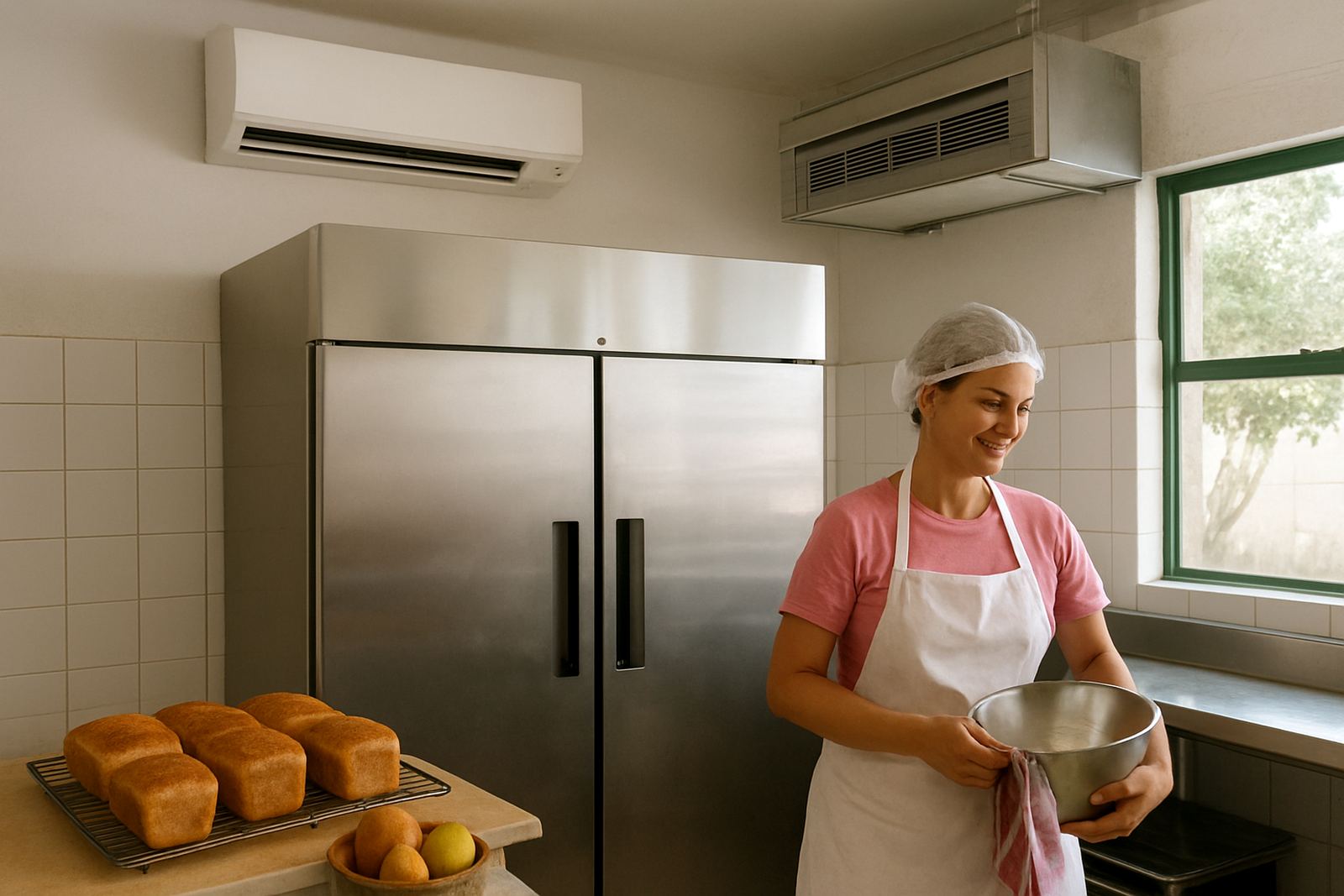
We supplied and installed a reach-in chiller sized for daily bakery use, along with the cooling components needed to stabilise the prep area temperature. The equipment was selected for steady pull-down, simple maintenance and easy cleaning around food production areas. The set-up included a correctly sized refrigeration circuit, insulated line set, mounting hardware, drainage planning and a control arrangement that staff could use without special training.
- Reach-in chiller for ingredient and stock holding
- Prep area cooling to reduce working-room heat
- Anti-vibration mounting and neat pipe routing
- Drainage and condensate management for daily use
- Commissioning, pressure testing and gas charge check
Our refrigeration technician, Ridwaan Daniels, handled the core install and commissioning. Lindiwe Mokoena managed the air movement and placement around the prep area, while Keegan van Wyk kept the booking and handover timing tight so the bakery could get back to work on schedule.
How the installation was carried out
The first week was used for measurements, route planning and confirming the electrical and clearance requirements. Once the positions were signed off, we set the chiller in place, ran the pipework and completed the cooling side connections. We also checked for any points where flour dust or heat could affect the unit over time, then adjusted the layout so the airflow moved across the prep area without blowing directly onto open product.
During the second week we finished insulation, tested the system under load and monitored temperatures at different times of the day. That mattered because a bakery can look fine at 7am and run much warmer by mid-afternoon. The final handover included basic operating guidance, cleaning reminders and a service plan suited to the client’s trading hours. We explained what to watch for after power cuts, because restarting cold equipment after an outage is where small problems often show up.
Results after handover
By the end of the project, the bakery had a chiller that held temperature more consistently and a prep area that stayed more workable during busy shifts. Ingredients could be stored closer to the production line, which cut down on walking back and forth and saved time during service peaks. The staff noticed the room felt less stuffy, especially when the ovens were full and the weather turned warm. There was also less pressure on the team to move stock into temporary cold space during peak hours.
From a maintenance point of view, the client got a setup that is easier to service and simpler to keep clean. That matters in a food space where dust, crumbs and moisture build up quickly if the system is awkward to reach. The cooler room and steadier storage conditions also helped reduce waste, because product was not being exposed to unnecessary heat before it reached the display or packing stage.
What we would do again on a similar bakery job
If we were doing the same job again in Stellenbosch or anywhere else in the Cape Peninsula, we would approach it the same way: measure the heat load properly, plan for door openings, and keep the service access practical from day one. Bakery work needs equipment that can handle long operating hours, not just a quick startup. We would also keep the commissioning period long enough to see how the system behaves after the lunch rush and again after load-shedding, because that is where weak planning shows up.
For this client the key was not a fancy system, it was the right system in the right place. The install fits the bakery’s working pattern, and that is what makes it useful every day. Mandla Petersen and the Tropical Refrigeration team continue to focus on that kind of result across Cape Town and the peninsula.
Key facts
| Project town | Stellenbosch, Cape Winelands |
|---|---|
| Client type | Bakery workspace with prep and cold holding |
| Work completed | Reach-in chiller installation and prep area cooling |
| Timeline | 2 weeks from site measure to handover |
| Main challenge | Limited space, oven heat, and power interruptions |
| Result | Steadier storage temperatures and easier daily production |