Why server rooms overheat so quickly
A server room is not just another small office. Once you put in a few racks, a UPS, networking gear and backup power, the heat load climbs fast and the room can sit at 28 to 35 degrees C before anyone notices. In Cape Town, that gets worse in sun-facing buildings, top floors, storage rooms converted into technical spaces and coastal offices where salt air can shorten the life of parts.
Dedicated cooling helps keep heat-producing hardware stable through business hours, after-hours backups and load-shedding events. We work from Montague Gardens and cover the Cape Peninsula, so we are used to tight plant rooms, limited wall space and odd ceiling heights in CBD offices, Bellville business parks and small commercial sites in Claremont. A proper plan starts with the heat load, not just the room size.
Typical equipment in a Cape Town server room
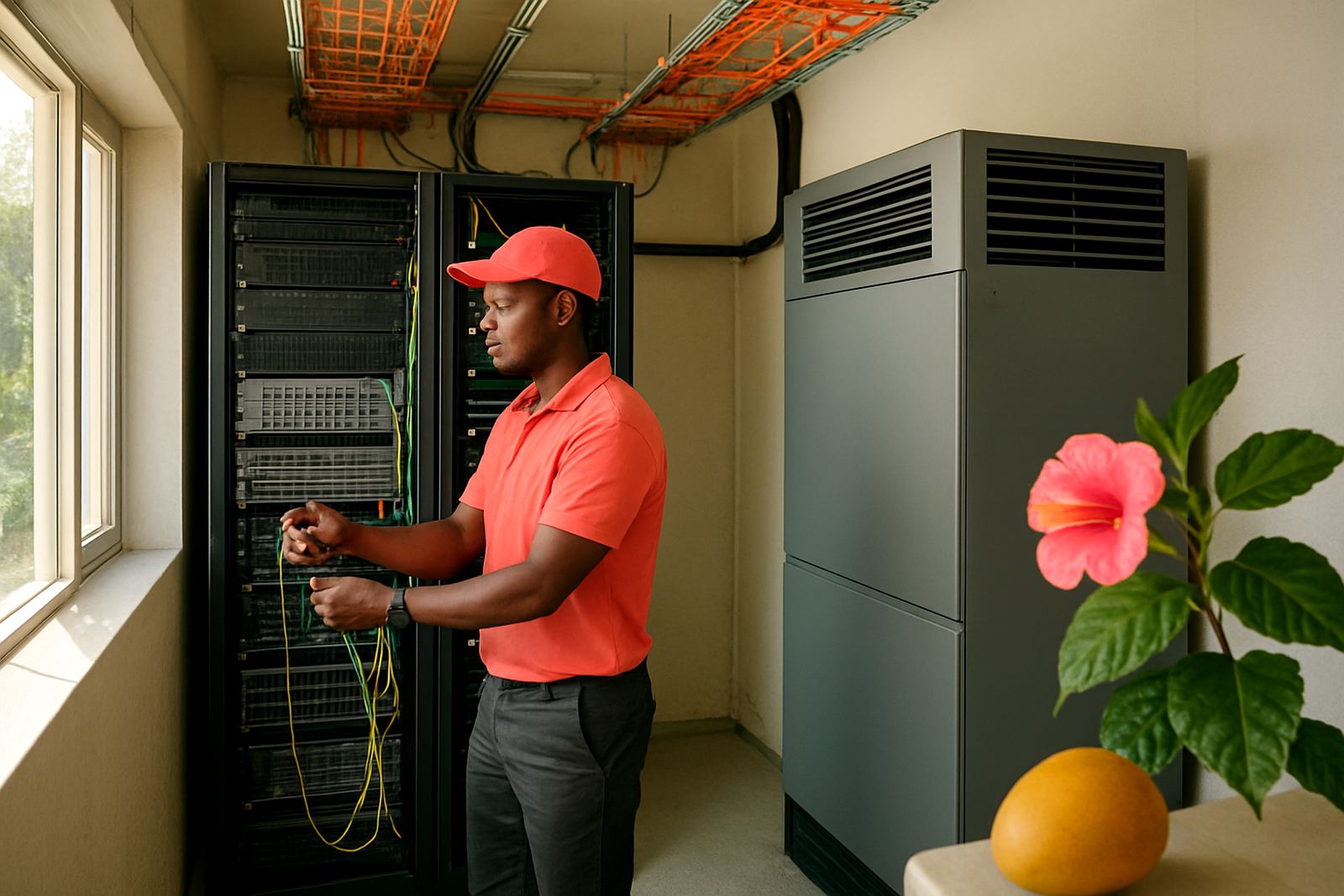
Every site is different, but most rooms have a fairly similar set-up. The cooling system needs to suit the equipment, the room size and how often staff enter and exit the space. We commonly find the following:
- One or more server racks with switches, firewalls and storage units
- UPS units and battery backup gear that also give off heat
- Patch panels, modem shelves and cable trays
- Small exhaust fans or louvres that do not move enough air on their own
- Door seals that are worn, missing or badly fitted
- Windows blocked off with board or film to reduce heat gain
Some rooms have been built inside older offices with no thought for return air paths, so the unit keeps cooling the same pocket of air and the hot air gets trapped at the top. That is a common cause of alarms and premature compressor wear, and it is easy to miss if nobody checks the full room layout.
Planning the cooling layout before you buy equipment
The right system depends on the room size, heat load and how the air moves around the racks. A 6 m2 room with two small racks may need a very different solution to a 20 m2 communications room with battery backup and several active units. We look at intake and discharge positions, ceiling height, outside wall access and whether the space has enough drainage for condensate.
Good planning also means thinking about maintenance access. If a technician has to remove half a ceiling to reach filters or pipework, that room will be harder to keep in service. In coastal areas like Milnerton, Somerset West and Fish Hoek, corrosion and humidity matter too, so the installation needs sensible pipe routing, sound mounting and parts that can handle local conditions. A neat install saves money later, especially when a room gets hot during a municipal outage and you need quick fault finding.
- Size the cooling from heat load, not only floor area
- Keep clear space around filters and service panels
- Plan for condensate drainage and easy cleaning
- Separate hot exhaust from cold supply air where possible
- Allow for backup operation during load-shedding and power returns
Common mistakes that cause failures and downtime
Many server rooms fail because the cooling was treated like a normal office air-conditioner job. That leads to poor placement, short cycling and uneven temperatures. Another issue is using a unit that is too small and then running it flat out all day, which increases wear and gives you little reserve on a hot January afternoon.
We also see rooms where the door is left open for ventilation, which only lets in dust and warm air. In some sites the equipment is packed too tightly, so the air coming out of the front of one rack gets pulled straight back into the next one. It sounds small, but over time it pushes up repair costs and creates avoidable alarms. A missing seal or blocked filter can do the same thing. Load-shedding adds another layer, because once the power comes back, systems all restart at once and the heat load jumps quickly.
Another common mistake is delaying gas leaks or ignoring weak airflow. If a unit is low on refrigerant, it may still run but it wont hold temperature properly and the compressor gets stressed. That is where proper fault finding, pressure checks and leak detection matter.
Repair, service and gas refill support for active sites
Server room cooling should be treated as business-critical equipment. If a unit stops working, the fix must be practical and fast. We handle repairs, gas refills, leak detection, thermostat replacement and compressor replacement where needed, with service planning that fits office hours and after-hours access when required. For many Cape Town sites, a same-day call-out can be the difference between a minor issue and lost hardware time.
Service normally includes filter cleaning, coil checks, drain clearing, fan inspection and a general look at the electrical connections and operating pressures. If the room is in a dusty area near a workshop or road frontage, service intervals may need to be shorter. In older buildings around the CBD and Bellville, we often find the system has been patched over time and needs a proper clean-up rather than another temporary fix.
- Aircon repairs for poor cooling or noisy operation
- Gas refill after leak testing and fault diagnosis
- Thermostat replacement when temperature control drifts
- Compressor replacement on failed or heavily stressed units
- Ventilation servicing where extract and supply air need attention
What budgets to expect in Rand
Costs depend on the room size, access, the number of units and whether pipework, power and drainage are already in place. As a rough guide, a simple split system installation for a small server room may start from about R12 000 to R25 000, excluding any major electrical changes. A better planned multi-unit solution or a room with special airflow requirements can move into the R30 000 to R75 000 range, especially where pipe runs are longer or access is tight.
Repairs are usually quoted after inspection because the issue might be as small as a failed capacitor or as serious as a leaking coil or compressor fault. A basic gas refill can be a smaller outlay, but if there is a leak, it should be traced and repaired first or the cost just comes back later. For rooms with critical hardware, budget a service plan or scheduled maintenance so you do not get caught out by summer heat, power cuts or a blocked drain on a Friday afternoon.
If you manage a server room in Cape Town, Milnerton, Somerset West, Fish Hoek, Claremont or the CBD, our team can assess the room and quote on the right cooling approach instead of guessing from a floor plan.